
Sept 20: Nukus and Khiva
After the Aral sea, we drove to Nukus where we stayed at a family style hotel. It’s got a population of around 350,000 and even though it’s small and remote, it has the most extraordinary museum of modern art,
Some call the Museum a kind of “lost Louvre” or “museum of forbidden art” because of this collection. It’s one of the most unexpected artistic treasures in Central Asia.
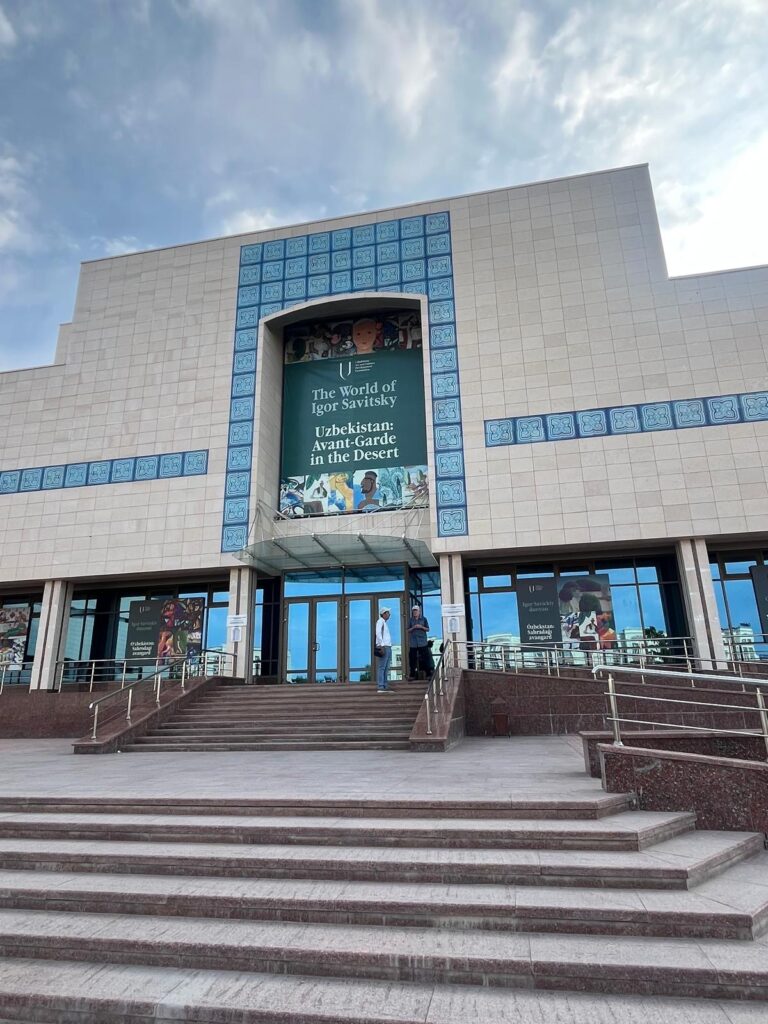
Founded by Igor Savitsky, a Moscow-born artist and ethnographer, he first came to Nukus in the 1950s for archaeological expeditions. While based there, he started collecting not only local folk art and artifacts, but also works by Russian artists who had been silenced under Stalin.
During the 1920s and early 1930s, Russian art had been bursting with experimentation — cubism, futurism, constructivism, suprematism — as artists tried to create a new visual language for a revolutionary society. But by the mid-1930s, the Soviet state imposed Socialist Realism as the only acceptable style. Anything too abstract, “formalistic,” or modernist was branded dangerous. Artists were blacklisted, exiled, or worse, and many works were destroyed.
Savitsky quietly rescued these “forbidden” paintings and drawings, often from artists’ families who had hidden them away in basements or attics. Because Nukus was so remote, the authorities largely ignored what he was doing — and he managed to assemble thousands of works that would otherwise have vanished.
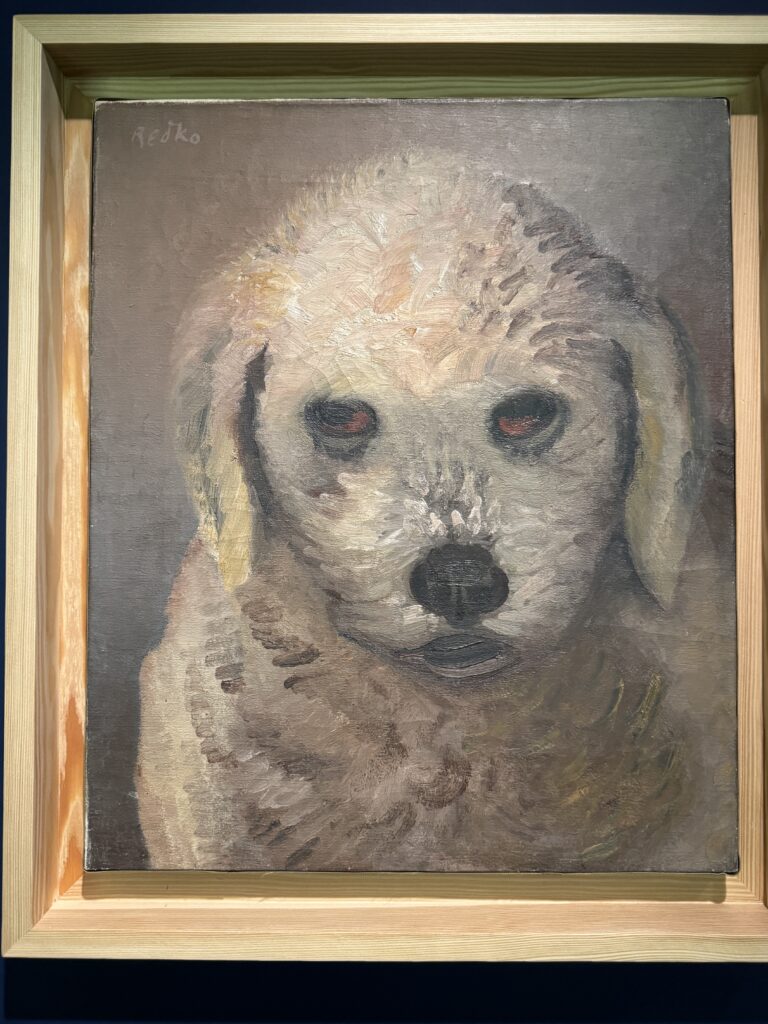
The collection includes works by both well-known and almost-forgotten names, including famous figures linked to avant-garde movements: Robert Falk, Alexander Volkov, Kliment Redko, Lyubov Popova, and many others. It also has a range of traditional costumes, jewellery, rugs and so on.
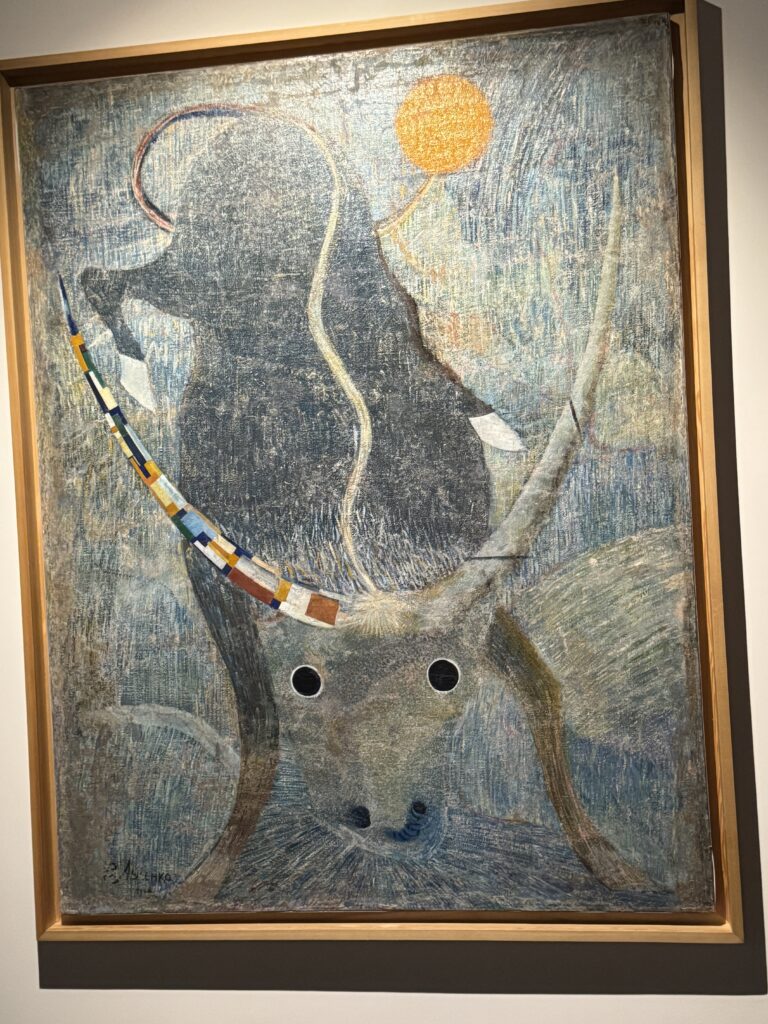
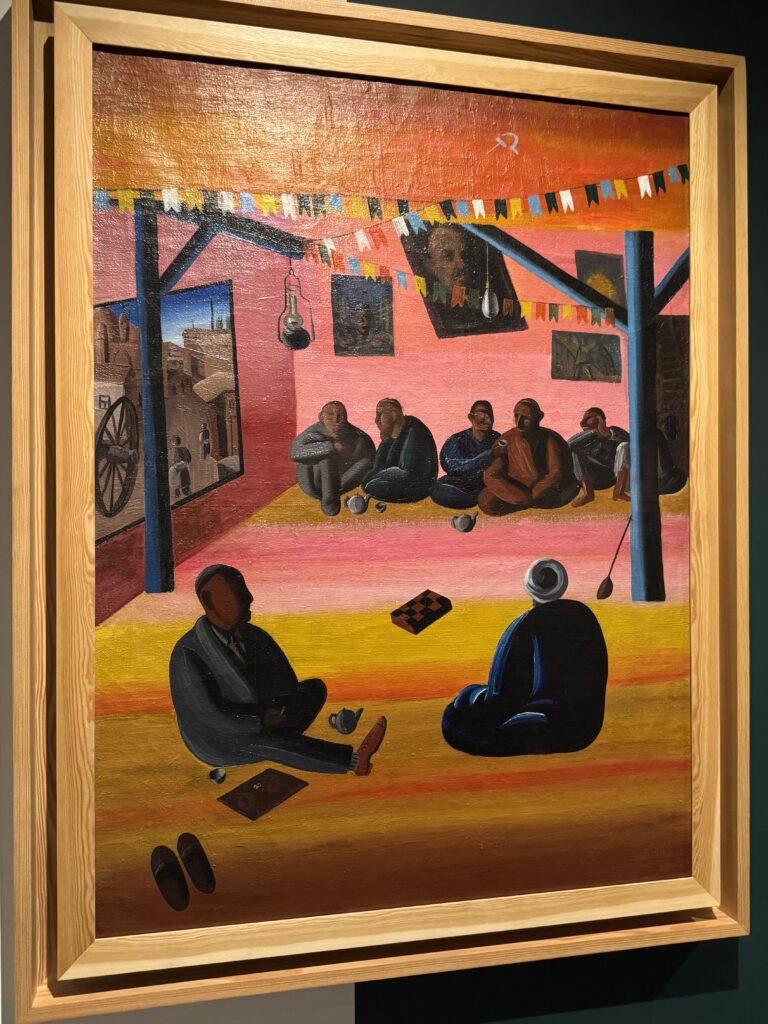
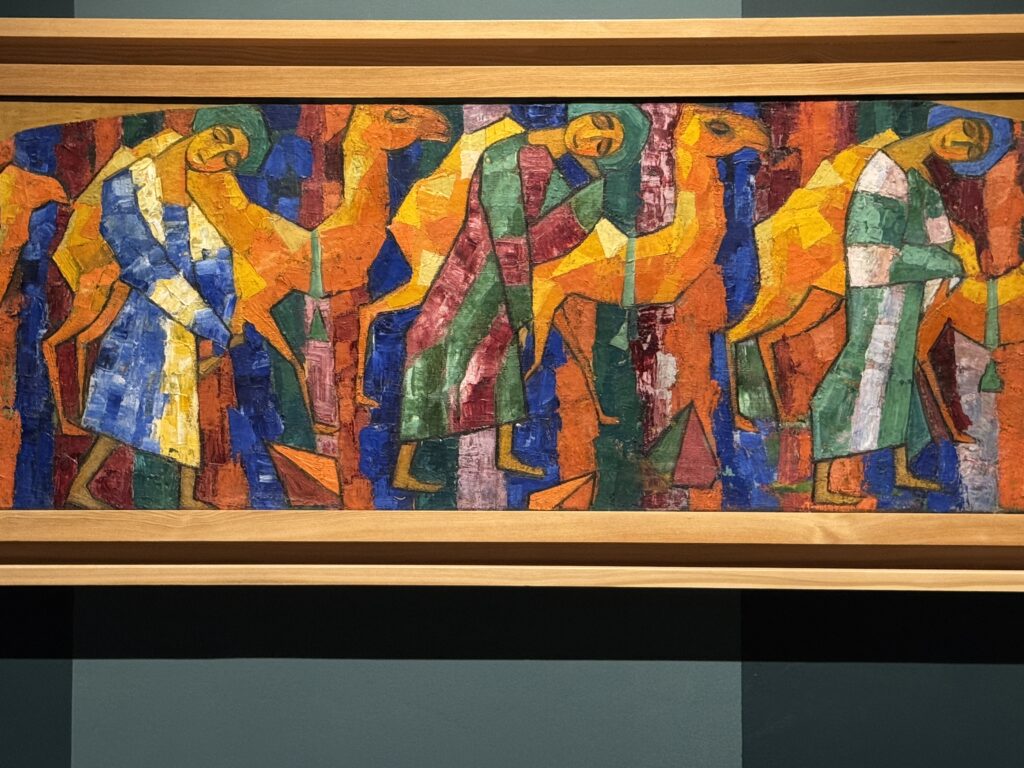
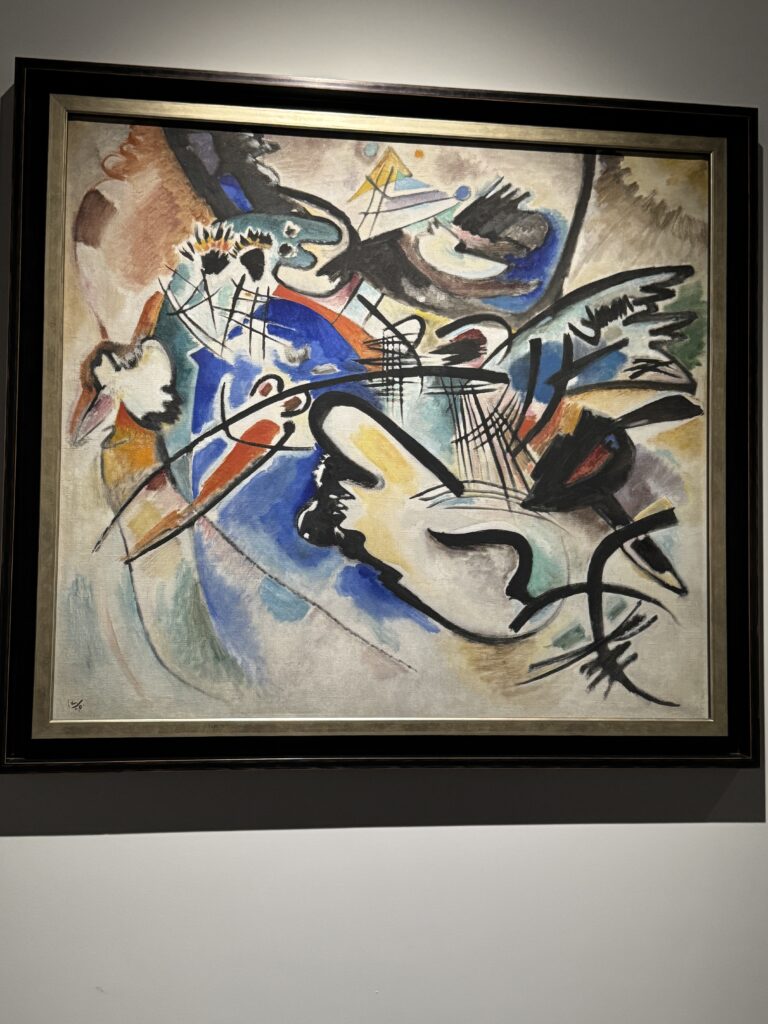
Estimates suggest the museum holds about 15,000 avant-garde works, making it the second-largest collection of Russian avant-garde art in the world (after the Russian Museum in St Petersburg).

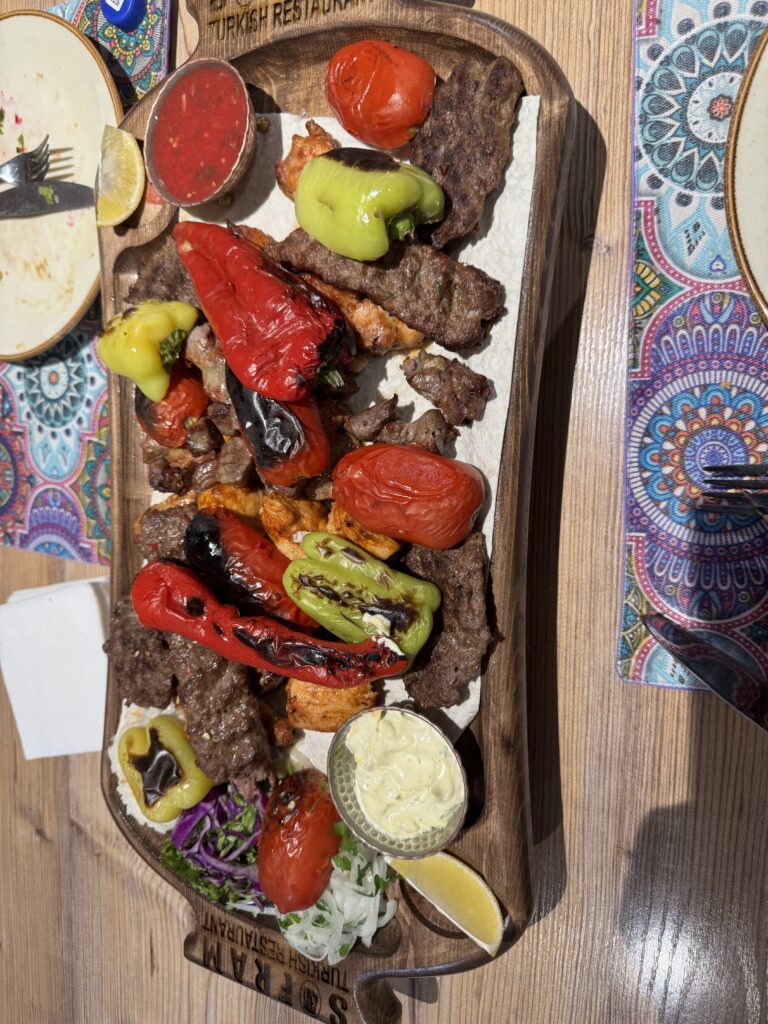
Lunch was delicious shaslik, bread, salads and baklava.

After lunch, we visited the Shylpyk Dakhma, also called the “Tower of Silence” — a striking ancient site near Nukus. It dates back roughly 1,500–2,000 years, built by followers of Zoroastrianism, the religion of ancient Persia and Central Asia before Islam.
Zoroastrians believed that the elements — earth, water, fire — were sacred and must not be polluted by corpses. So instead of burial or cremation, they practiced sky burials: bodies of the dead were placed on top of towers like Shylpyk, exposed to the sun and scavenger birds. Once only bones were left, they would be collected and placed in ossuaries (small containers) or buried in special pits. This way, the dead did not “contaminate” nature.
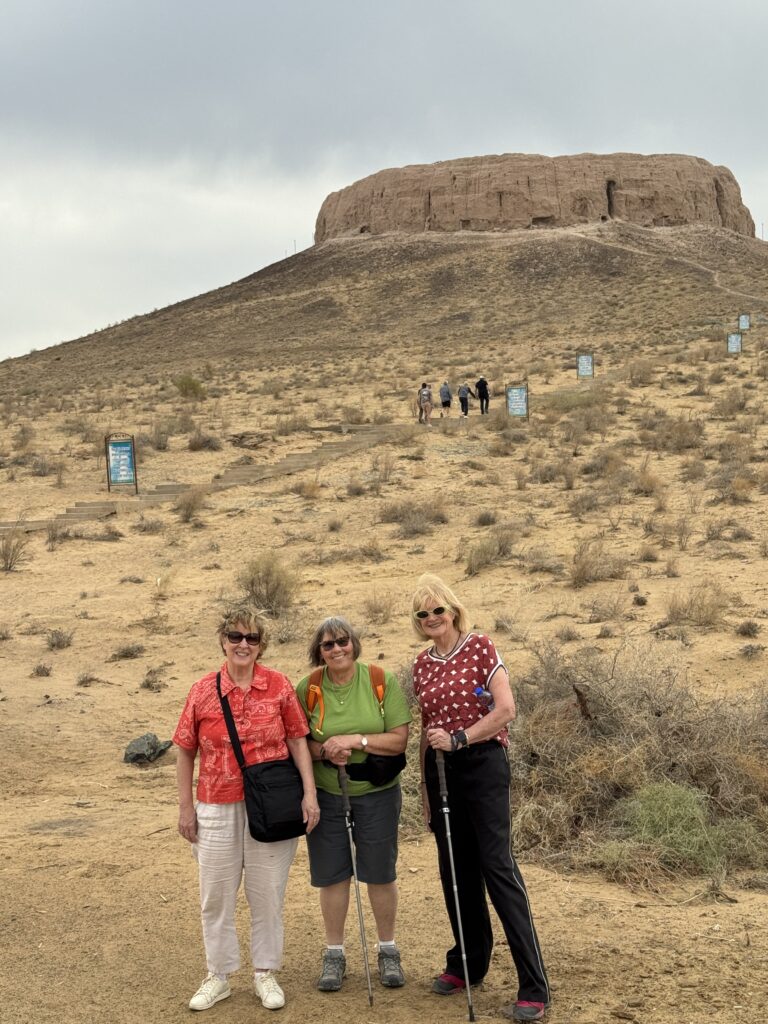
Shylpyk’s location is dramatic: it sits on an isolated plateau, with sweeping views over the desert and the Amu Darya.
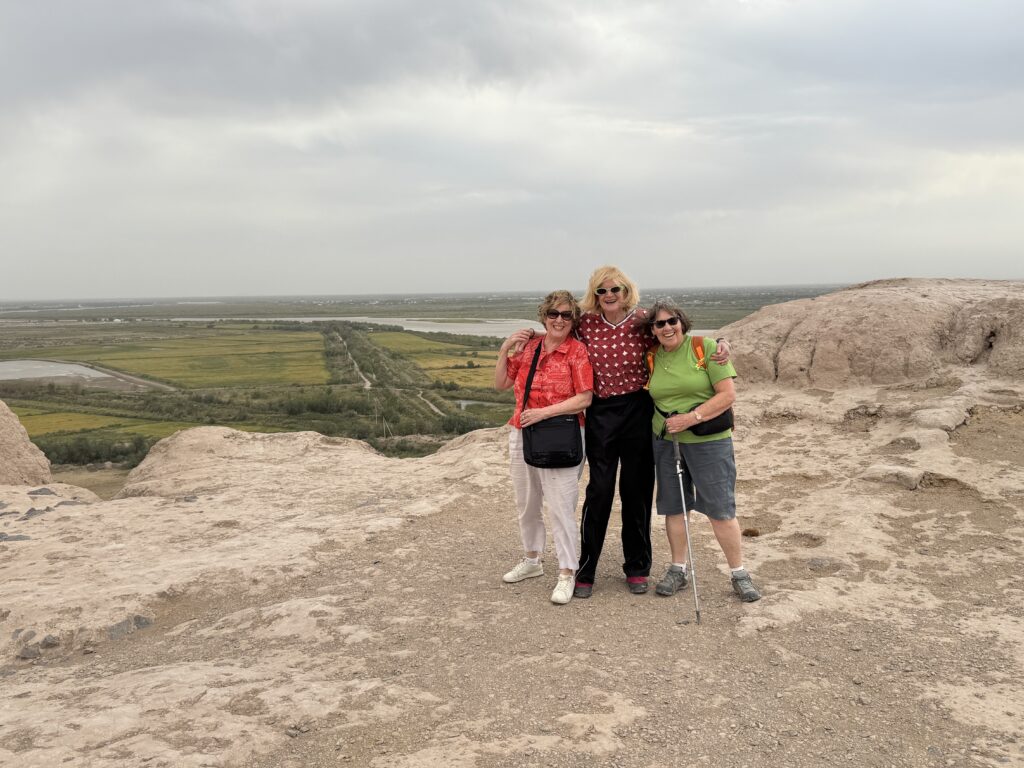
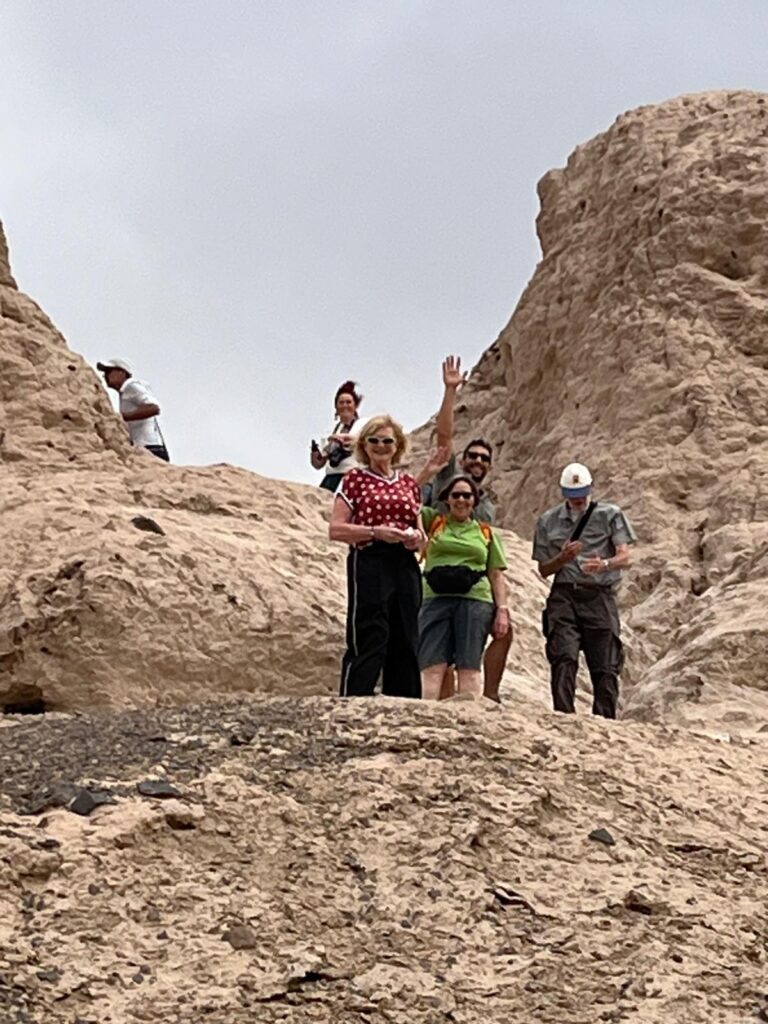
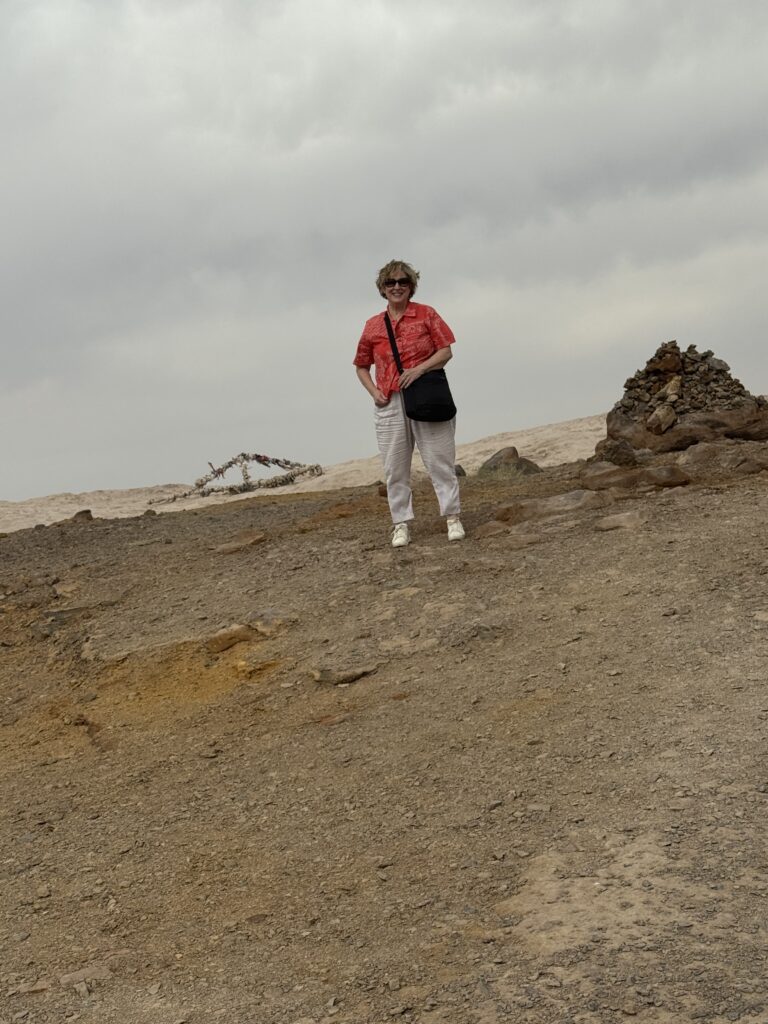
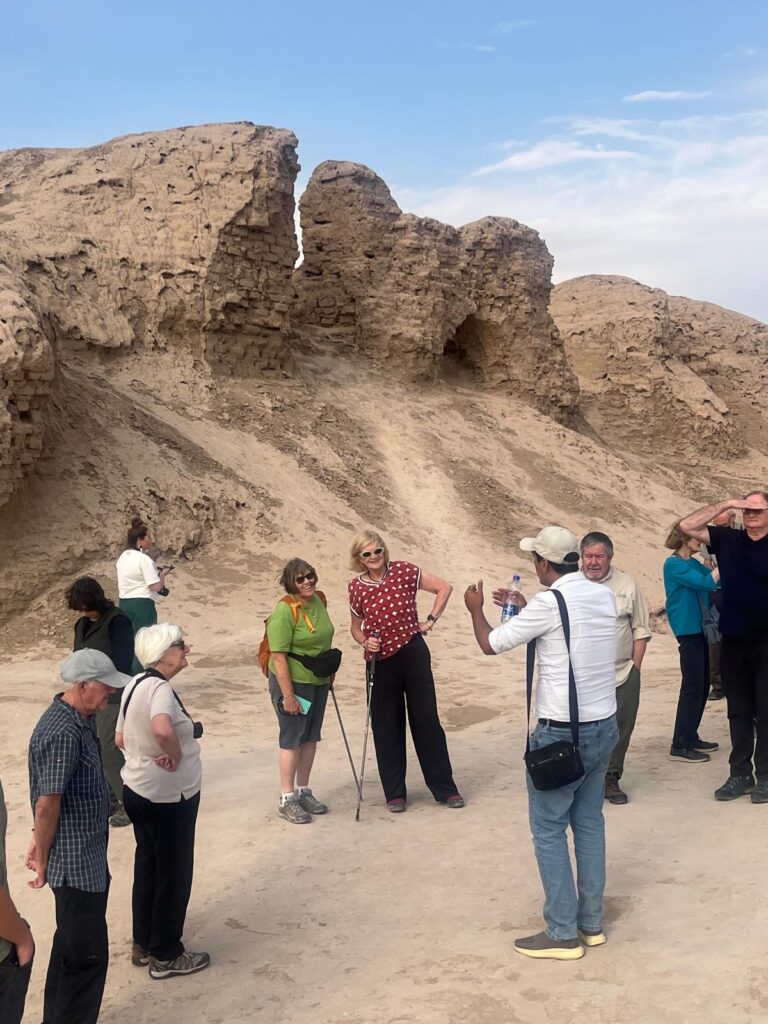
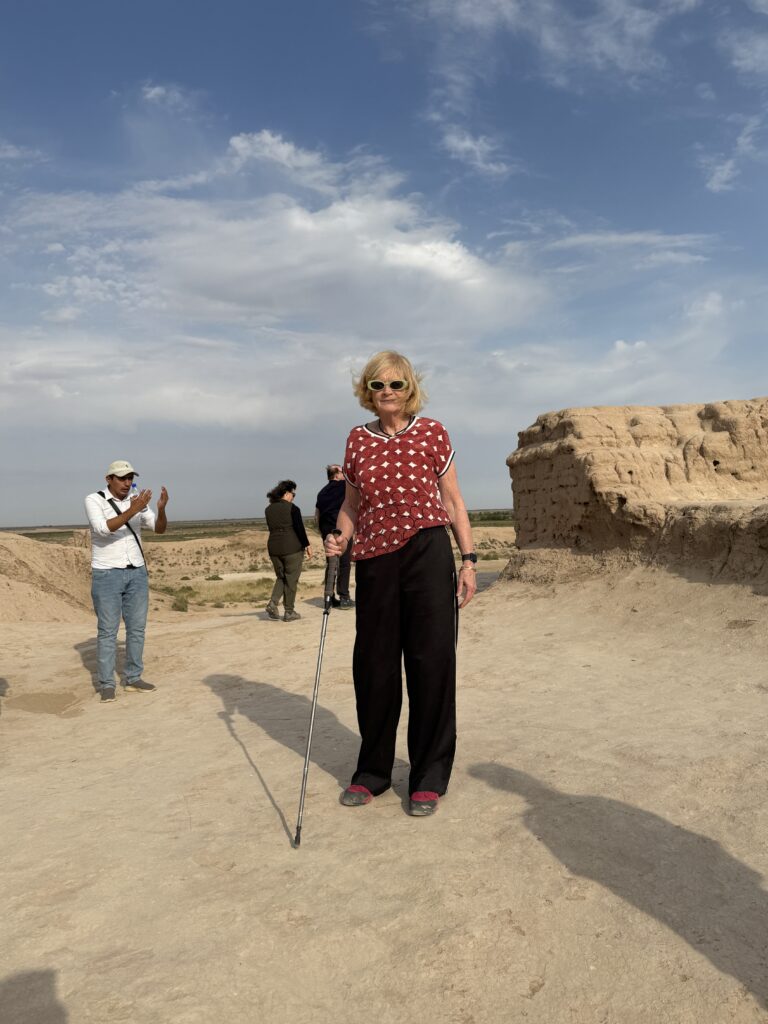
We then visited Tuprak Qala which means “Clay Fortress” in Uzbek. Built in the 2nd century AD, during the rule of the Khorezm kings. Tuprak Qala wasn’t just a fortress — it was a royal residence and administrative centre, and a caravanserai. The site covers a huge area and was enclosed by massive mud-brick walls with towers and gates. Inside were palaces, temples, storerooms, workshops, and residential quarters.
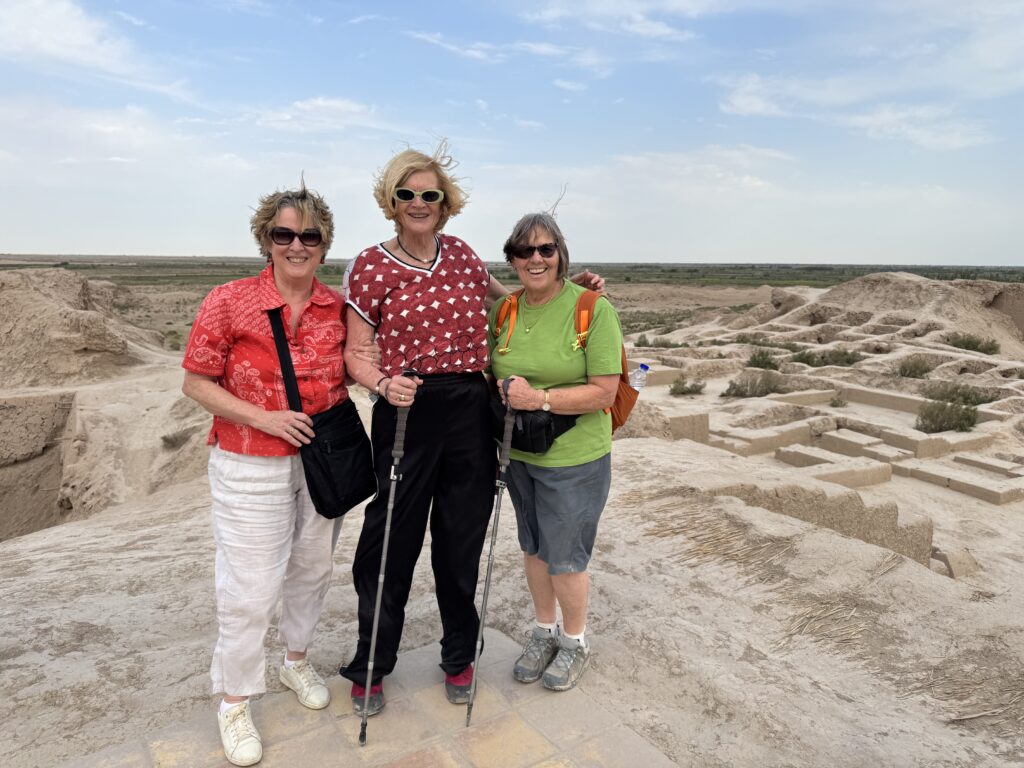
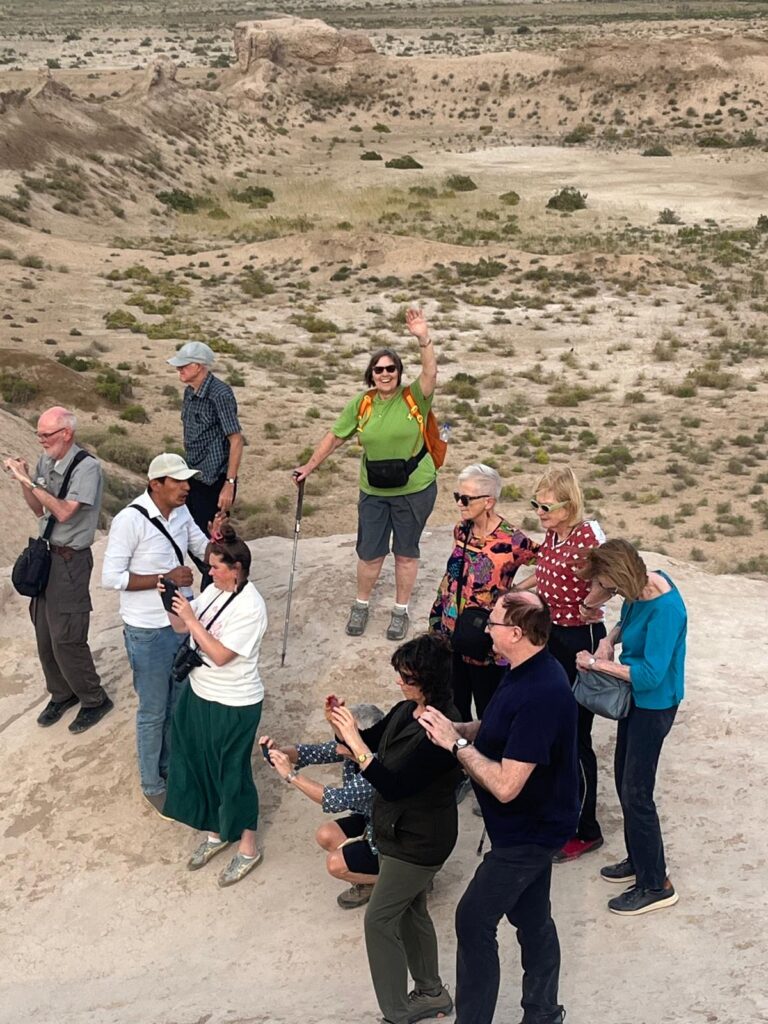
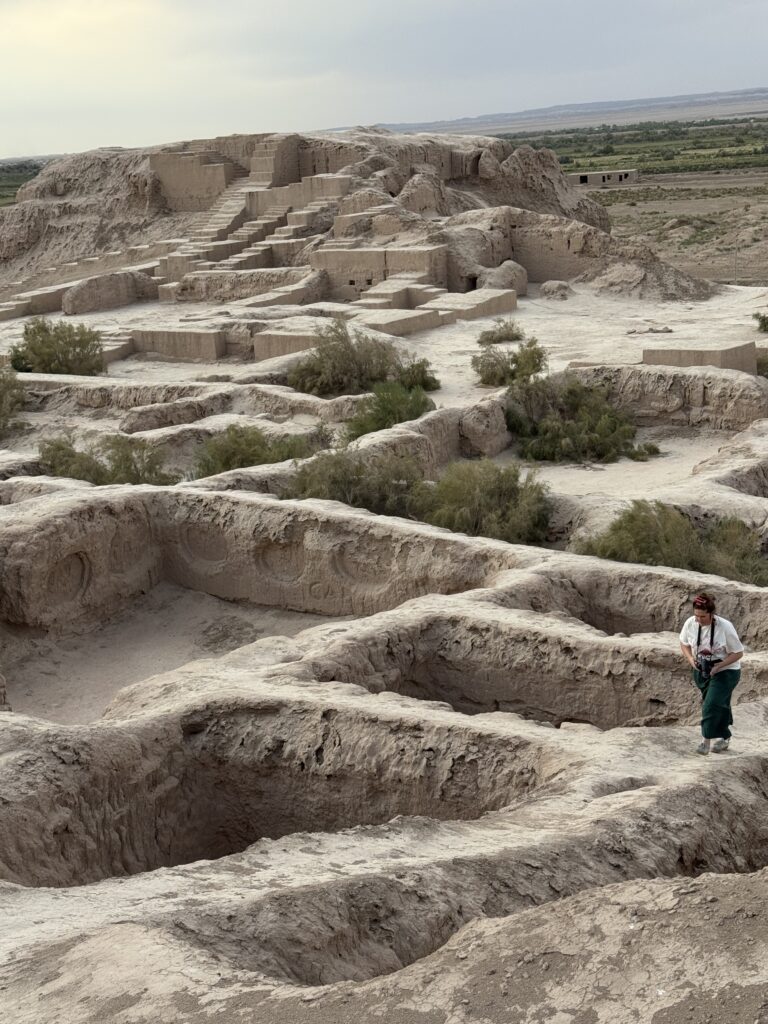
Tuprak Qala flourished for several centuries but was abandoned around the 6th century, possibly due to political shifts, wars, or the movement of the Amu Darya river (which often changed its course and made areas uninhabitable). After that, the fortress slowly crumbled in the desert winds.
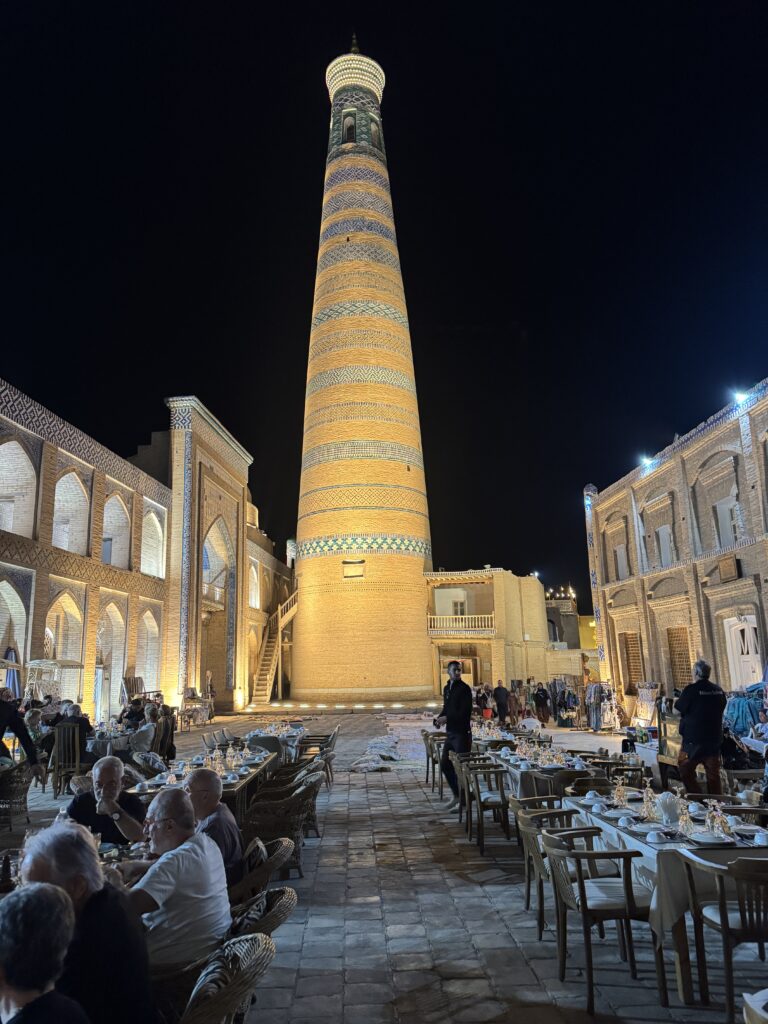
We then drove to Khiva . Khiva feels like stepping straight into a storybook city from the Silk Road.
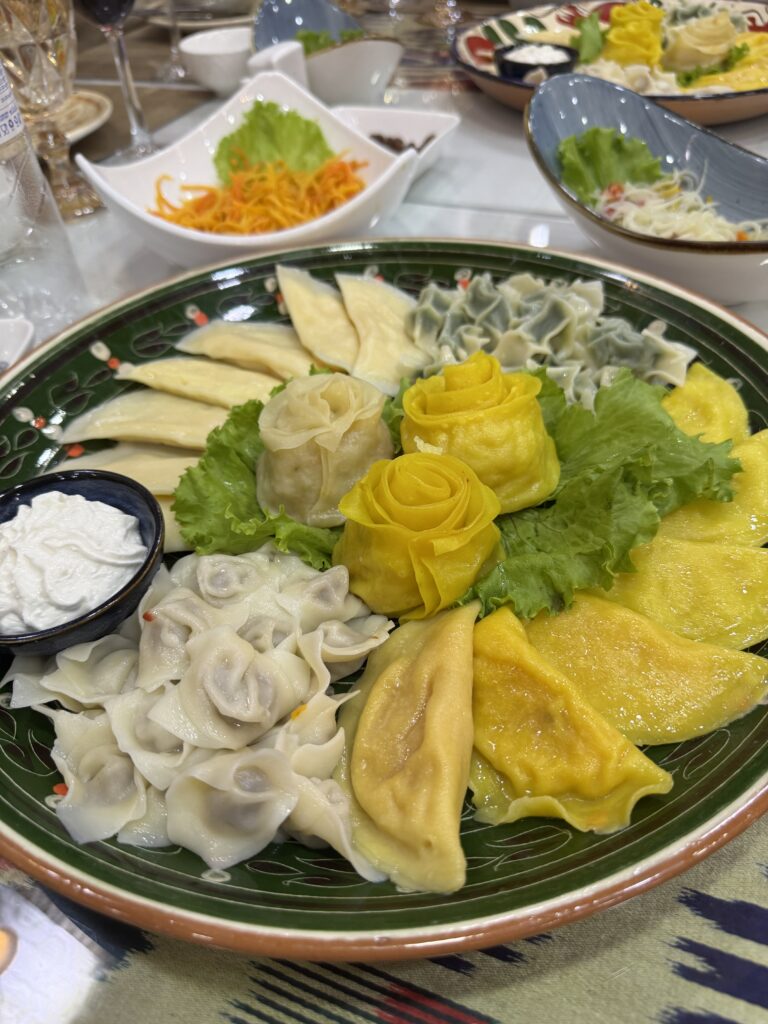
It’s tucked away in western Uzbekistan, in the region of Khorezm, and is famous for its perfectly preserved old town — Itchan Kala — which is a UNESCO World Heritage site. The city is enclosed by high mudbrick walls, dotted with turquoise-tiled minarets, carved wooden doors, and quiet winding alleys. And our hotel is within the city, and tonight’s dinner was bread, salad and an amazing array of dumplings.
Comments
3 responses to “Can the Stans handle the Merck girls”
Looks amazing – how is the weather – where are your hats?
Wow! Information overload! Amazing blog Sar 👏👏
Looks like you have all got caught in a bit of “desert winds”! :)). This is really an info filled trip for such a small place. And, of course, the food!! Happy travels :)) xxx