
September 30: Samarkand
Amir Temur — also known in the West as Tamerlane (1336–1405) — was a 14th-century conqueror from Central Asia, born in Uzbekistan.
He rose from a local noble family to become one of history’s greatest military strategists, creating a vast empire that stretched from India to the Mediterranean. Temur saw himself as the restorer of the Mongol Empire and often invoked Genghis Khan’s legacy, though he was never a direct descendant (although he married a relative of Genghis).
His capital was Samarkand, which he transformed into a glittering cultural and intellectual centre filled with stunning architecture. Despite the brutality of his campaigns (he used terror as a weapon of control and deterrence), he is remembered in Uzbekistan as a nation-builder and patron of the arts.
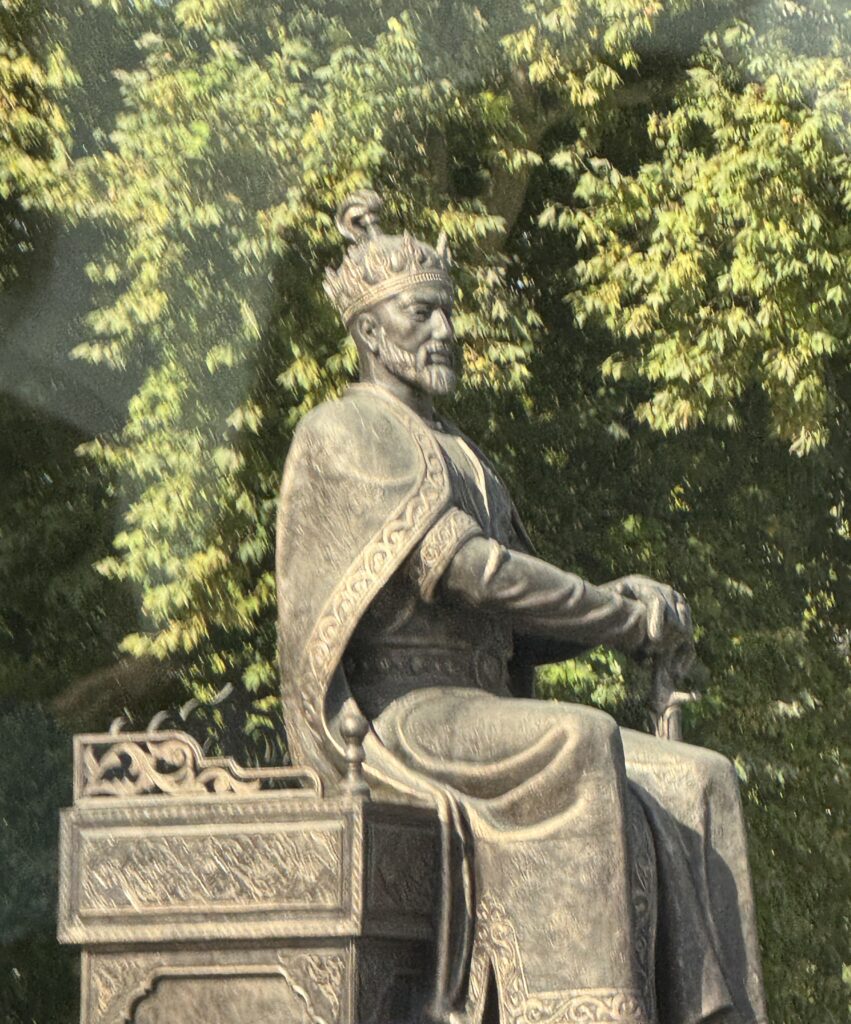
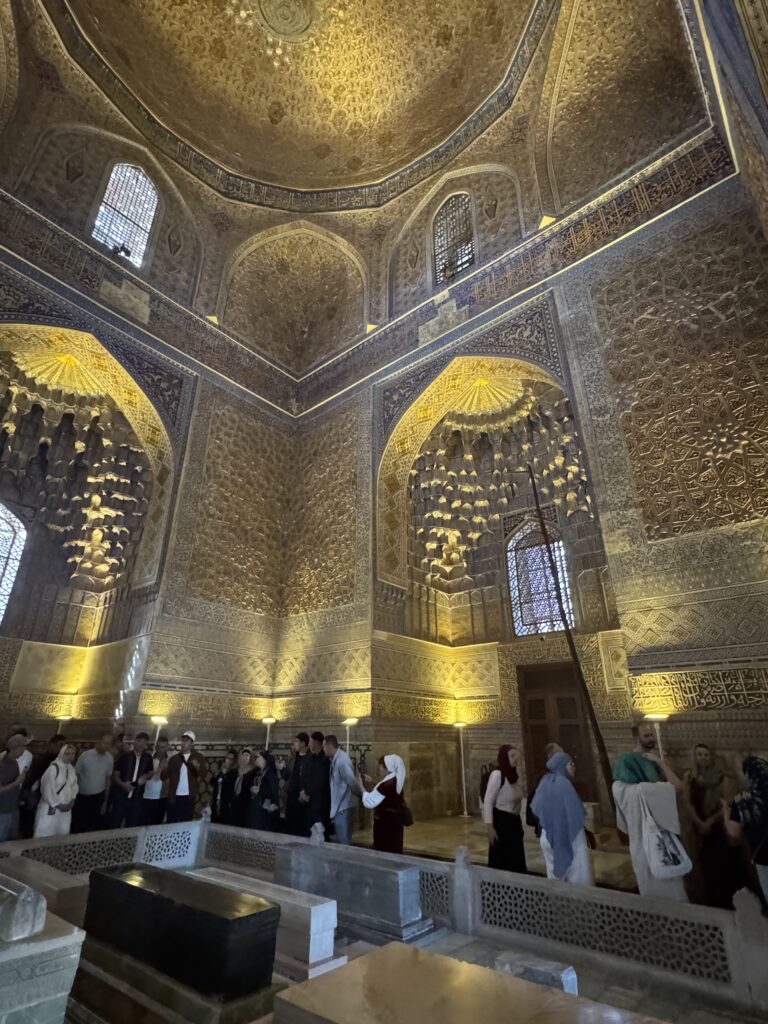
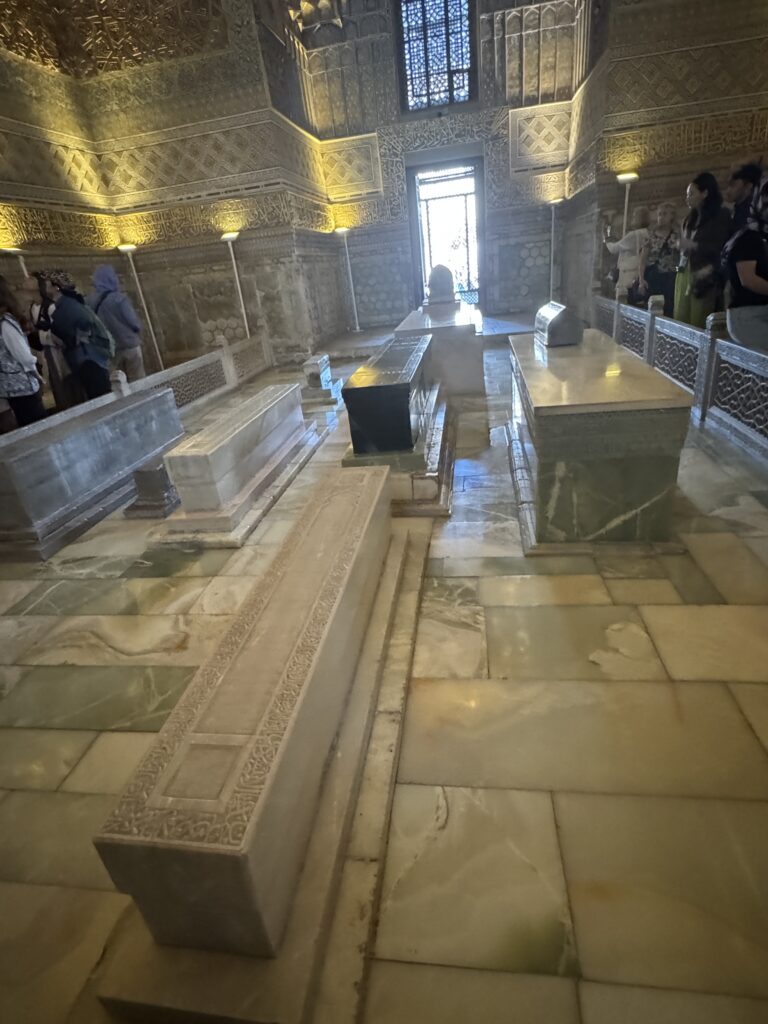
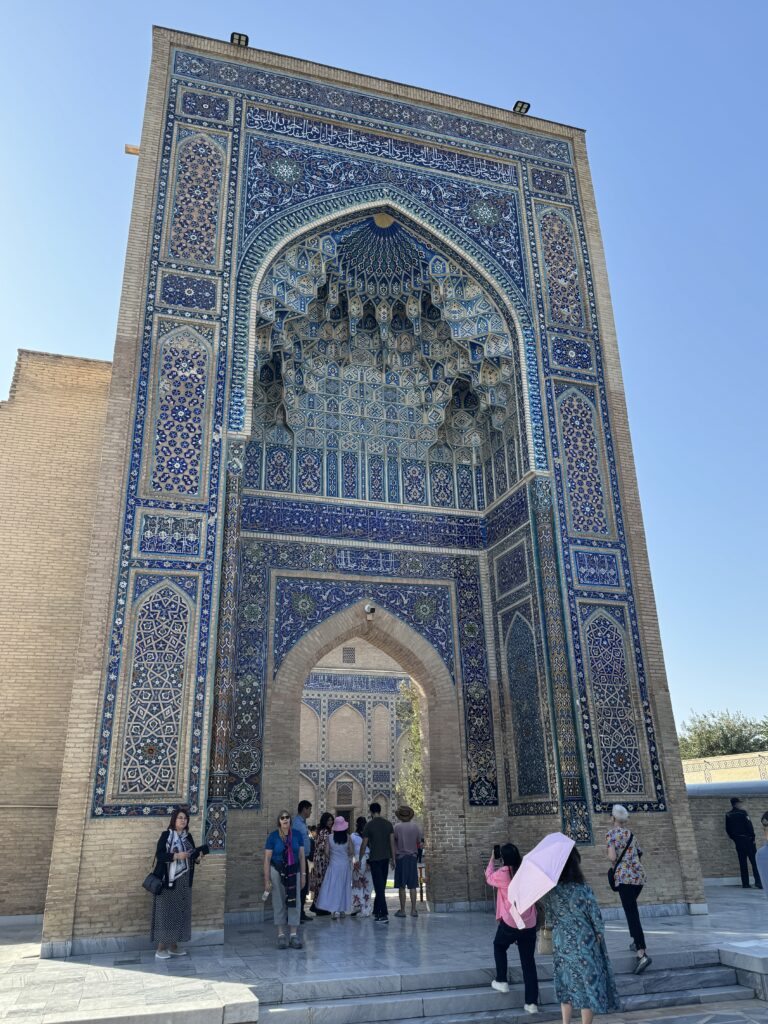
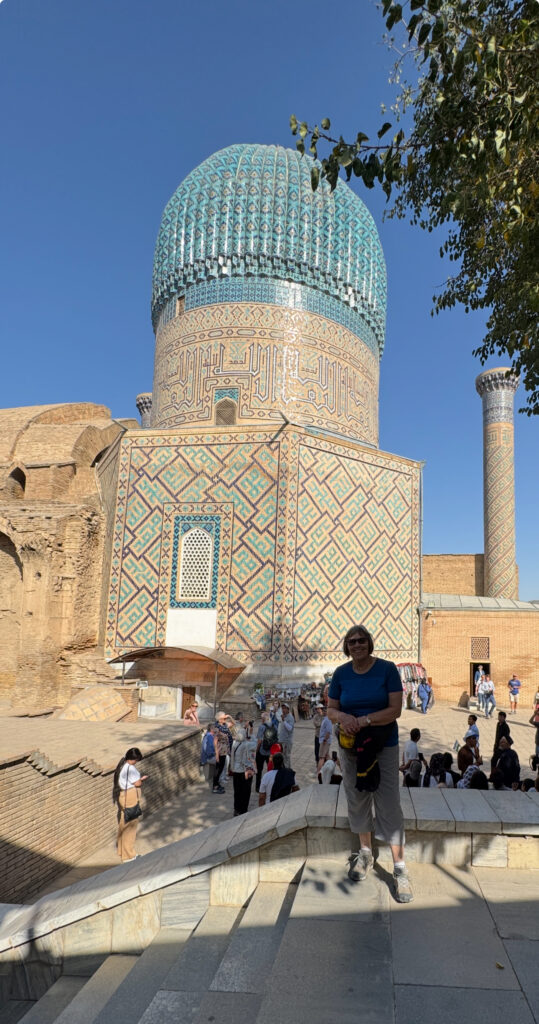
We saw much of that stunning architecture today, starting with his mausoleum. The mausoleum contains his tomb (the black one) as well as the tombs of his sons and grandson, Mirzo Ulugbeg who succeeded Temur.

Next stop the Registan which is regarded as one of the most magnificent squares in the Islamic world — and the heart of Amir Temur’s imperial city. The name Registan means “sandy place” or “desert”. In Temur’s time (late 14th century), the area served as a public square where royal proclamations were made and troops gathered.
We shared the viewing moment with a group of students who wanted to practice their English!
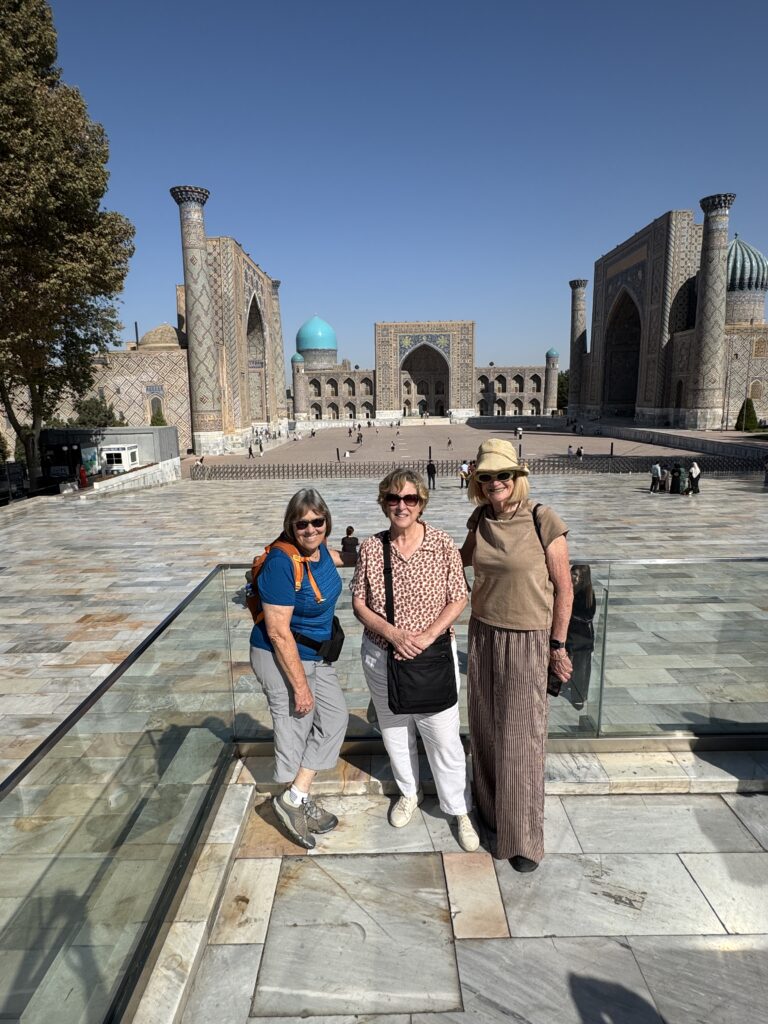
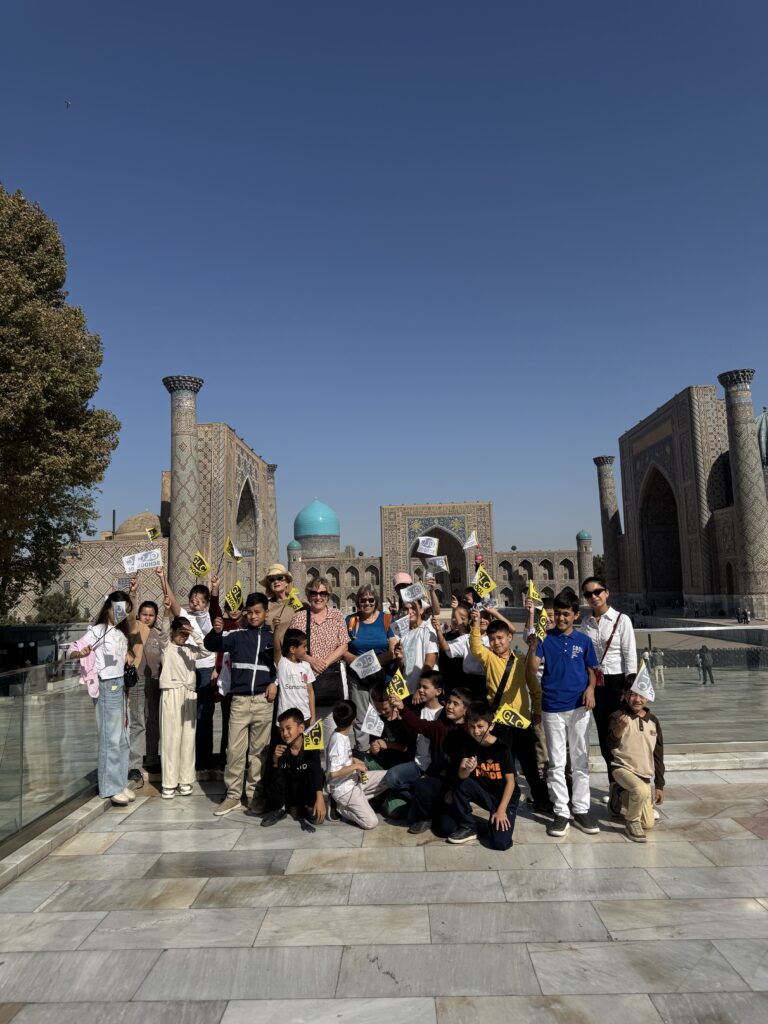
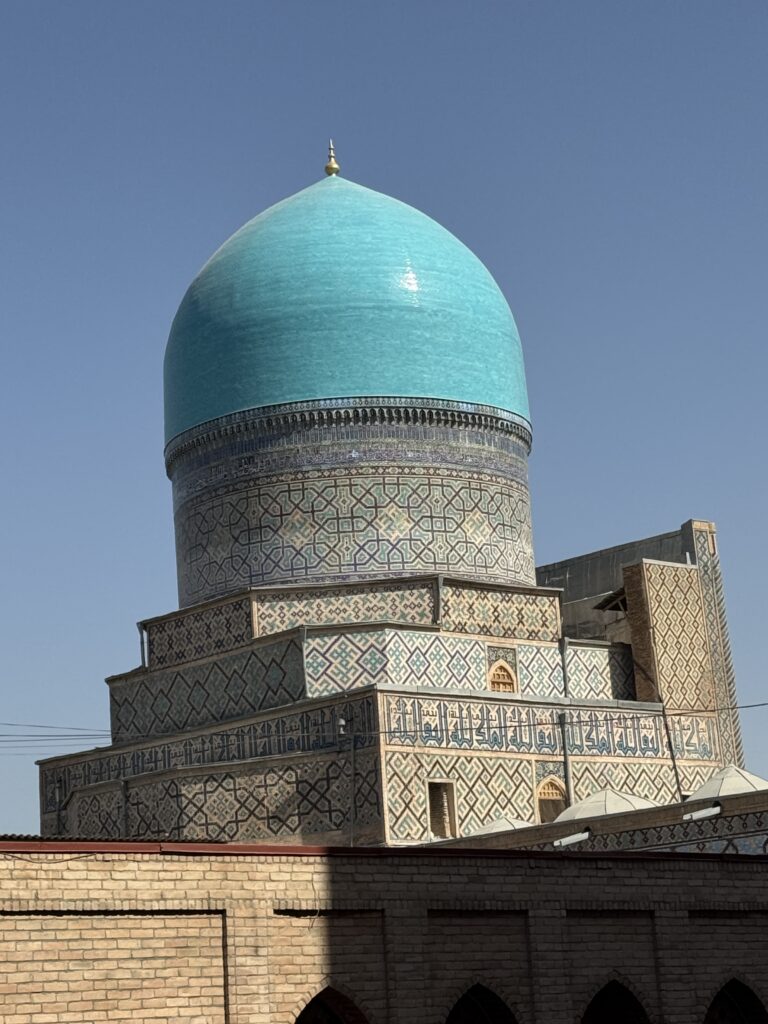
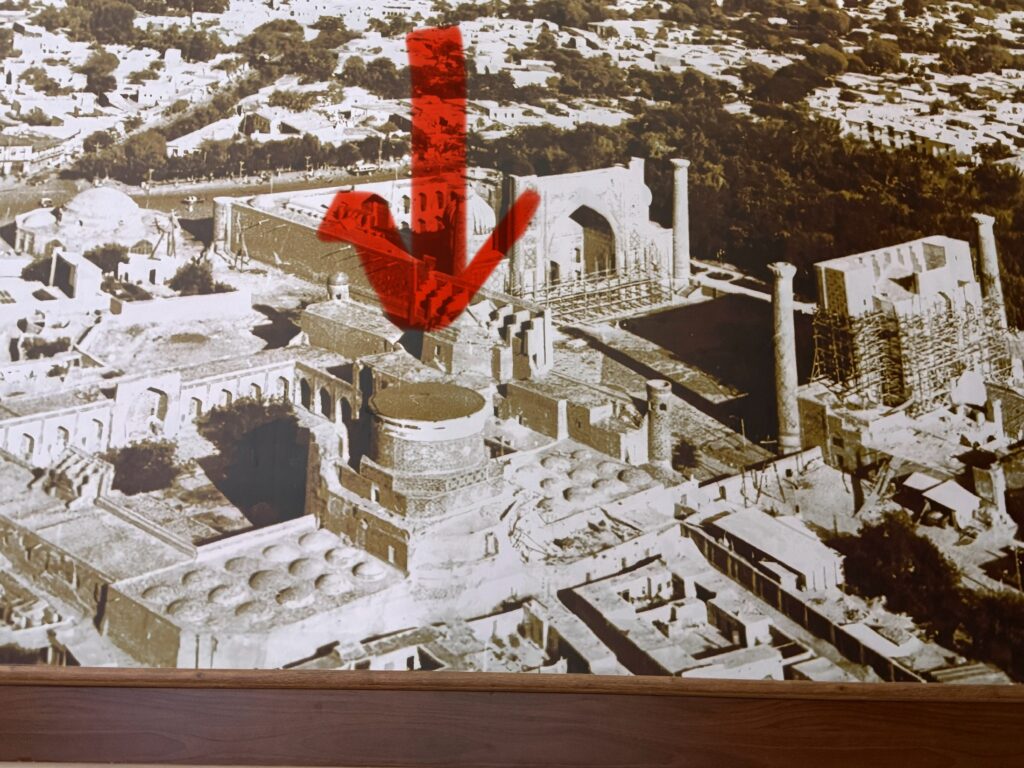
The grand madrassahs (Islamic colleges) that now frame the square were built later by his successors, especially in the 15th–17th centuries. The first one, the Ulugbeg Madrassah was built by Temur’s grandson. Its portal is decorated with deep blue tiles and star patterns symbolizing the cosmos. When you look up at the dome, it looks like a normal dome, but in fact it has a flat roof, as the picture pre-restoration shows you.
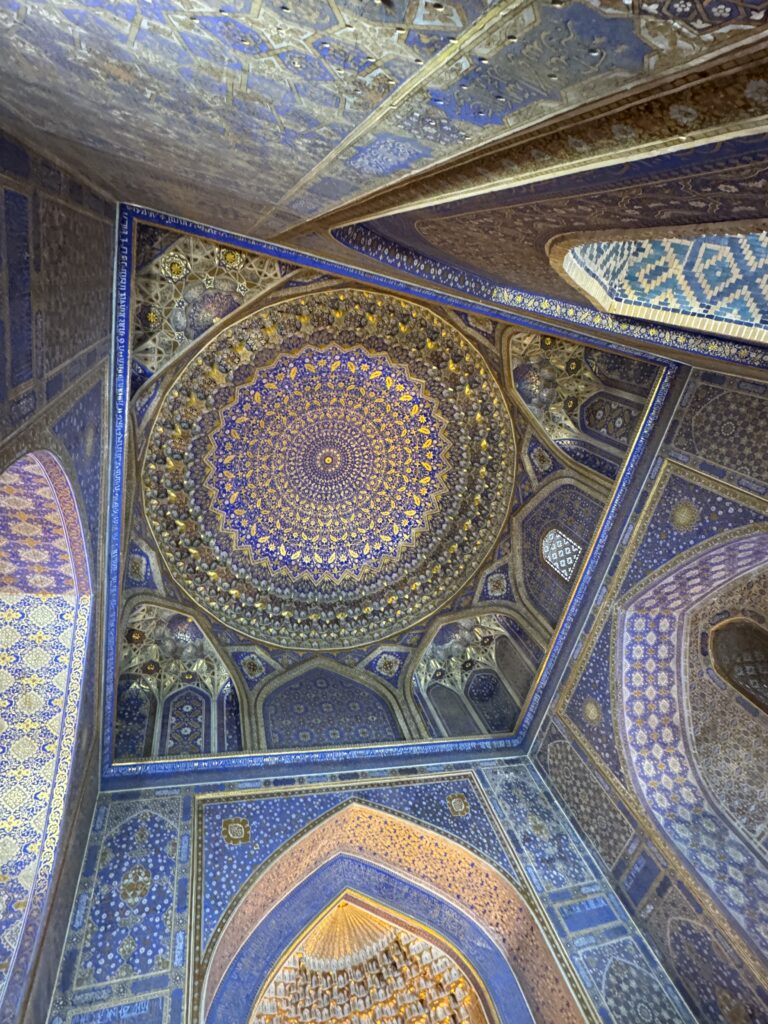
The “Lion-Bearing” madrassah features bold tilework with tigers chasing deer beneath a rising sun, a striking departure from Islamic tradition (which avoids depicting humans or animals). This was to show the creative freedom of the regime.

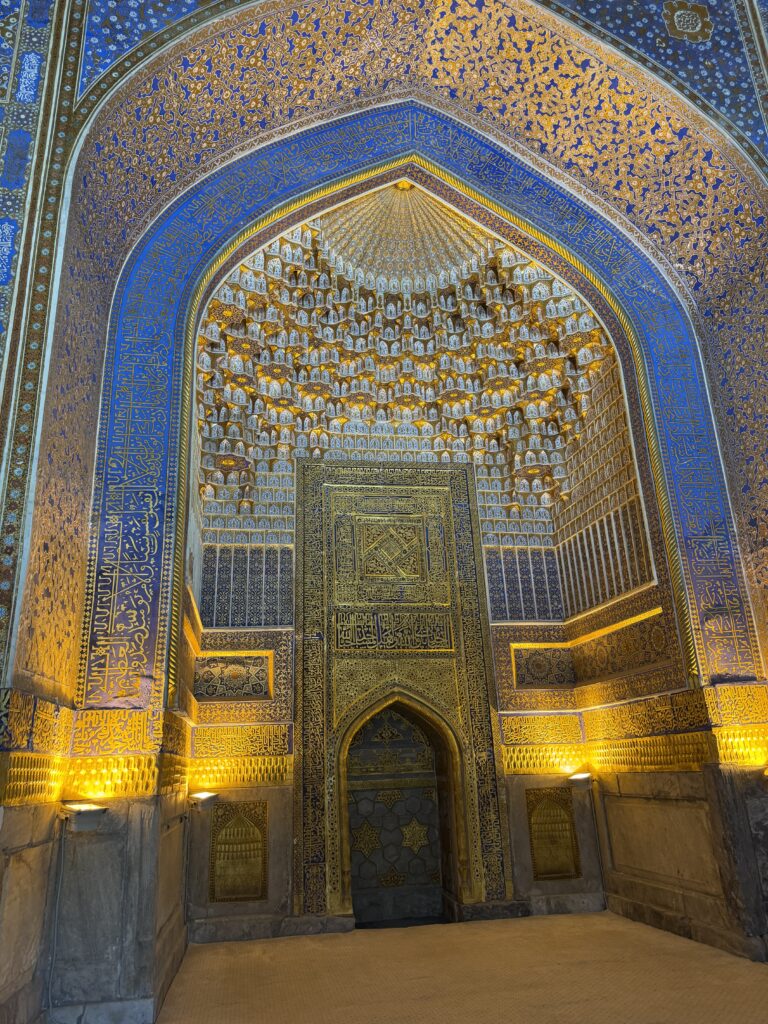
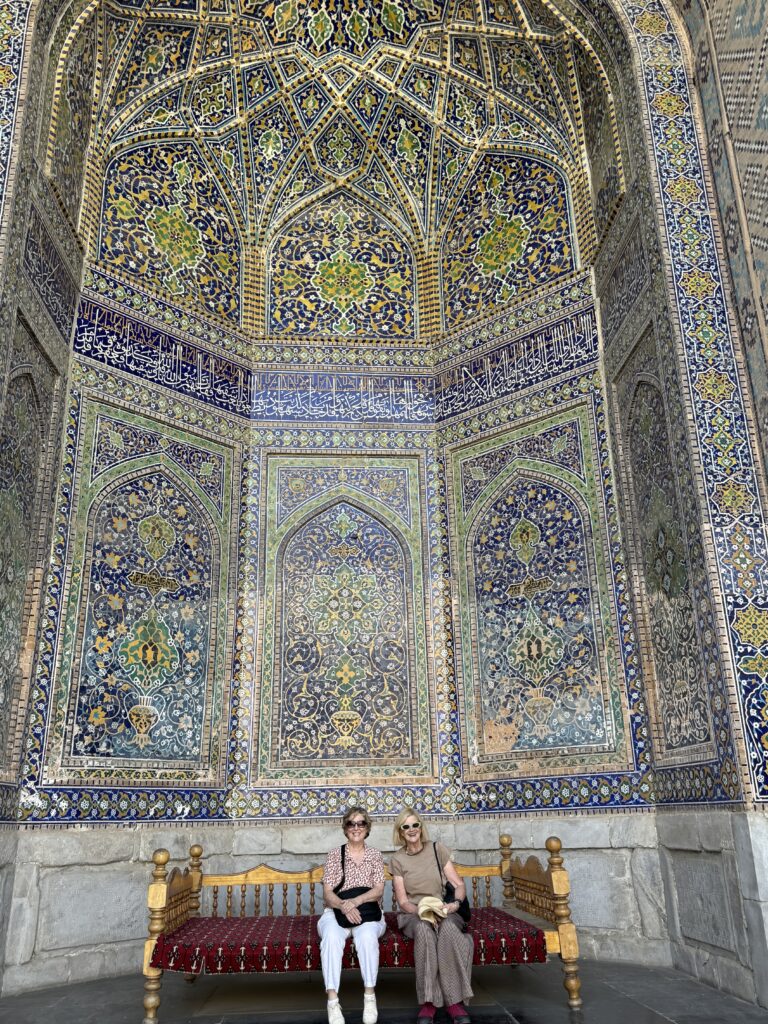
The Tillya-Kari Madrassah, meaning “Gold-Covered,” served both as a college and mosque. Its interior glitters with gold leaf.
The Bibi-khanym mosque was named after the oldest wife of Amir Temur and was meant to out-rival everything. It was constructed over 5 years (so very fast) and, among other things, elephants were used for lifting and transporting heavy loads.

The Samarkand Observatory was said to be one of the greatest scientific achievements of the medieval Islamic world. It was built in the early 15th century by Ulugbeg – the brilliant grandson of Amir Temur, who also ruled Samarkand for 40 years.

Constructed around 1420, it was a three-storey circular building, about 46 meters in diameter, housing a huge sextant (an arc for measuring star positions). The sextant’s radius was about 40 meters, built partly underground and aligned perfectly with the meridian for precise observation. Ulugbeg and his team calculated the length of the year to within seconds of the modern value, and also observed the sun, moon and other celestial bodies. The observatory was discovered at the beginning of the 20th century.
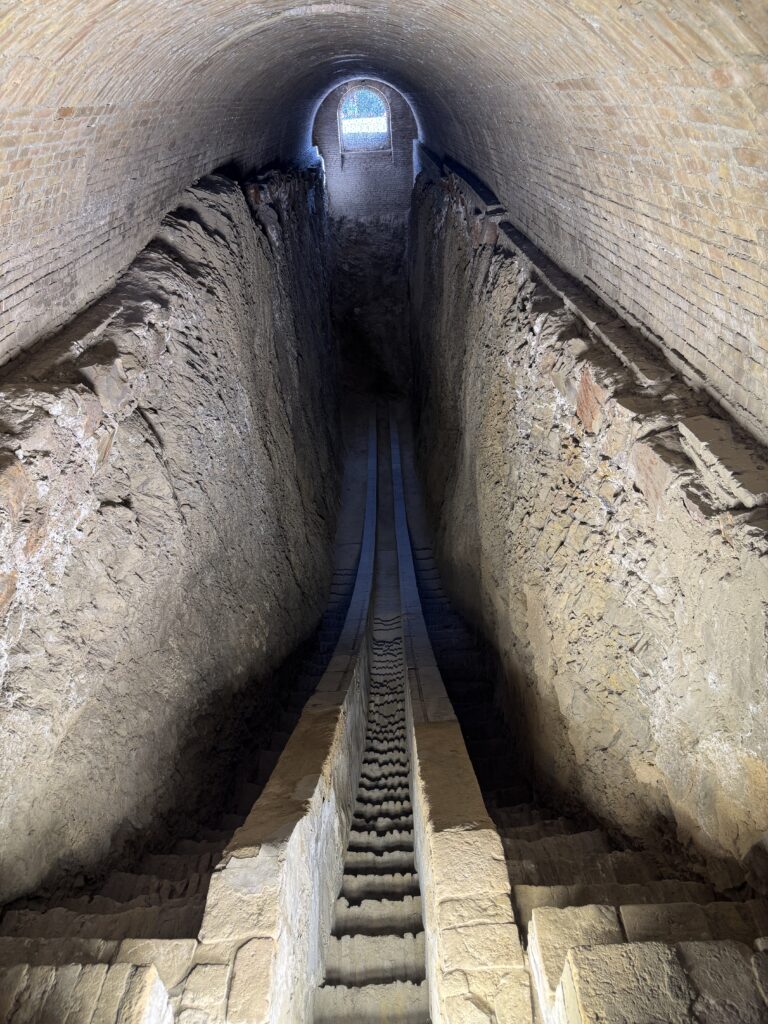
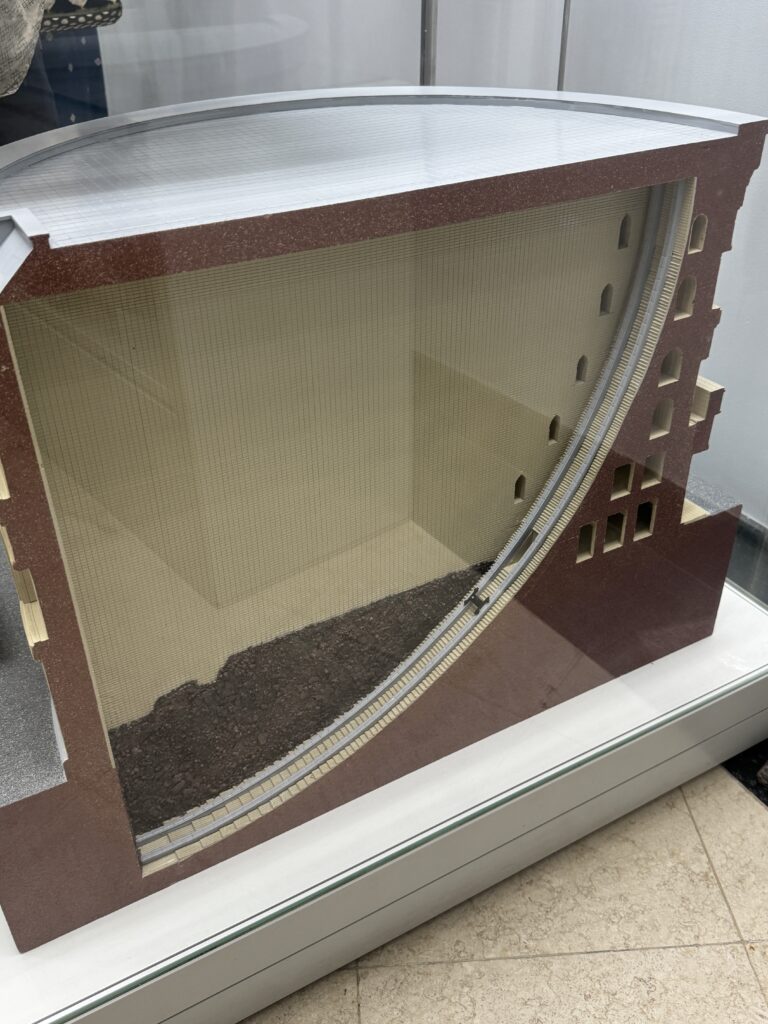
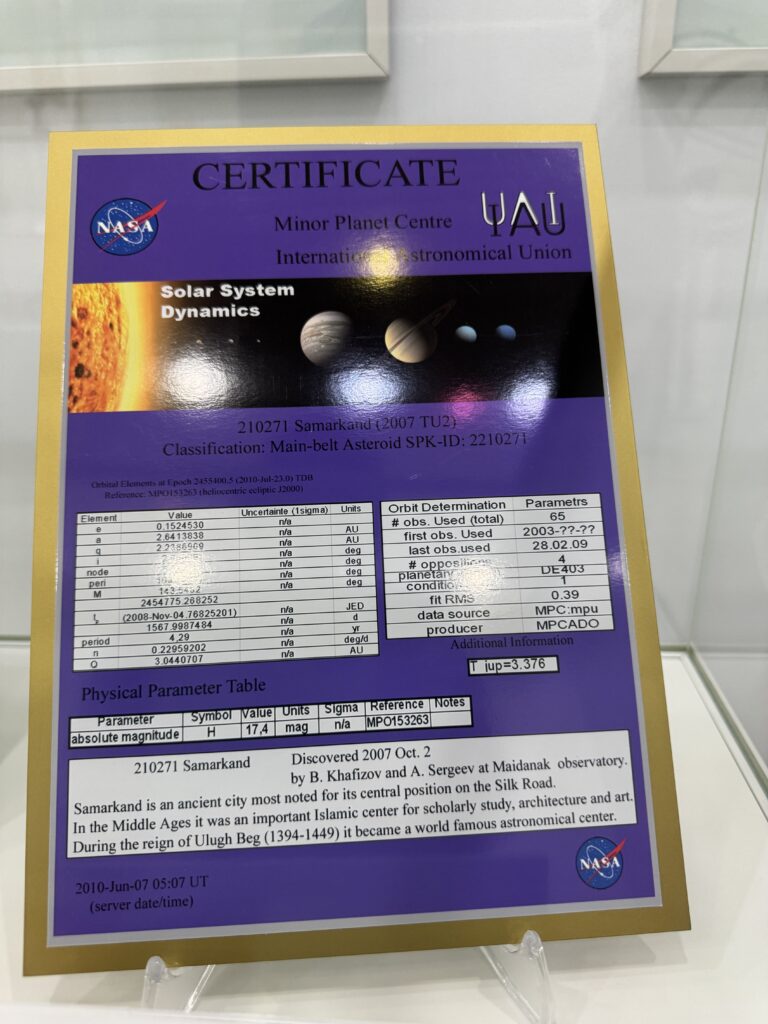
Interestingly, Ulugbeg has left a space legacy to Uzbekistan. They have discovered 5 minor planets and have one of the unique astronomical facilities in the world. And if you want to know what you receive for discovering a planet, check out the certificate below.
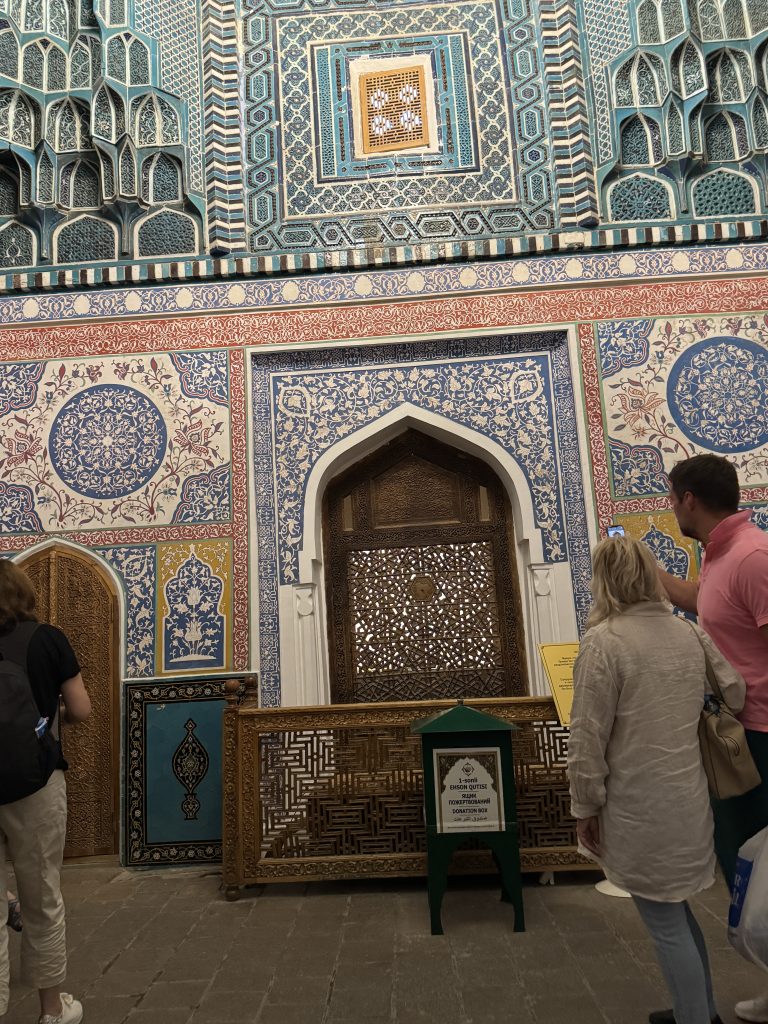
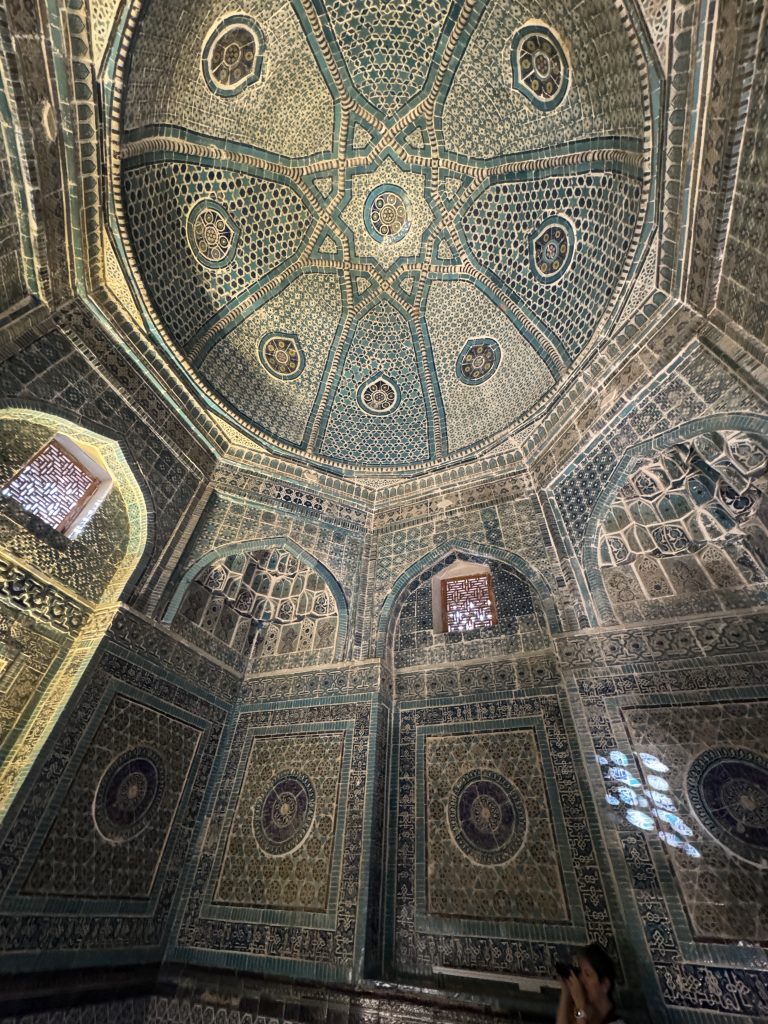
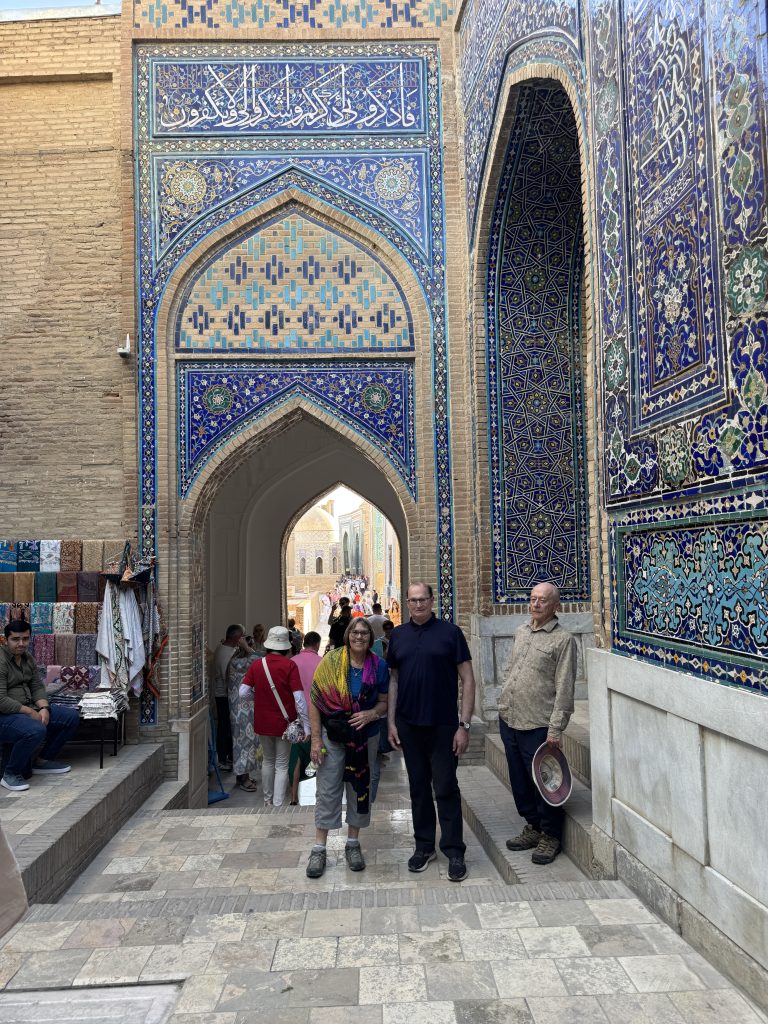
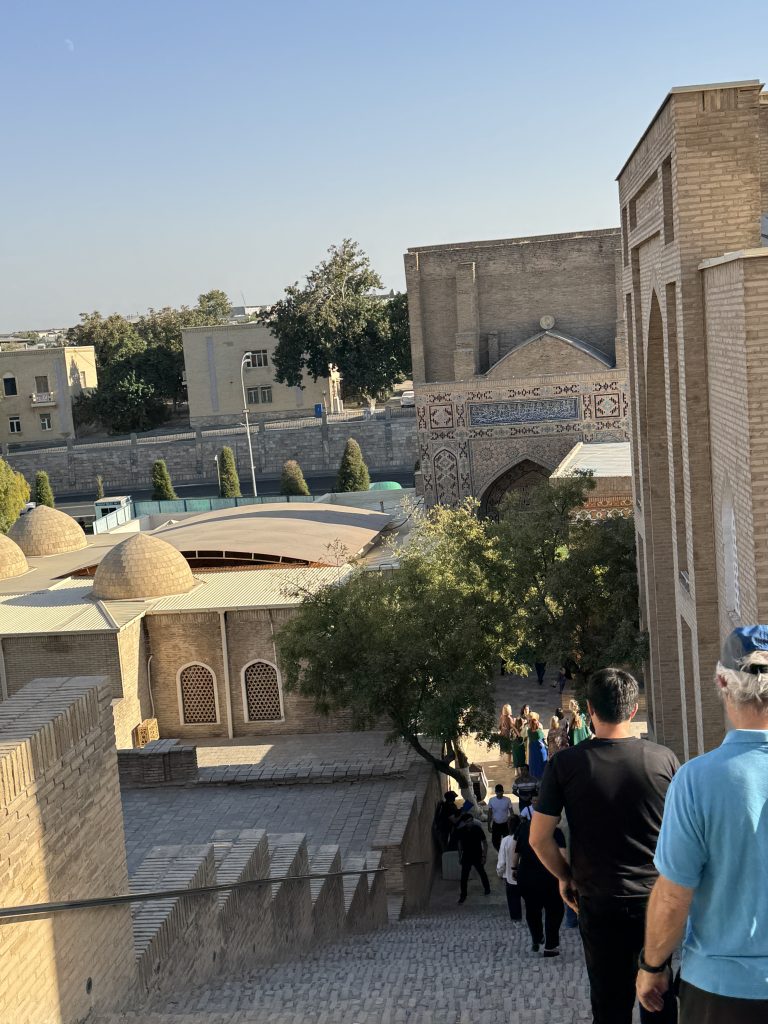
Final visit for the (very long) day was the Shahi-zinda necropolis.
This necropolis is on the slope of the Afrosiab hill (which itself is the site of an ancient settlement) and is a long, narrow avenue of turquoise-tiled mausoleums climbing up a hillside. Its name means “The Living King”, and it’s both a royal burial ground and a place of pilgrimage.
According to tradition, Shahi Zinda (“King Alive”) refers to a cousin of the Prophet Muhammad, who is said to have brought Islam to the region in the 7th century. Legend holds that he was martyred here — but did not die, instead descending alive into an underground paradise. His shrine became the spiritual heart of the complex.
The other mausoleums built in the 14th and 15th centuries house the female relatives and nobles of Amir Temur’s family — his sisters, nieces, and other court members.
Comments
4 responses to “Can the Stans handle the Merck girls?”
Stunning mosiacs love all the colours
Magnificent structures! And such vivid colours
Great info Sar xxxx
Love the photo’s – looks like an amazing journey through time. Send more photo’s of your meals. Have you been to any more markets? Can you use your credit card – or need local currency ?
The architecture is fantastic. Photos great Sar. Info so interesting. Xxoo