
Sept 19: The Aral Sea
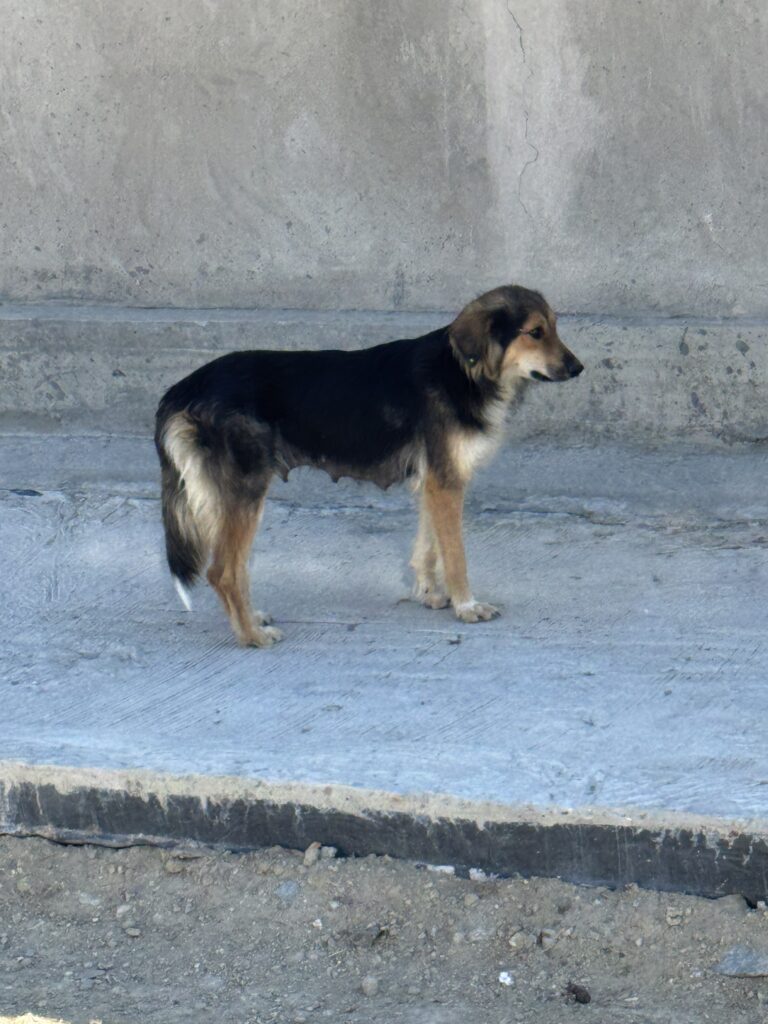
Well we saw four dogs today, so I think they don’t eat the dogs (or the cats!) And the food is really nice. I’m not a tomato lover but the tomatoes are really delicious as is all the fruit and vegetables. They eat a lot of bread (much of which is homemade)and meat.
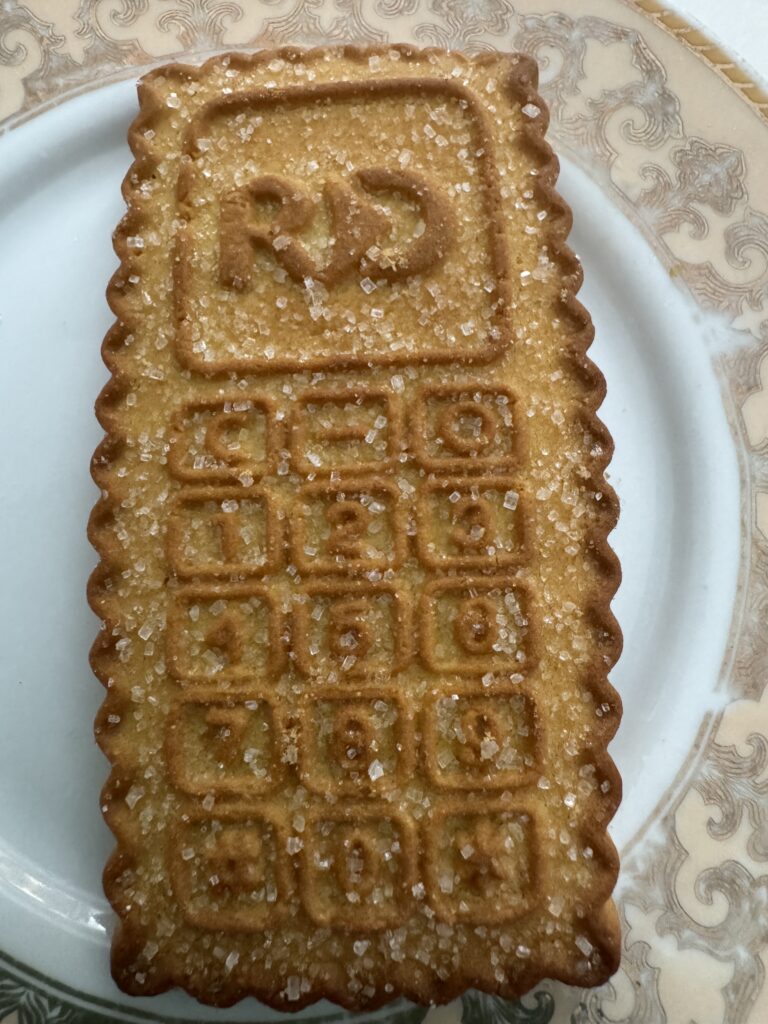
Here’s dog evidence and a very inventive biscuit done like the face of a mobile phone.
Today we took a long bus ride to the Aral Sea
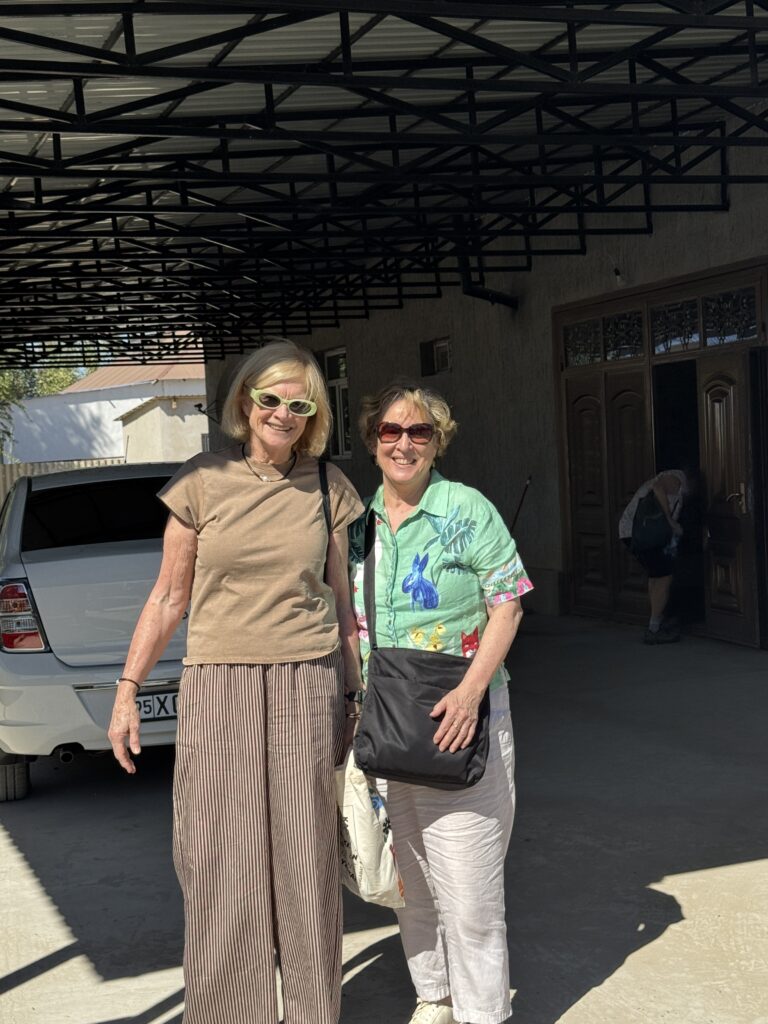
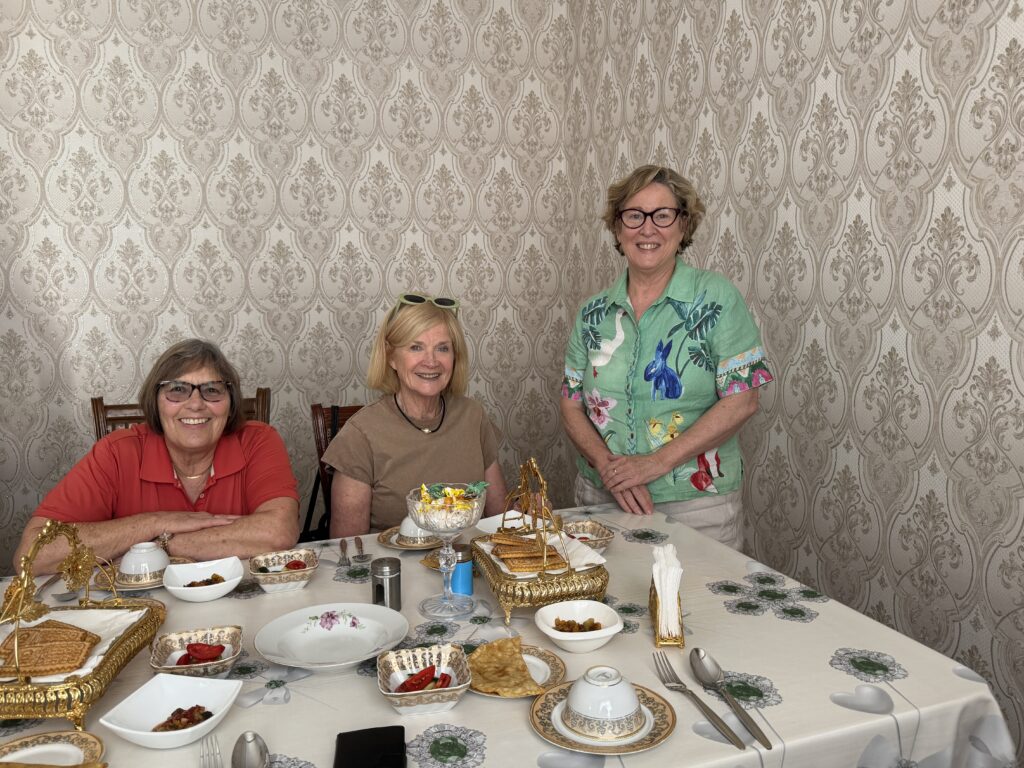
It was about a three hour drive to get there over some very tortuous roads. We stopped for lunch at Muynak in a family home. Lunch was bread, tomatoes, a type of ratatouille, noodle soup, beef stew with potatoes, fresh fruit and biscuits (so you can see that we are not starving).

The story of the Aral Sea is one of those “wow, how did that happen?” moments in modern history.
To give you some context of where the Aral Sea is, here’s a map….
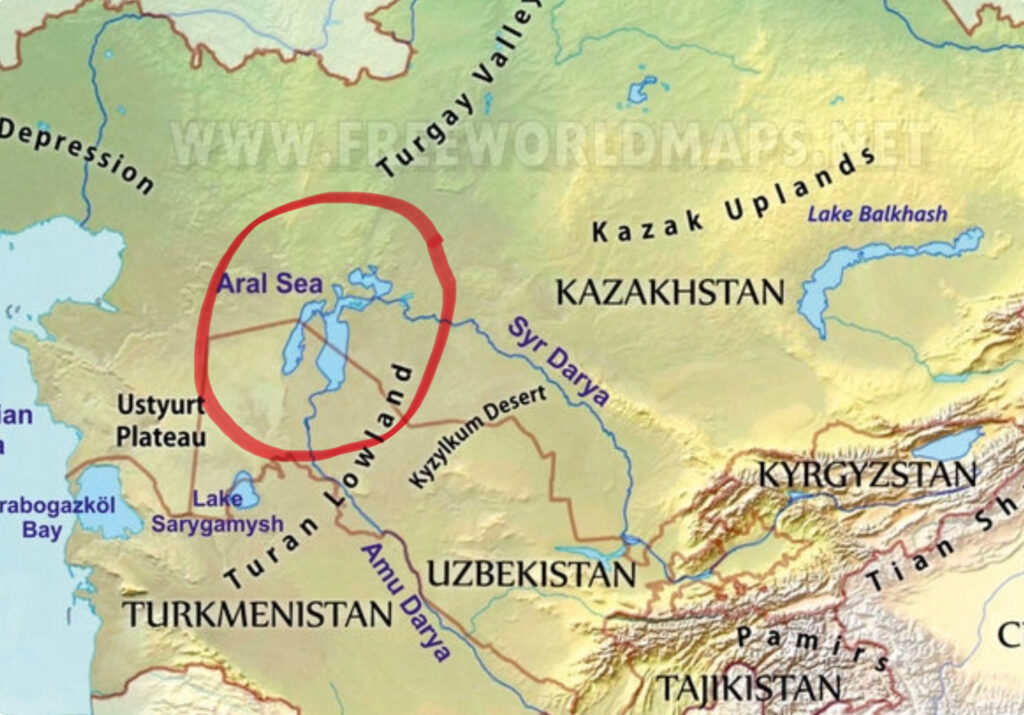
So, picture this: the Aral Sea, sitting between Uzbekistan and Kazakhstan, used to be one of the largest inland lakes in the world. In the 1960s, it was about the size of Ireland, full of fish, supporting whole fishing communities, and even moderating the local climate. People called it the “Sea of Plenty.”
Then came the Soviet era and a big idea—turn Central Asia into the cotton capital of the world. To do that, they diverted the two main rivers that fed the Aral Sea, the Amu Darya and the Syr Darya, into vast irrigation canals. Cotton production boomed, but the sea began to shrink. At first, nobody paid much attention, but by the 1980s it was clear something was seriously wrong: the shoreline was retreating, fishing boats were stranded on sand, and entire towns lost their livelihood.
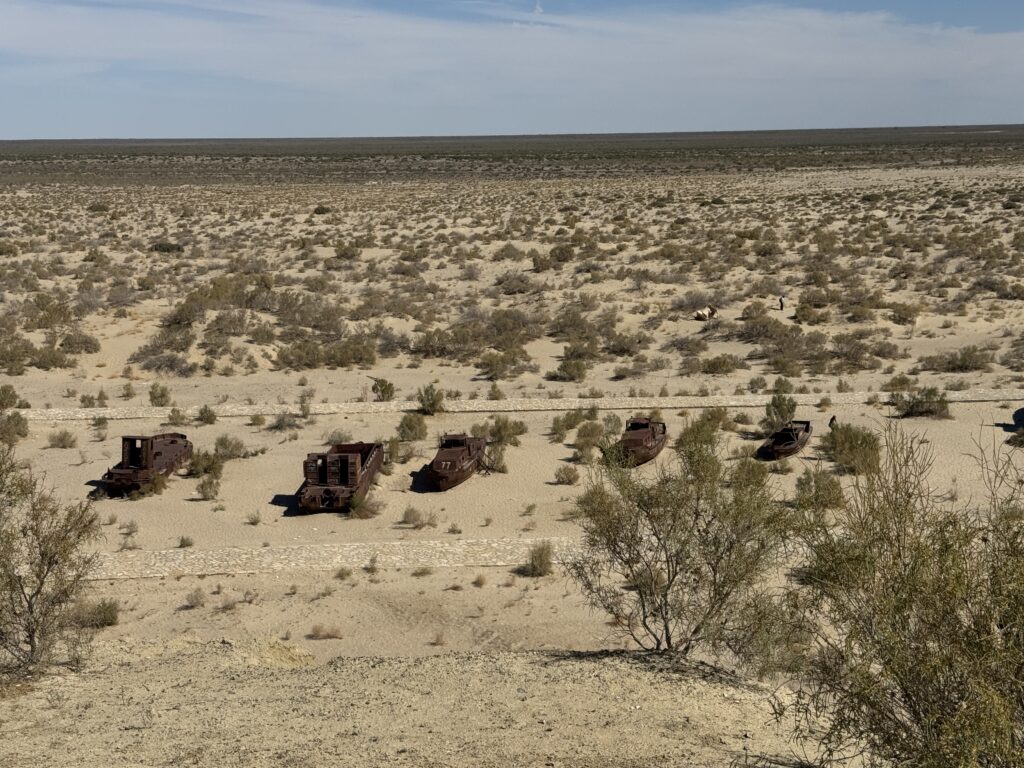
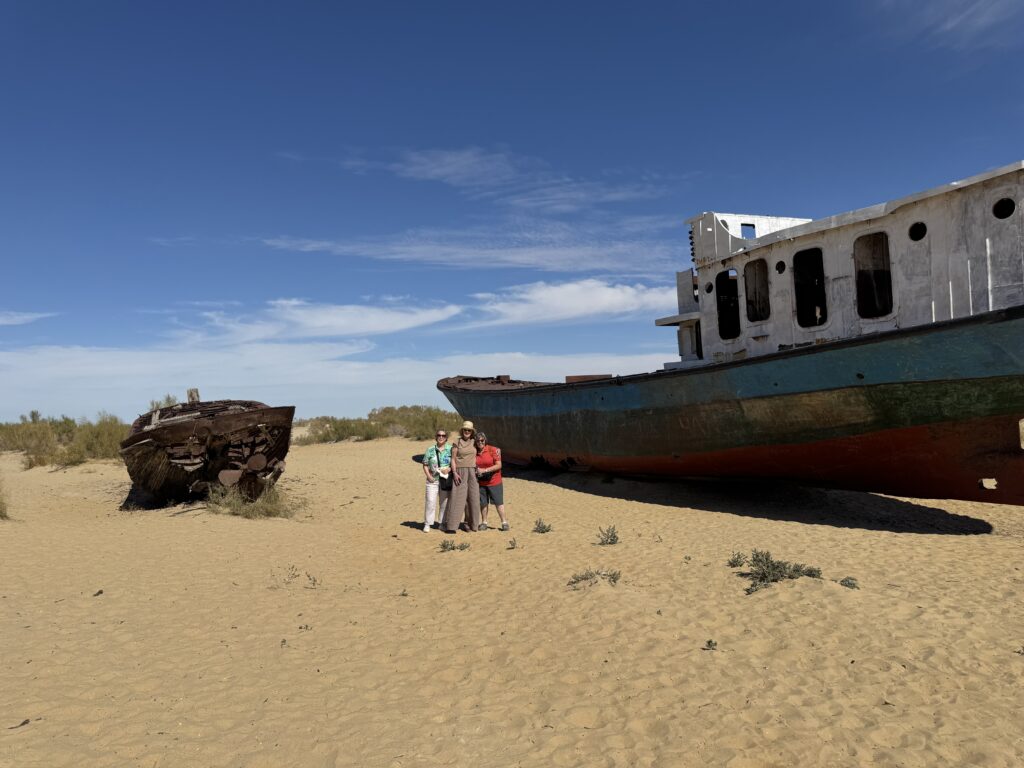
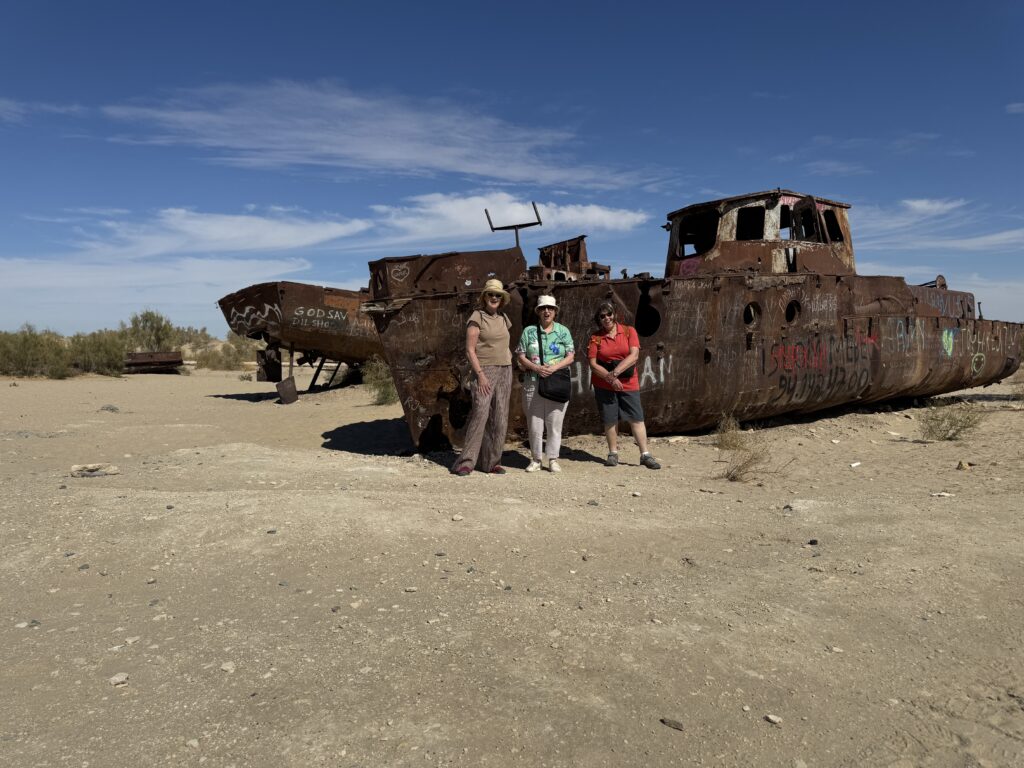
By the early 2000s, the Aral Sea had split into smaller parts, and most of the southern section in Uzbekistan had turned into desert, now called the Aralkum. The exposed seabed wasn’t just sand, either—it was laced with salts and chemicals from decades of pesticide use. Winds picked it up and spread it across the region, causing health problems and damaging farmland.
This is shows the shrinkage of the Aral Sea over time… the blue bits are the water


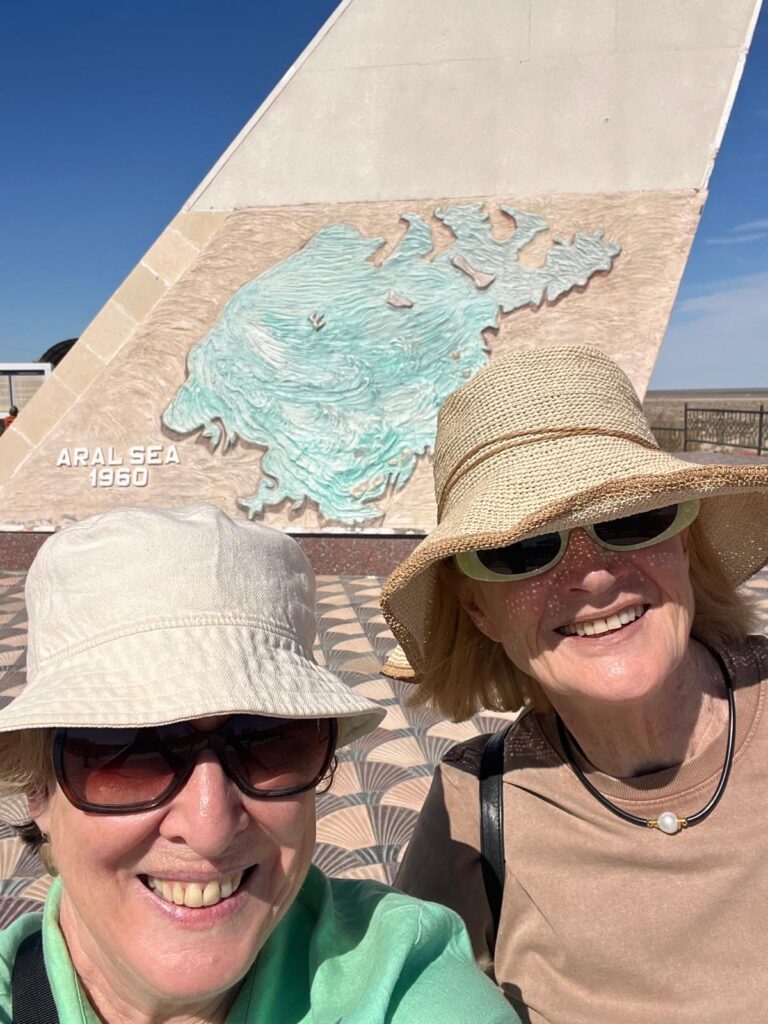
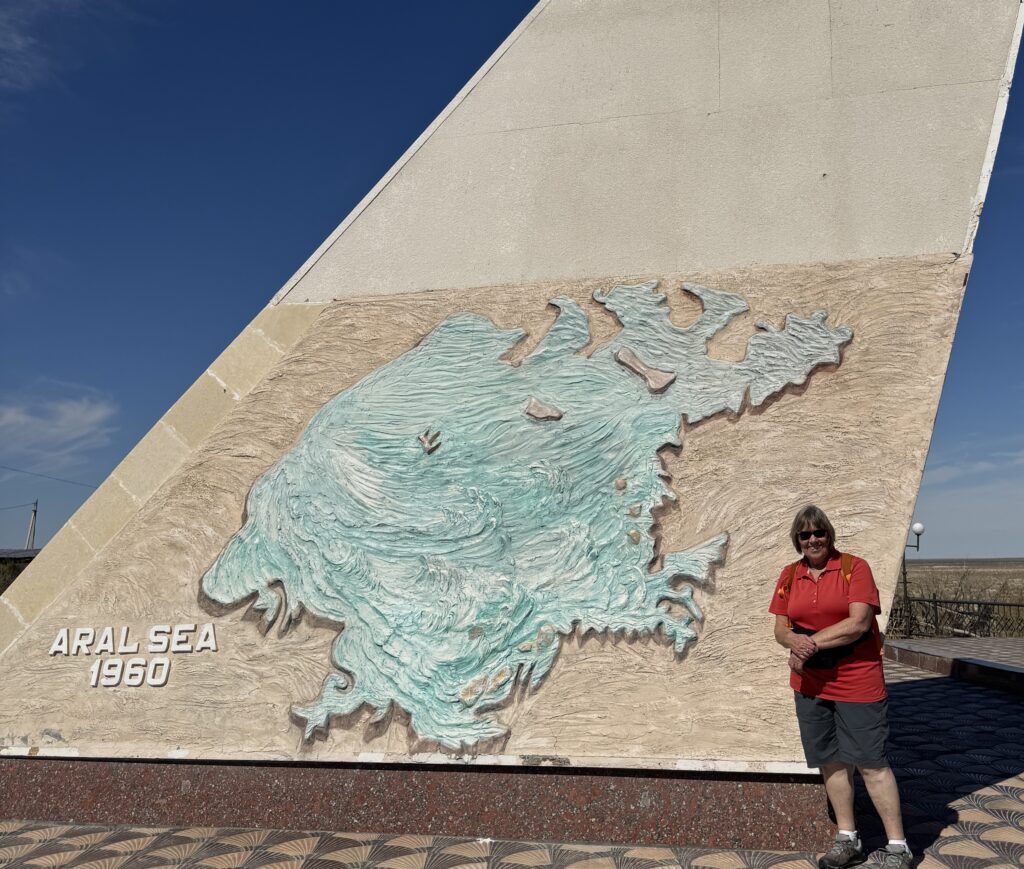
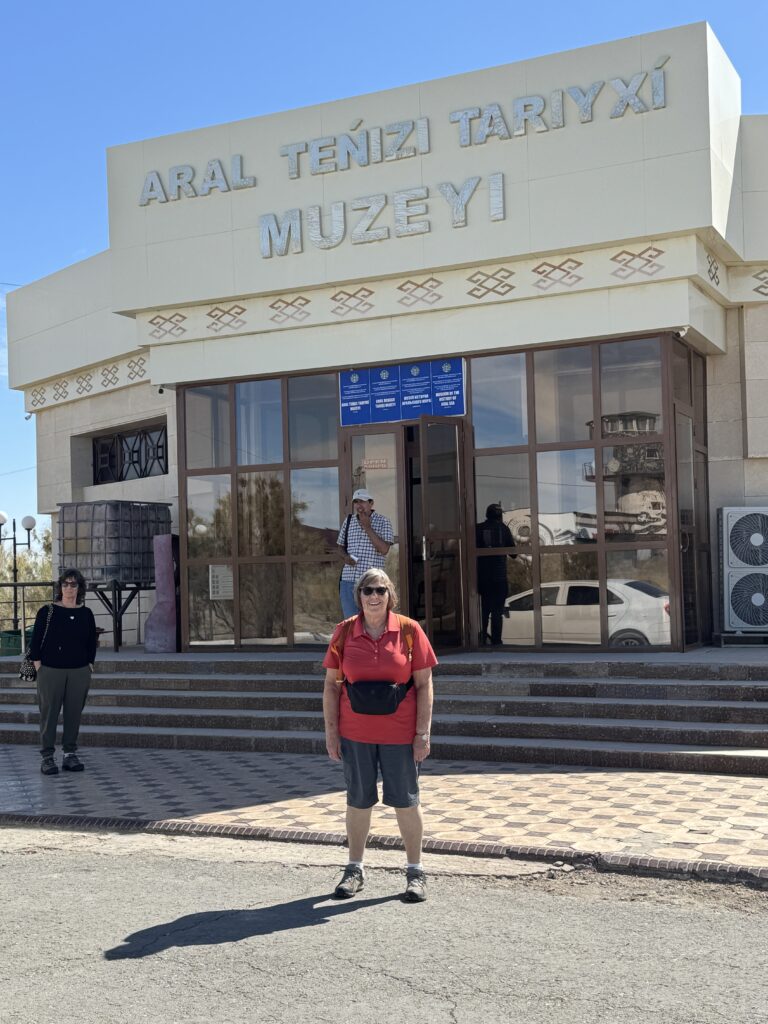
We were meant to visit the Aral Sea museum to see a video about the evacuation of stranded ships from the sea ( now desert) but the museum lost power so we looked at the exhibits in darkness. The best I could do is a painting of how the sea used to look, and me at the front of the museum!

In a tale of two countries, in Kazakhstan, with international help, they built a dam in the 2000s to save the northern part of the sea. Amazingly, that section has made a comeback—water levels rose, fish returned, and some communities got their fishing industry back. The southern part, in Uzbekistan, sadly, is still largely gone. But they did find gas and now there’s a gas industry in Muynak.
Comments
3 responses to “Can the Stans handle the Merck girls?”
Now I know everything I need to know about the Aral Sea
I had never heard of it before xx
Glad you are eating well Suss 😊
How nice that you had a meal in a private home 🤗
An interesting history lesson too!