
September 18: Tashkent
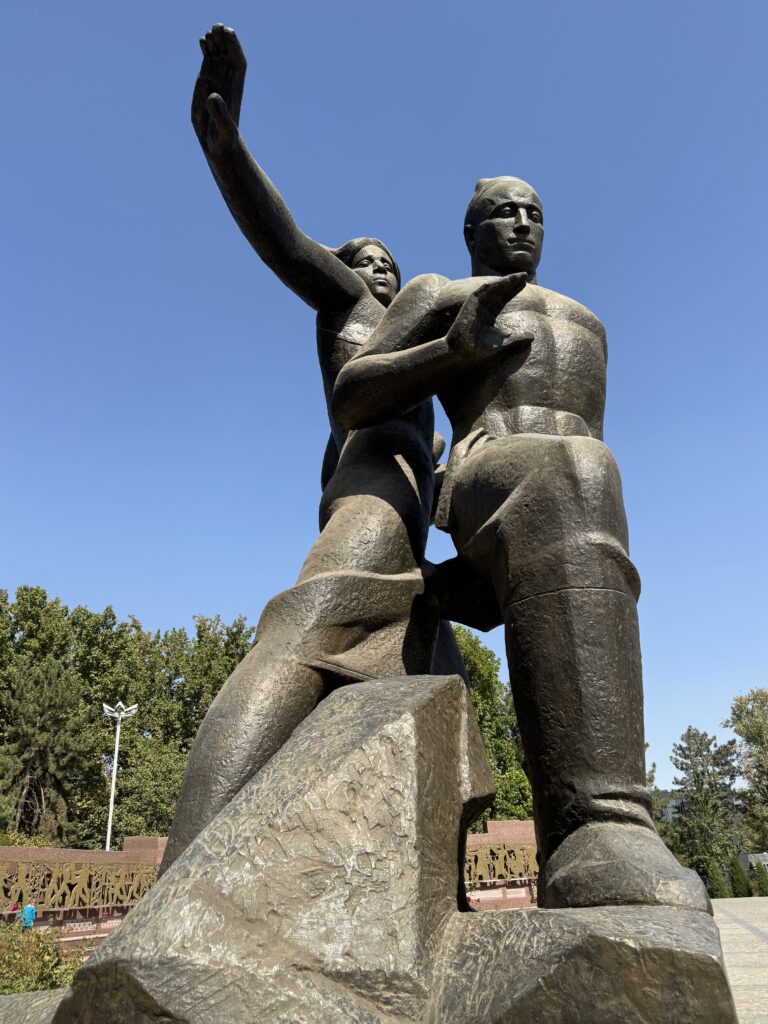
Today we did a sightseeing tour of Tashkent, starting with a visit to the memorial for the Tashkent earthquake. It happened early in the morning on April 26, 1966. At first, people thought it was just another tremor, but this one was huge—around 5.1 on the Richter scale. That might not sound massive compared to some quakes, but the epicenter was shallow and right under the city, so the impact was devastating. Whole neighborhoods of traditional adobe houses just crumbled. In fact, about half of Tashkent’s population was left homeless overnight—something like 300,000 people.
The Soviet government jumped in quickly. You have to imagine: Tashkent was the pride of Central Asia, a cultural capital, so Moscow wasn’t going to let it stay in ruins. Within days, workers, engineers, and soldiers from all over the Soviet Union were flown in to help with rebuilding. People sometimes call it a “brotherly construction effort” because every republic of the USSR contributed something—Ukraine built one neighborhood, Georgia another, and so on.
And that’s really when the Tashkent you see today took shape. Wide boulevards, big Soviet-style apartment blocks, green parks—it was basically a new city rising out of the rubble.
The memorial features a huge statue ( all the statues here are huge) of a man trying to hold back the earthquake and a woman and child behind him. She is wearing a sleeveless top which is meant to show the modernity of women,

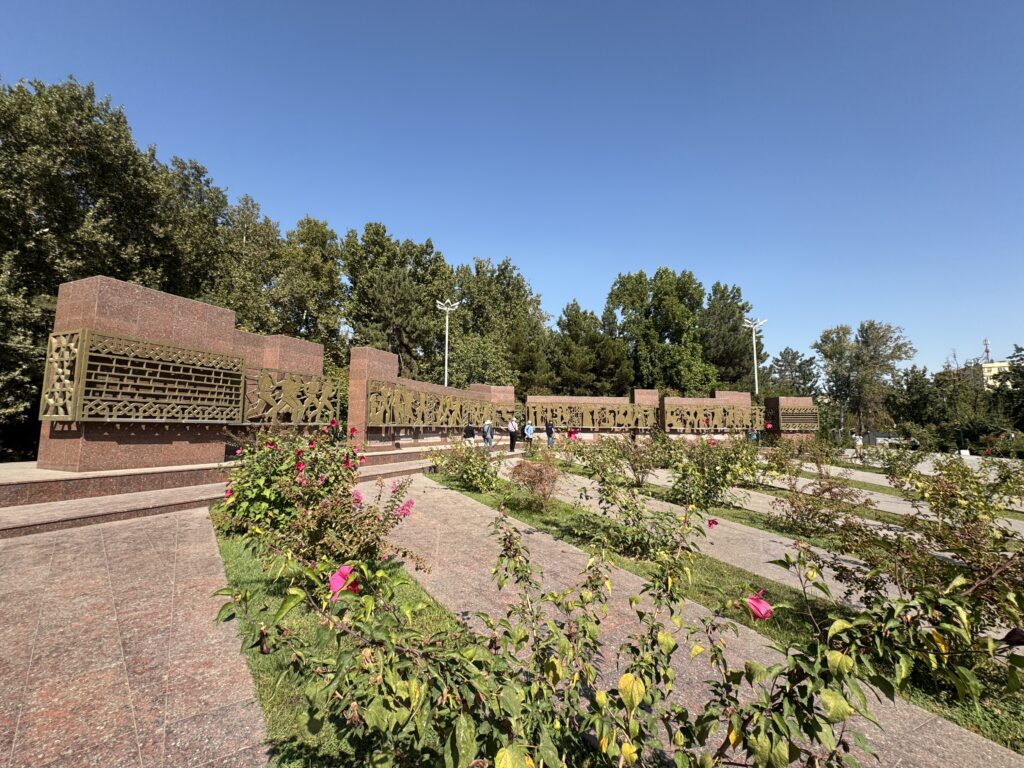
Behind the statue is a wall featuring the rebuilding of Tashkent, and Lisa and Marg had a confab as to whether the flowers were roses or not.

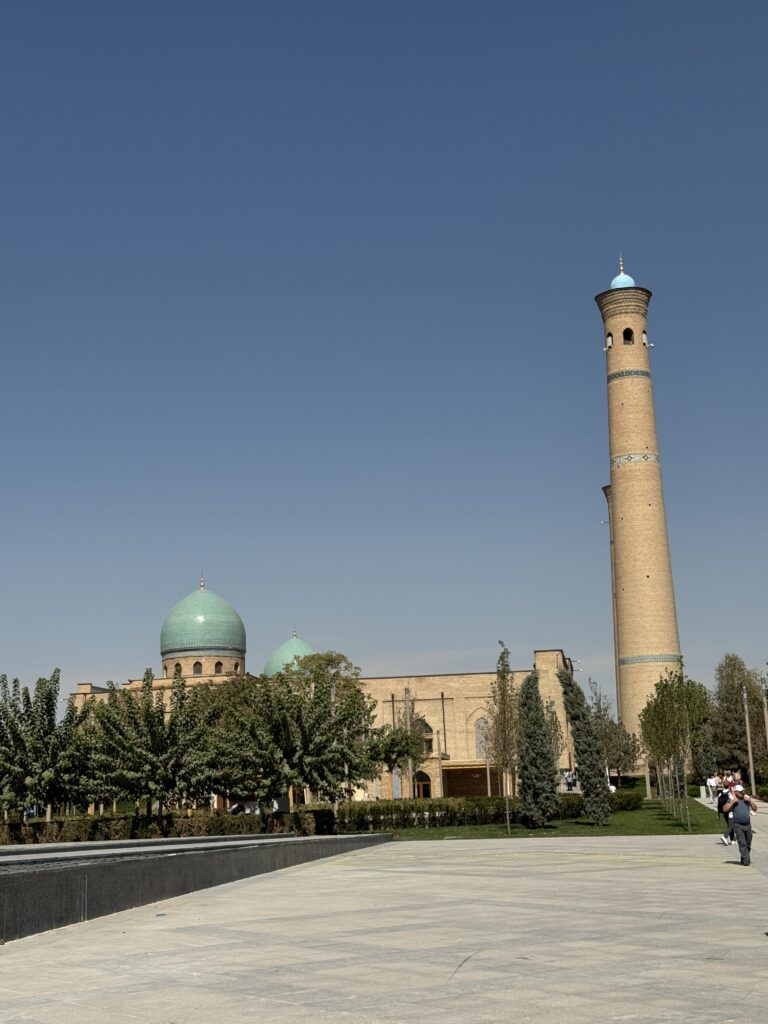
We then visited the Grand Imam Square—sometimes called Hazrati Imam Square—in old Tashkent. The main building is new – construction began in 2007 and is almost complete.


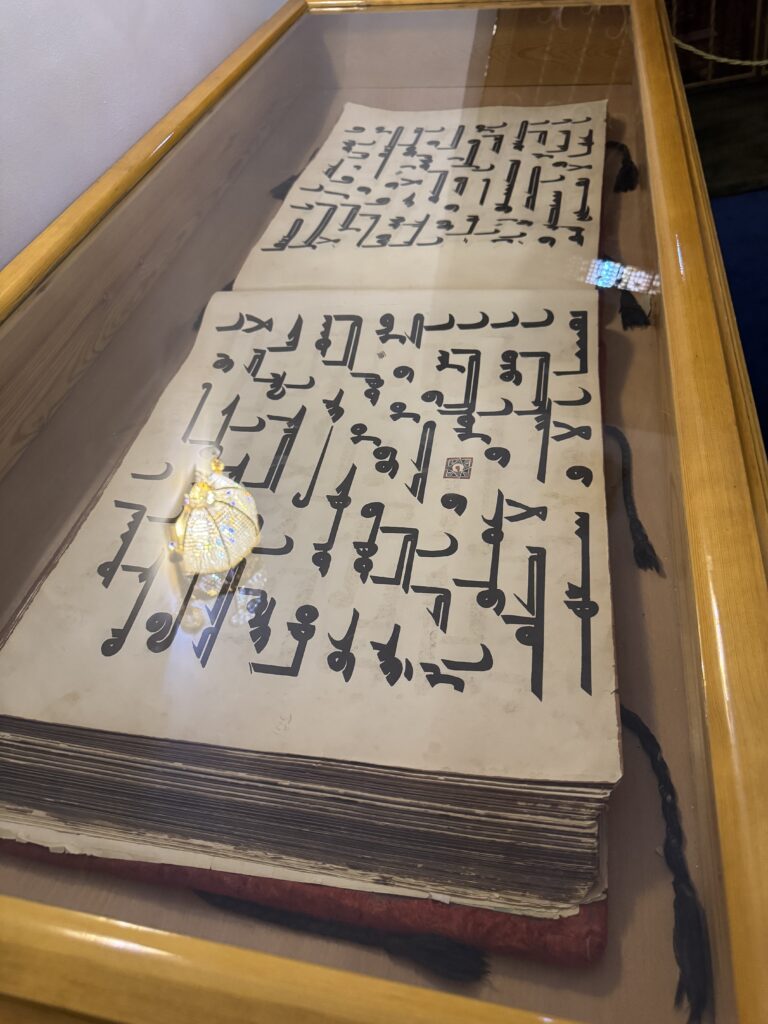
The square is actually a whole religious complex, centred around what’s known as the Hazrati Imam (or Khast Imam) ensemble. It’s named after Hazrati Imam, a 10th-century scholar, poet, and religious figure who is said to be buried there. Over the centuries, the area grew into a spiritual centre for the city. The most significant thing about the area is that it houses one of Islam’s most sacred relics: the famous 7th-century Koran believed to be one of the world’s oldest surviving copies. People come from all over just to see it.
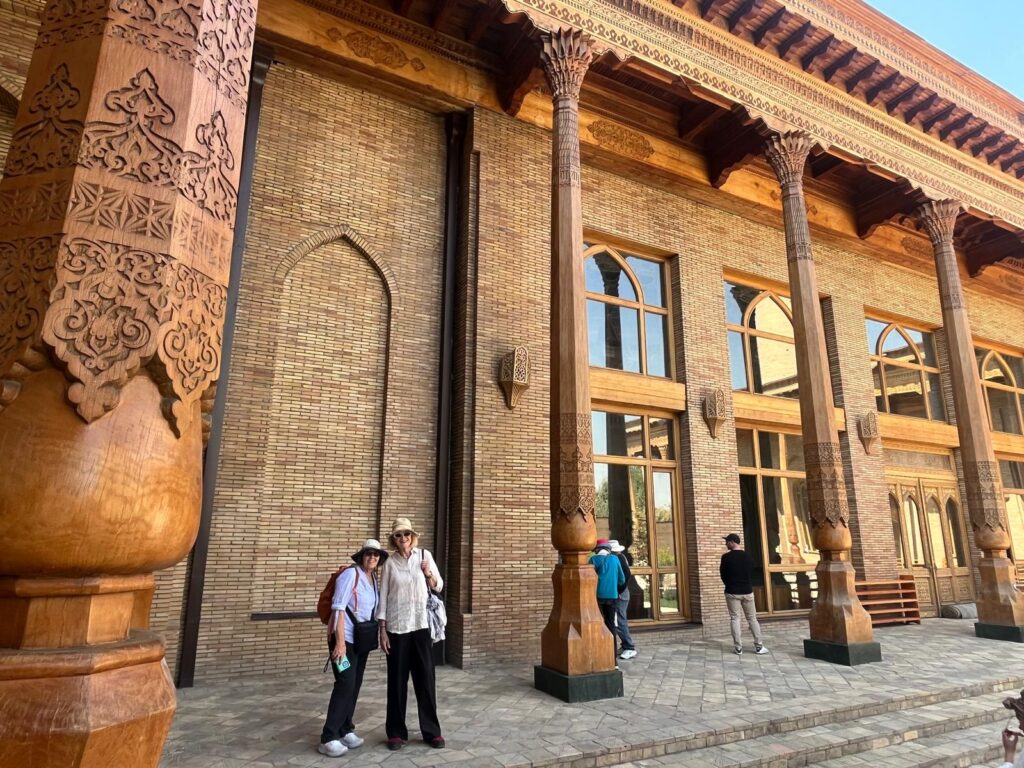
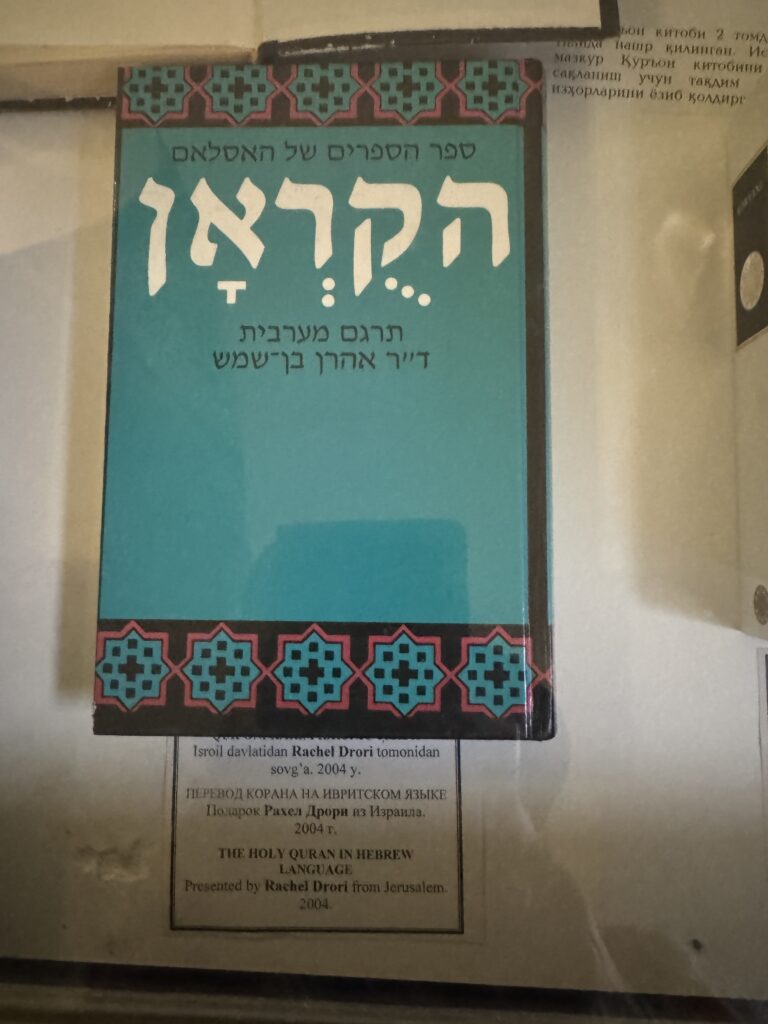
The rooms surrounding the Koran have Korans in different languages, including one in Hebrew! And there is a copy of the original
Independence Day in Uzbekistan is a big deal—it’s basically the country’s most important public holiday. It’s celebrated every year on September 1st, marking the day in 1991 when Uzbekistan declared independence from the Soviet Union.
What’s interesting is that, for many people, this holiday isn’t just about politics—it’s also about identity. After decades as part of the USSR, Uzbekistan suddenly had the chance to stand on its own, revive its traditions, and celebrate its culture more openly. Independence Day became the moment to show all of that off.
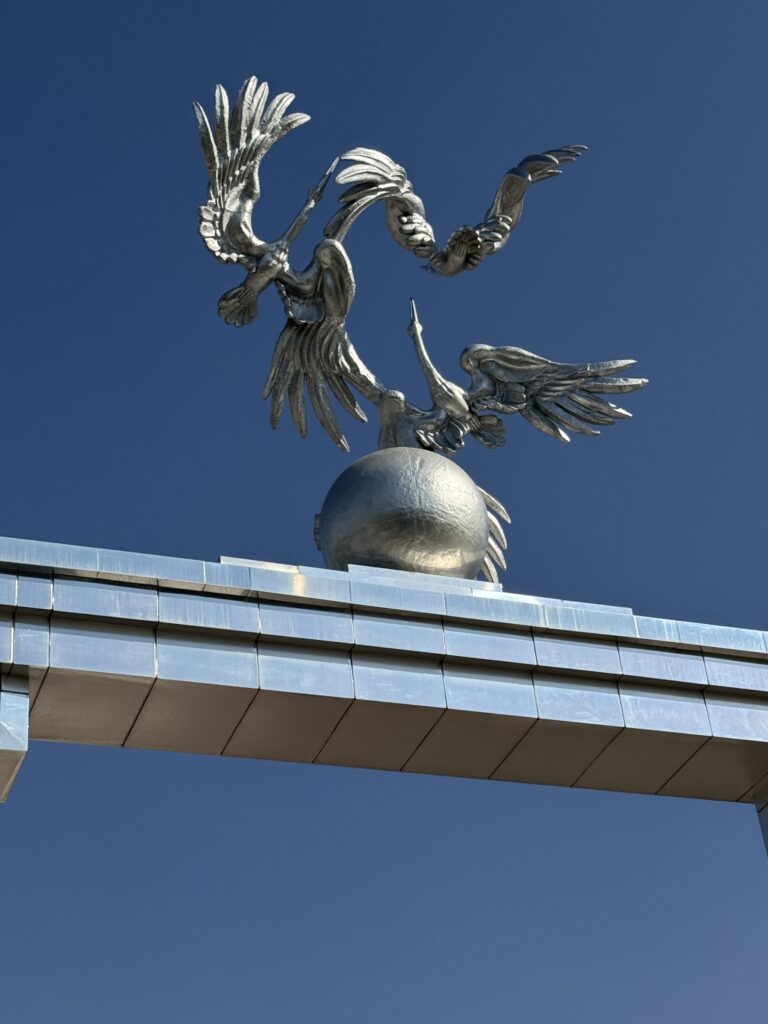
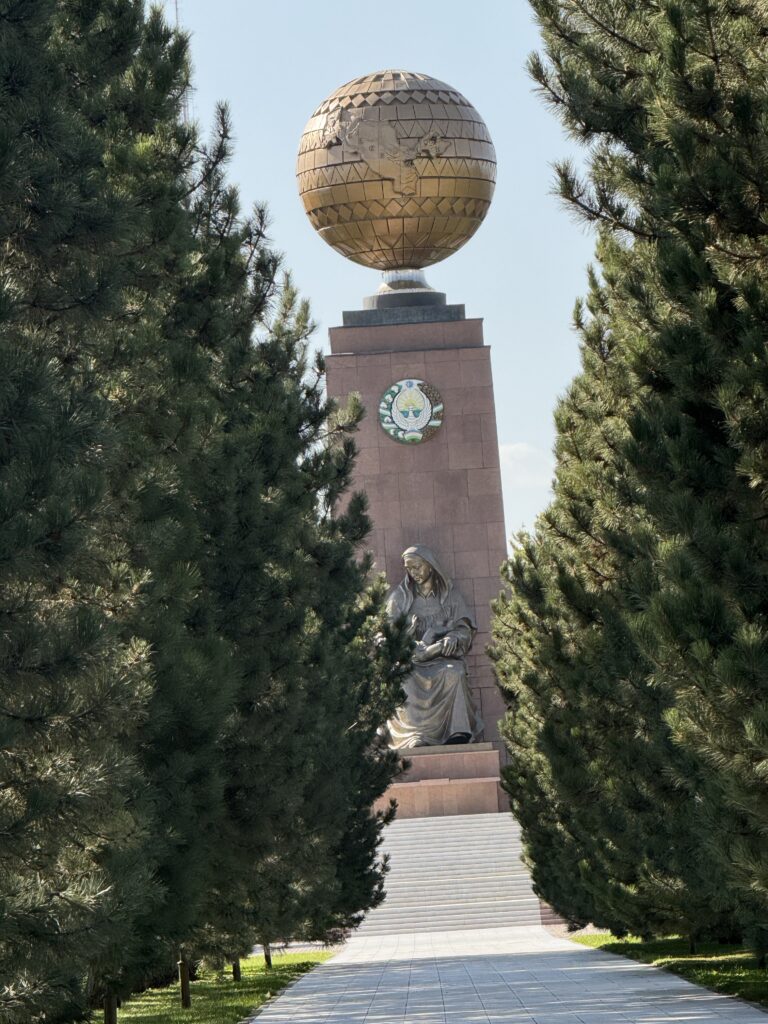
In Tashkent, the celebrations usually kick off in Mustaqillik Maydoni (Independence Square) which has some magnificent storks mounted on top of a huge globe, as well as a monument showing the map and colours of Uzbekistan.
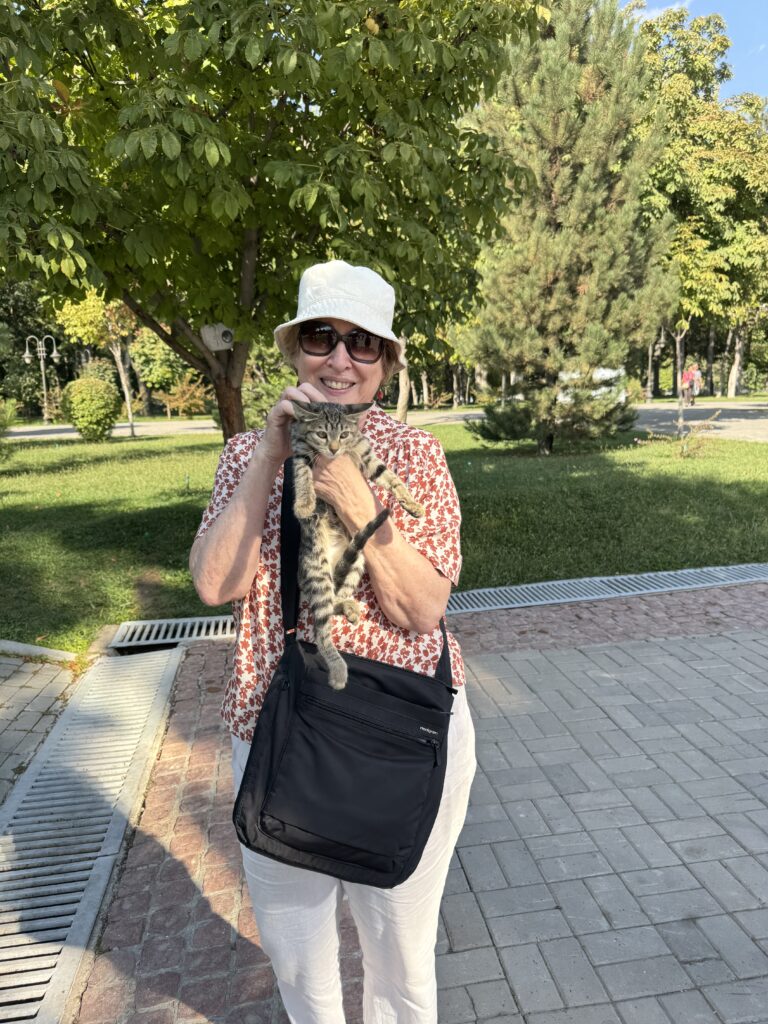
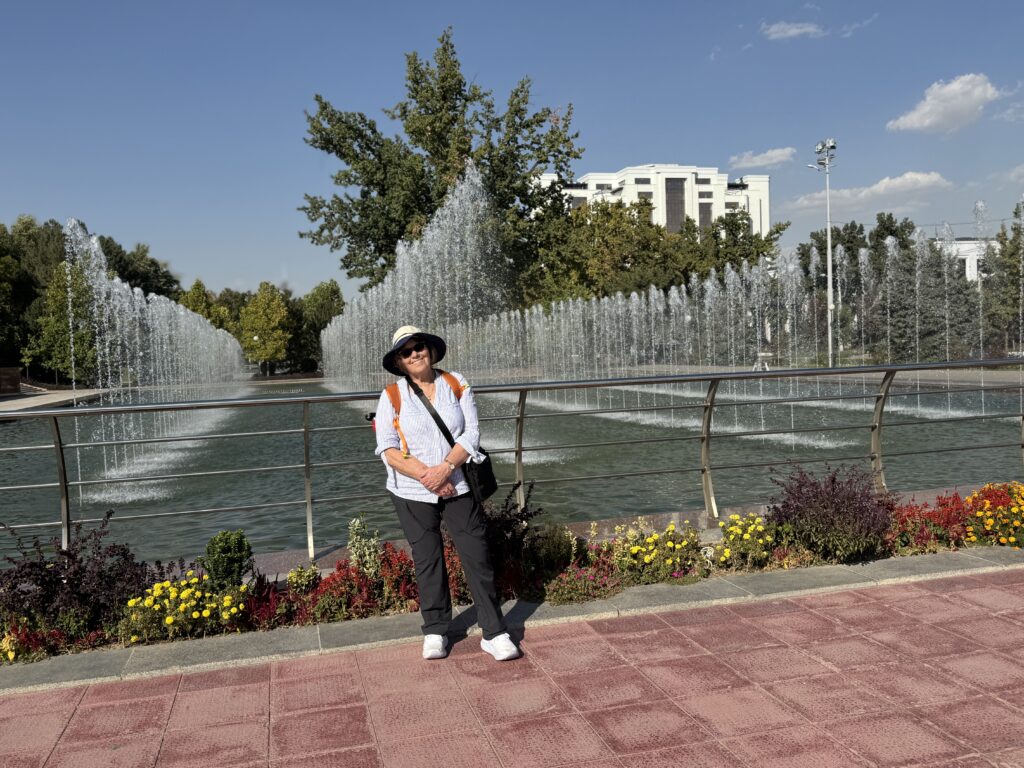
Lisa found a kitten to play with ( we haven’t seen one dog yet) and I admired the field of fountains.
We also visited the very tasteful memorial to the Uzbek soldiers who died in WW2 fighting alongside the Russians. More than half a million of them died.


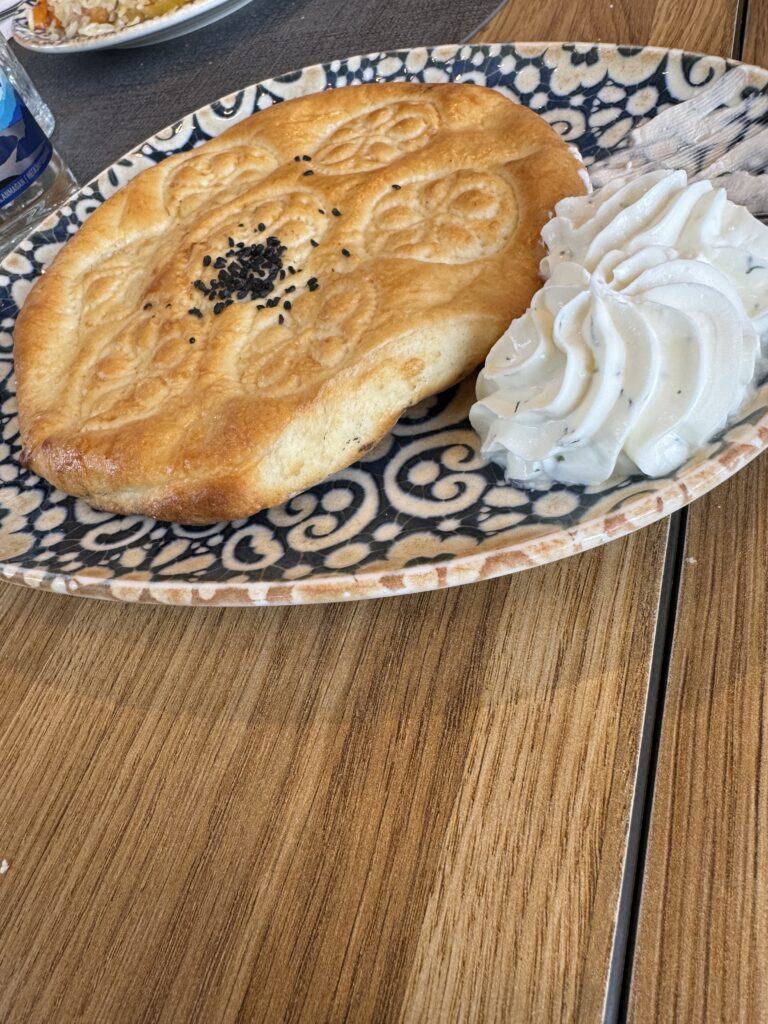
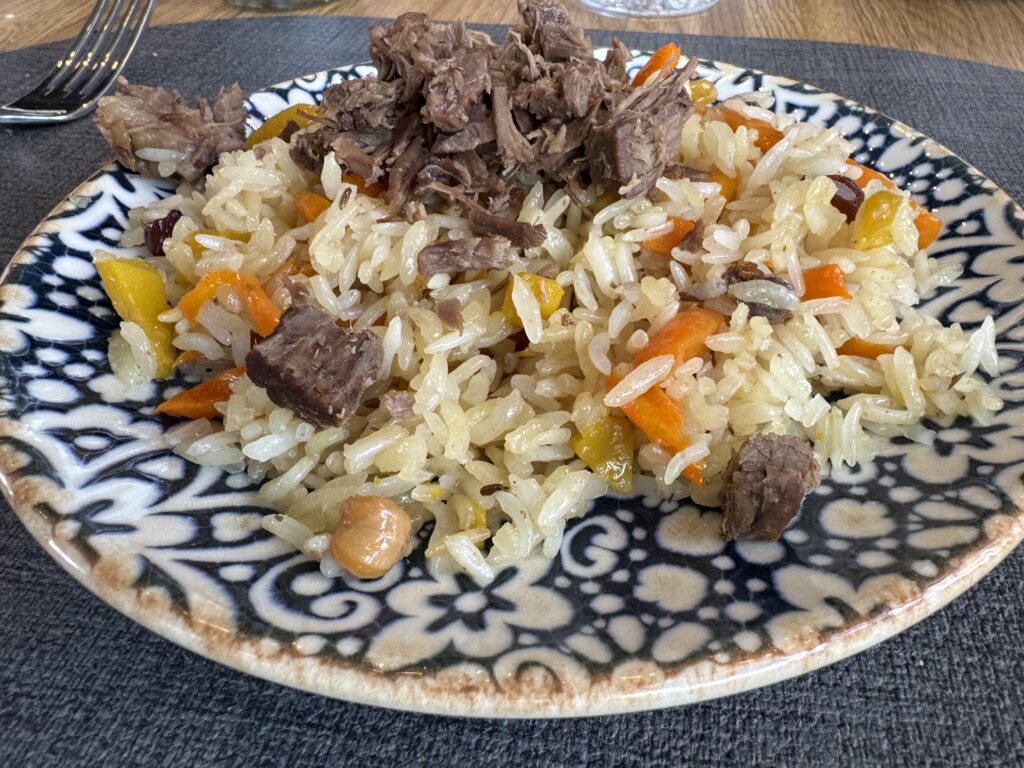
We also got to experience some traditional Uzbek food…their bread which has different patterns on it and Plov, a beef and rice dish

Comments
5 responses to “Can the Stans handle the Merck girls?”
It looks fascinating and quite empty. Perhaps they eat the dogs! Xx
Amazing photos and information!
Everything looks so pristine and tidy
yes it does look quite empty. where’s the other members of your group. xx
Interesting . Food looks good . Are you eating it ?
So pretty 😍