
September 21: Khiva
Khiva has been around for well over a thousand years. According to legend, it was founded when Shem, son of Noah, dug a well there — the Kheyvak well, which still exists today. Because of its location, Khiva became an important oasis trading post where caravans stopped on their way between Persia, China, and Russia. It’s like a living museum. Within the walls are 250+ old houses and about 50 historic monuments, from madrassas and mosques to palaces. And we saw some of them today.
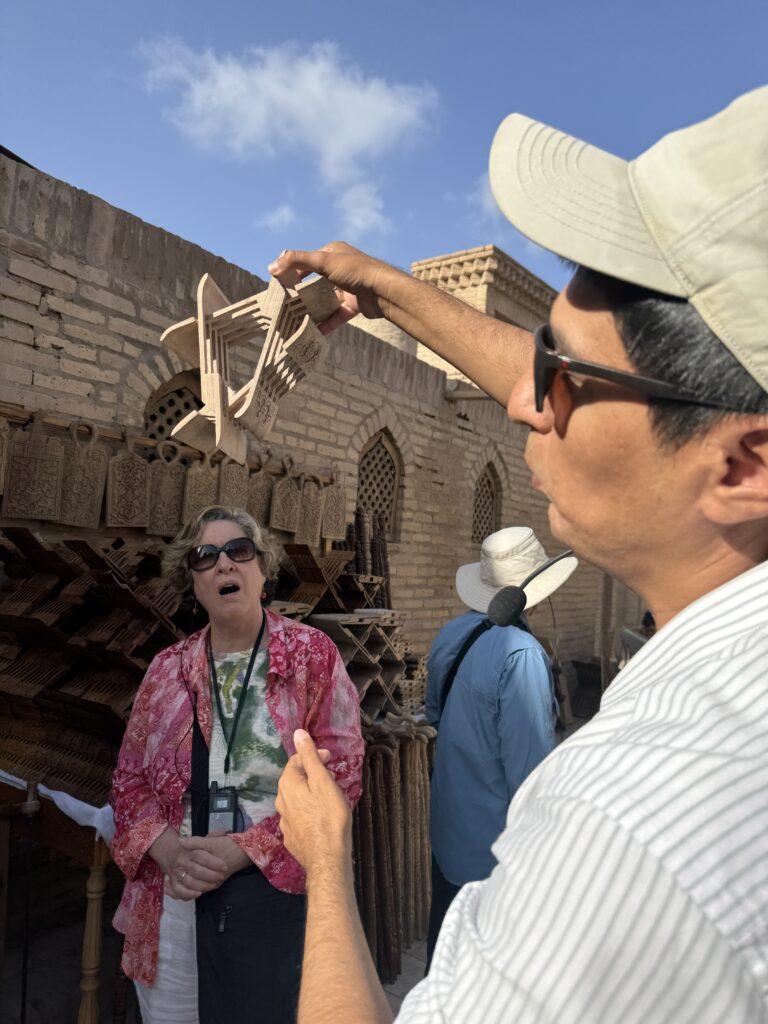
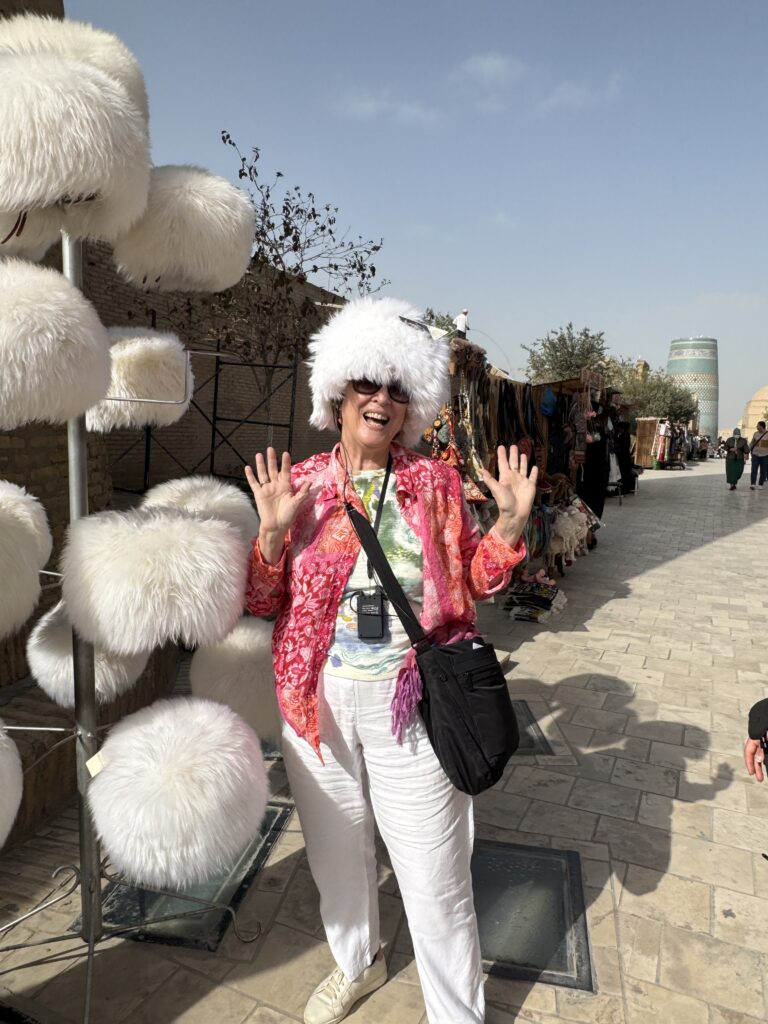
We wandered through the streets to get to our first monument. Lisa was fascinated with the wood carving which turns into a book rest, and had fun modelling their amazing hats.
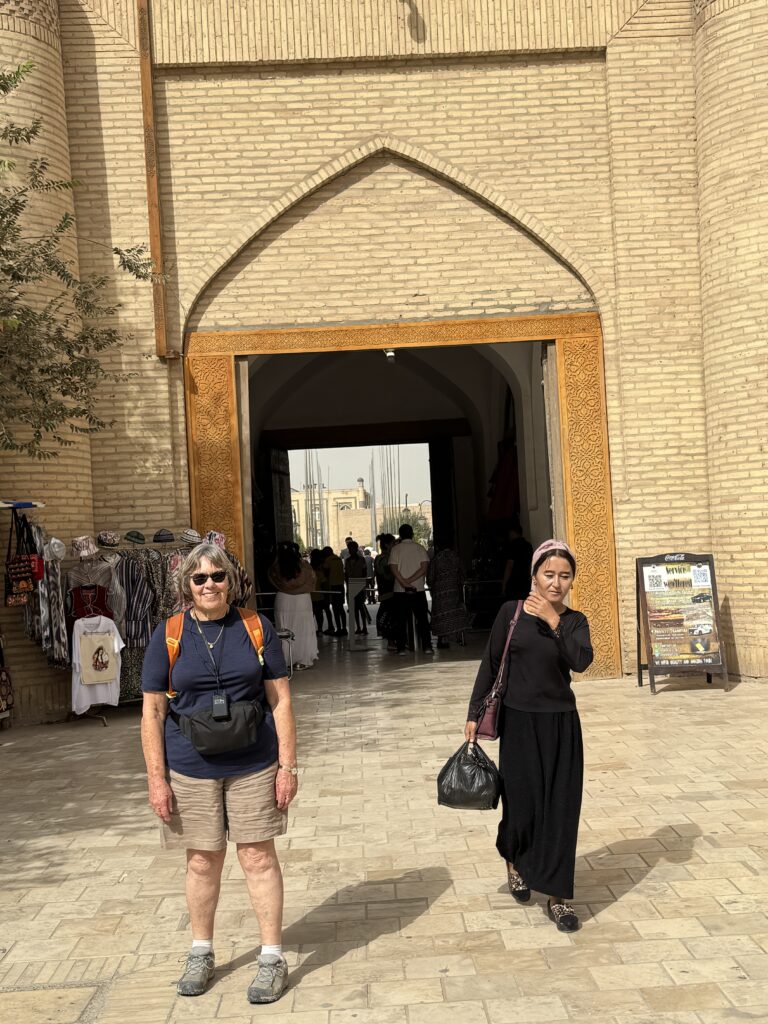
We made our way to the West gate of the city, so we could view the walls from the outside, and see all the activity going on.

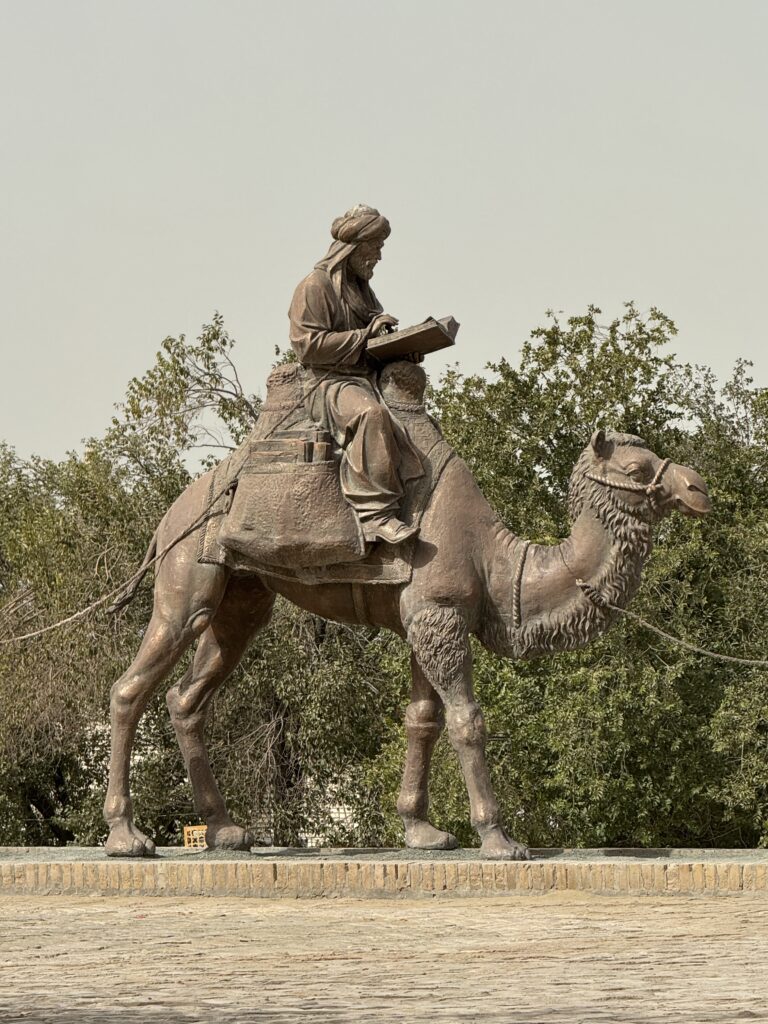
And here is the man who has had a significant impact on our lives…Abu Abdullah Muhammad was a 9th century scientist and mathematician who gave us algebra and algorithms.
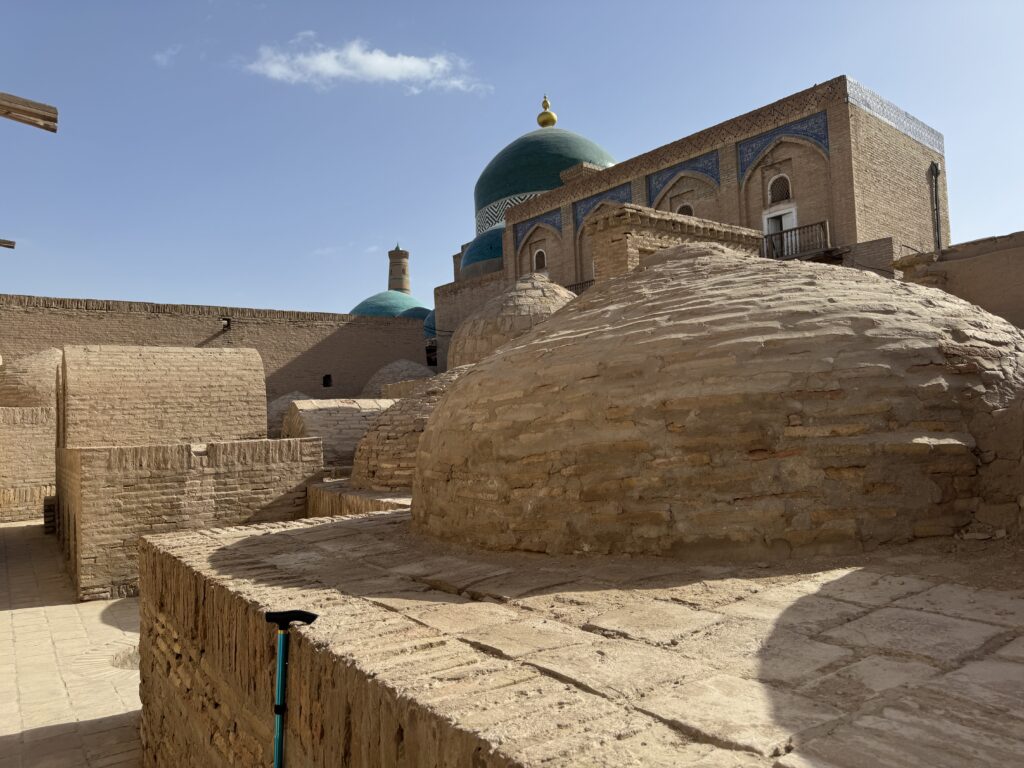
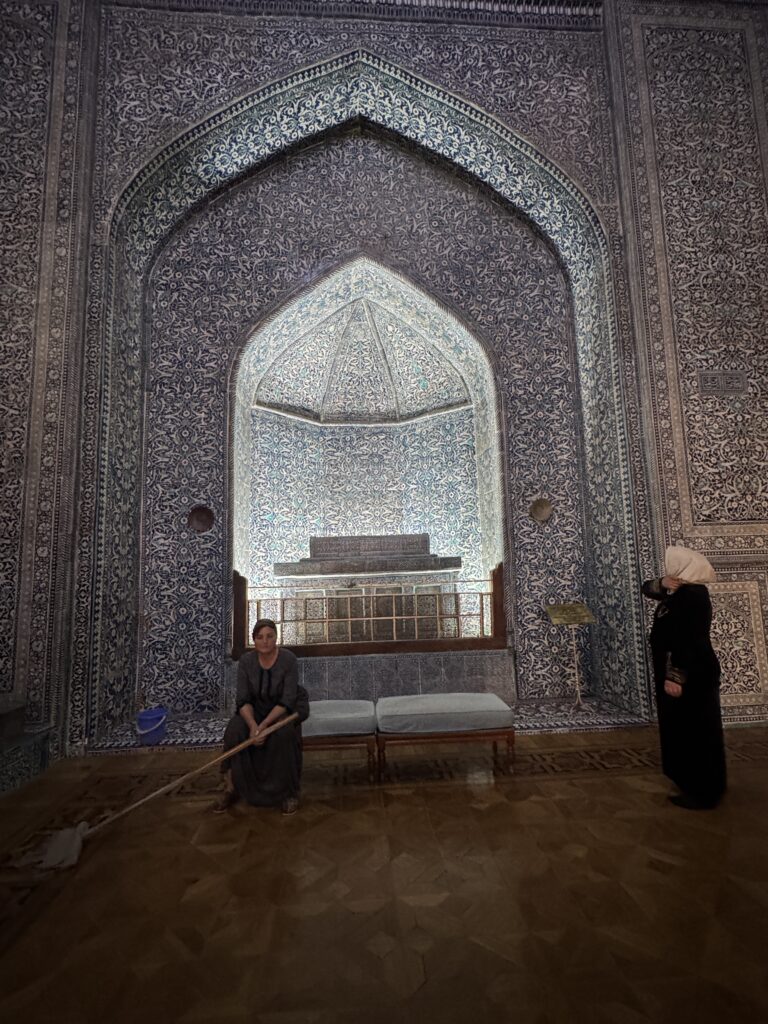
Our first trip into history was the Mausoleum, named after Pakhlavan Mahmud (1247–1326) who was a local hero. He became revered as a Sufi saint, and his tomb turned into a pilgrimage site. Built in the 14th century and expanded by later khans, it’s famous for its brilliant turquoise dome, which dominates Khiva’s skyline. The interior is richly decorated with glazed tiles, carved wood, and intricate majolica. Over time, Khiva’s rulers chose to be buried here too, so it became the city’s main dynastic mausoleum.
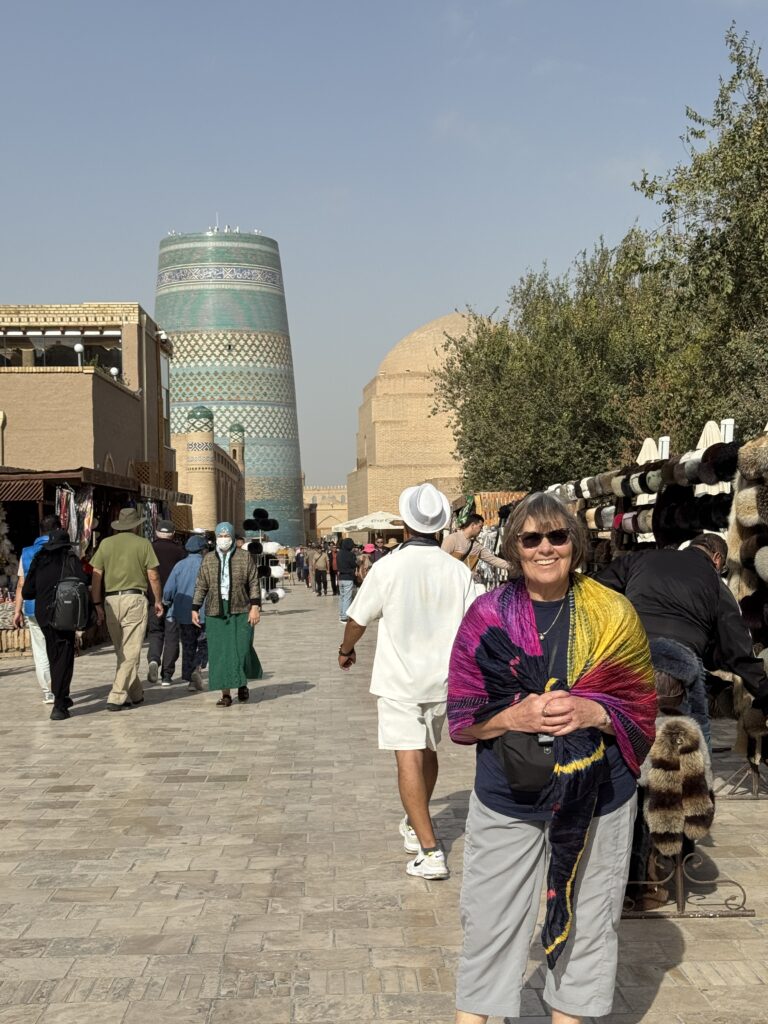
The Kalta Minaret is one of Khiva’s most striking landmarks — and also one of its quirkiest. Kalta means “short” in Uzbek, so it’s literally the “Short Minaret.”It was commissioned in 1851 by Muhammad Amin Khan, who wanted to build the tallest minaret in the Islamic world — supposedly high enough to see all the way to Bukhara. The project stopped abruptly in 1855 when the khan was killed in battle. Construction ended at about 26 meters, though it was meant to soar over 70 meters. Legend has it that the minaret’s builder was killed by the new Khiva Khan so that he couldn’t build a taller minaret anywhere else.

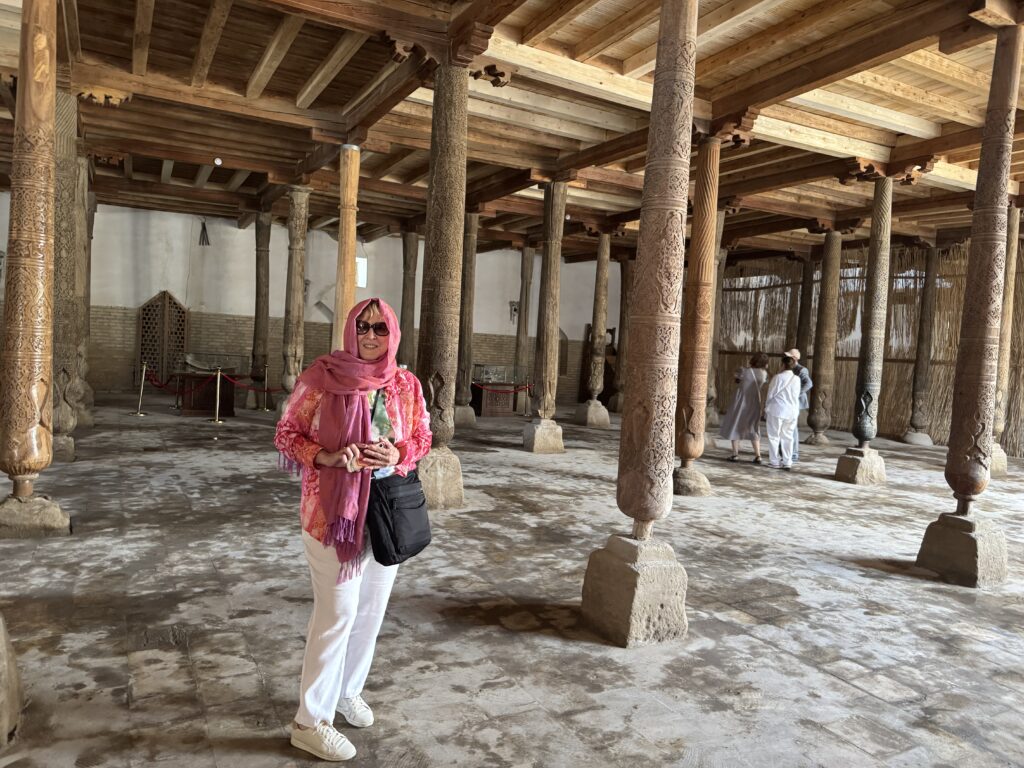
The Juma Mosque was rebuilt in the late 18th century (around 1788–1789), but it stands on the site of a much earlier mosque that may date back to the 10th century. Unlike most mosques with domes and tall minarets, Juma Mosque is a large, flat-roofed hall supported by an extraordinary forest of 213 wooden columns.
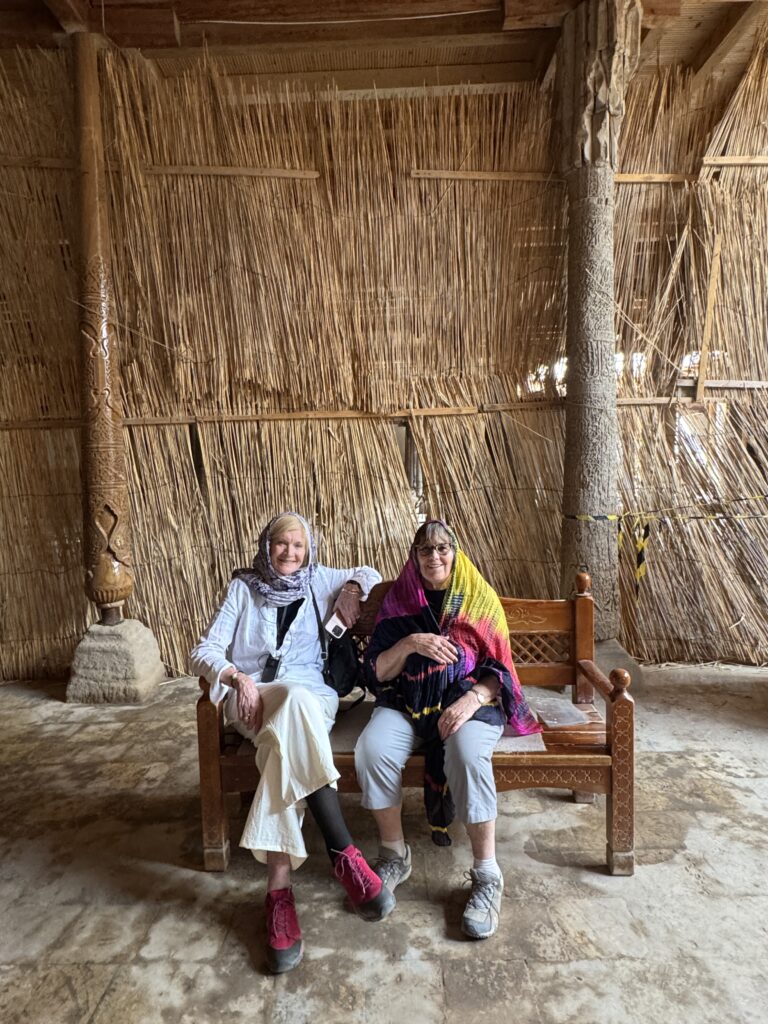
The Kunya Ark (“Old Fortress”) is the historic citadel of Khiva, built in the 12th century and expanded by later khans. It served as the residence of Khiva’s rulers and the center of government.

Inside its high mudbrick walls were the khan’s palace, mosque, harem, mint, stables, and even a prison. Parts of it were rebuilt in the 17th century. Highlights include the summer mosque with its brilliant blue tilework and the khan’s reception hall.
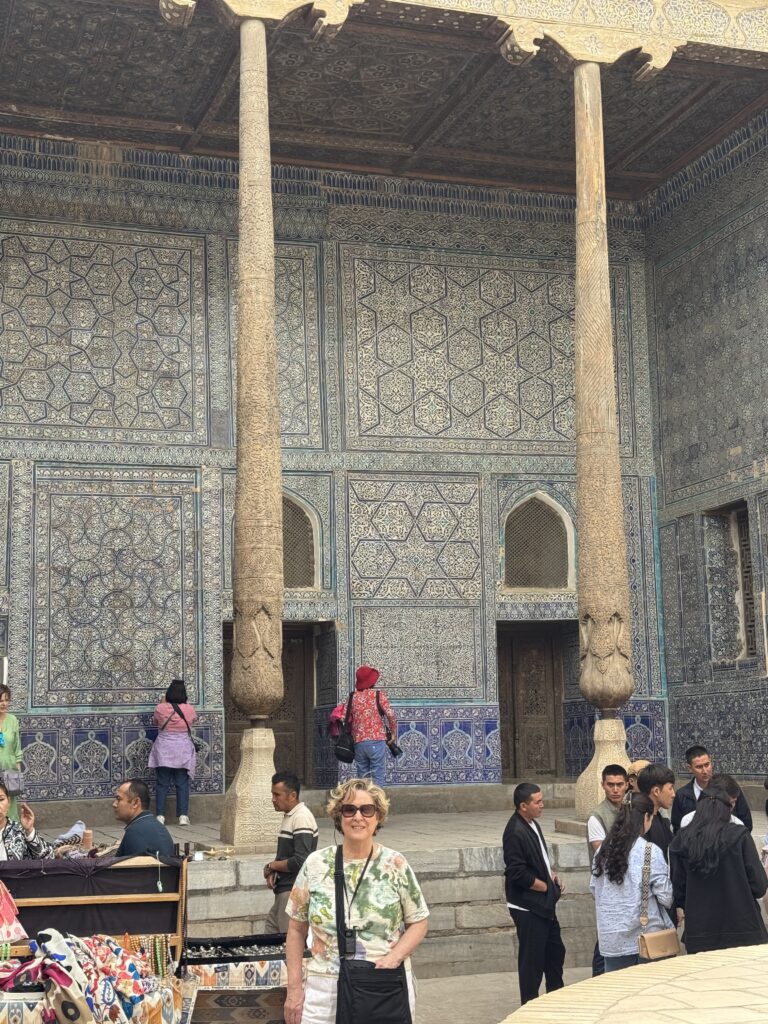

The Tosh Hauli Palace (“Stone House”) is one of Khiva’s grandest monuments, built in the 1830s by Allakuli Khan as a new royal residence. It’s famous for its maze-like layout — with over 150 rooms and courtyards — and for its lavish decoration: walls covered in blue-and-white tiles, carved stone, and painted wood ceilings.
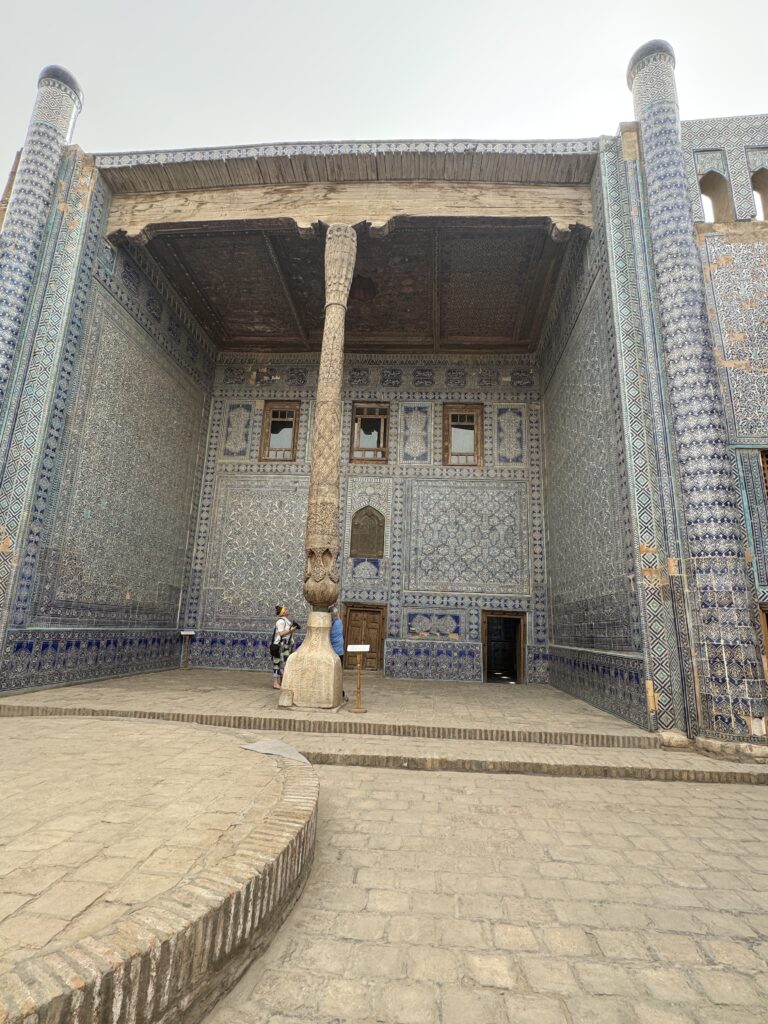
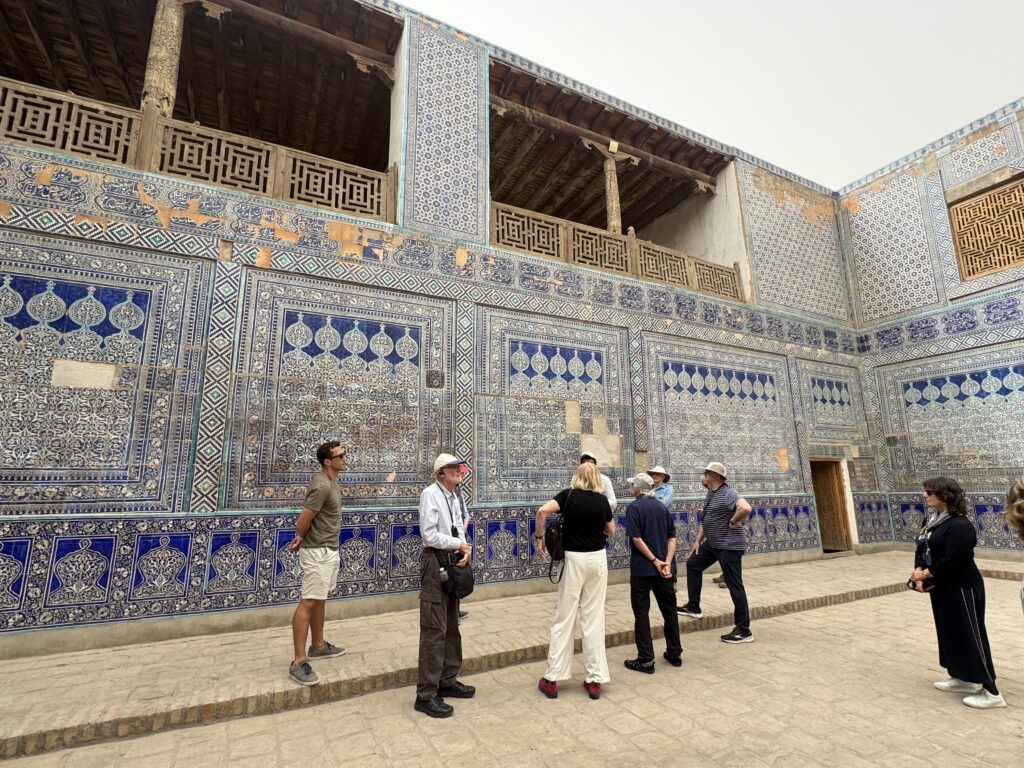
The palace has three main sections: the official reception areas, the family quarters, and the harem, where the khan’s wives and concubines lived. The harem is especially striking, with richly tiled rooms and intricate ceiling patterns.
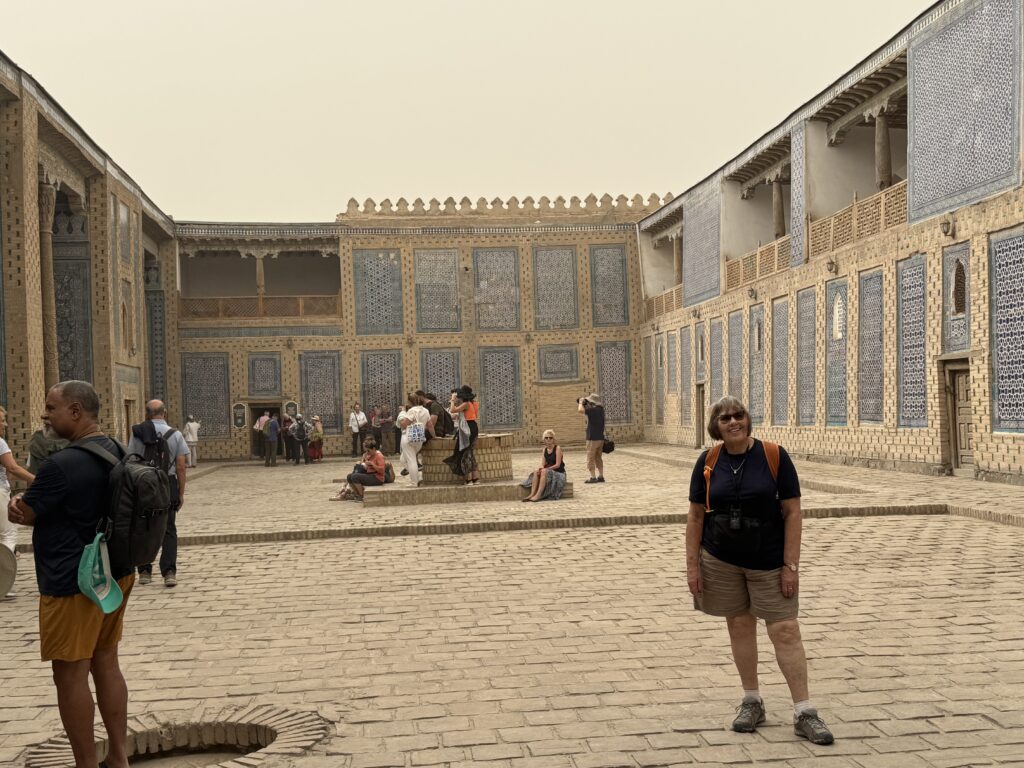
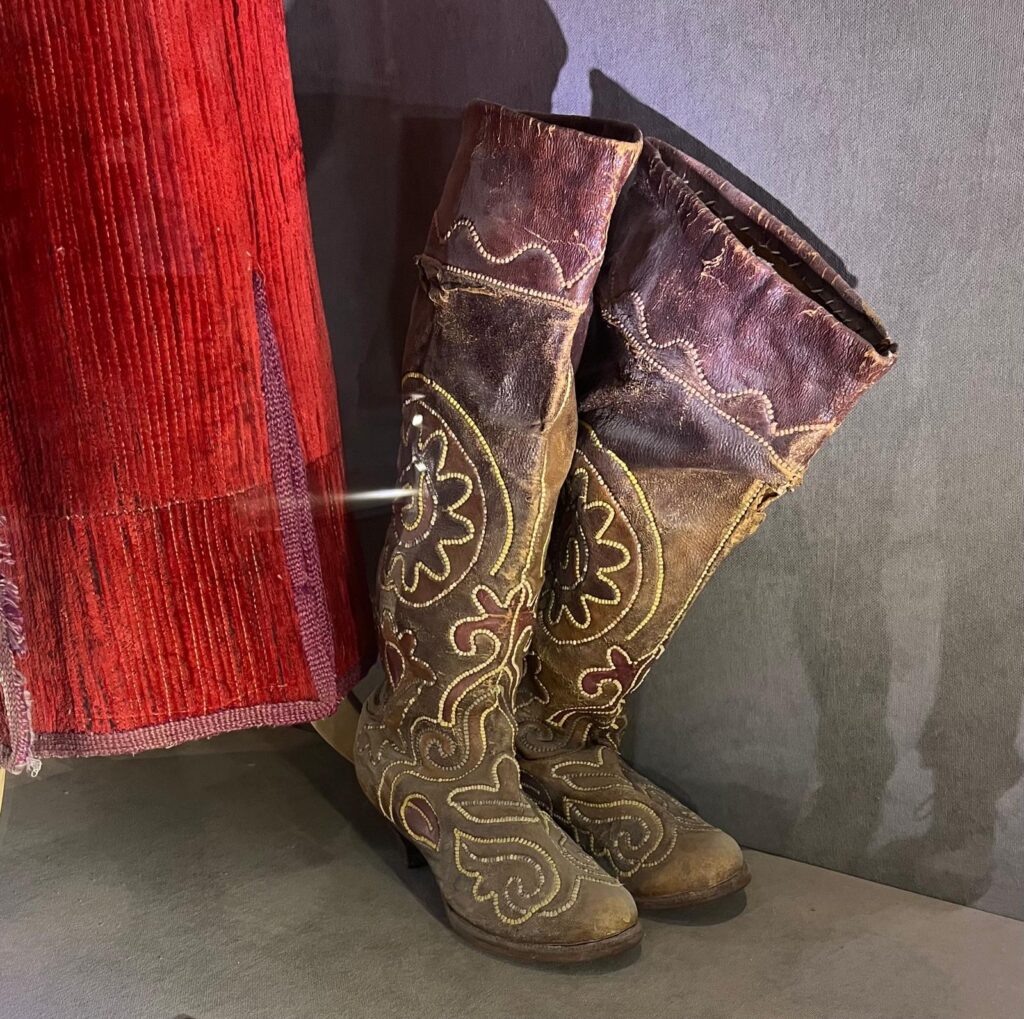

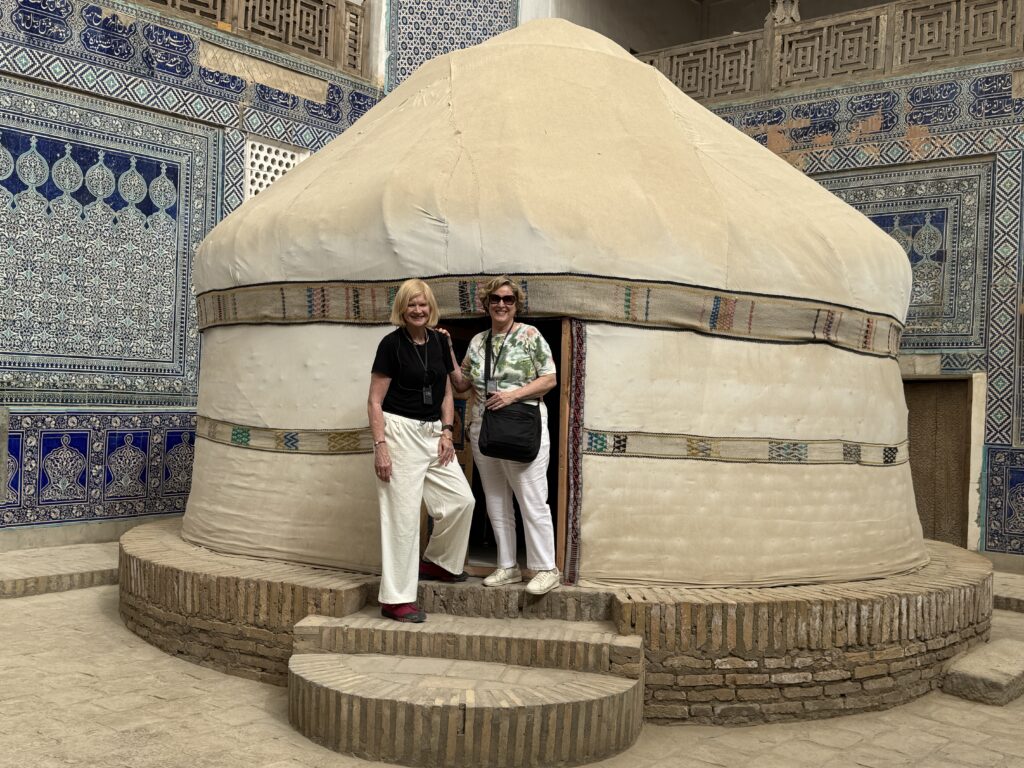
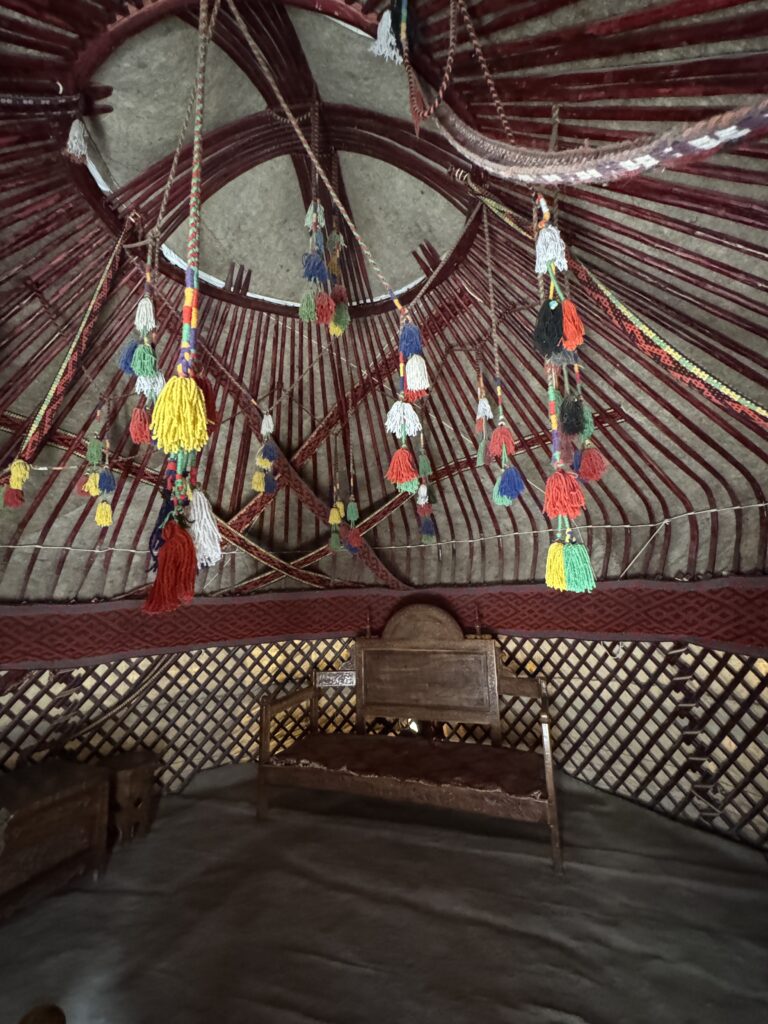
There’s also a flat platform in the centre of the courtyard to accommodate a yurt.
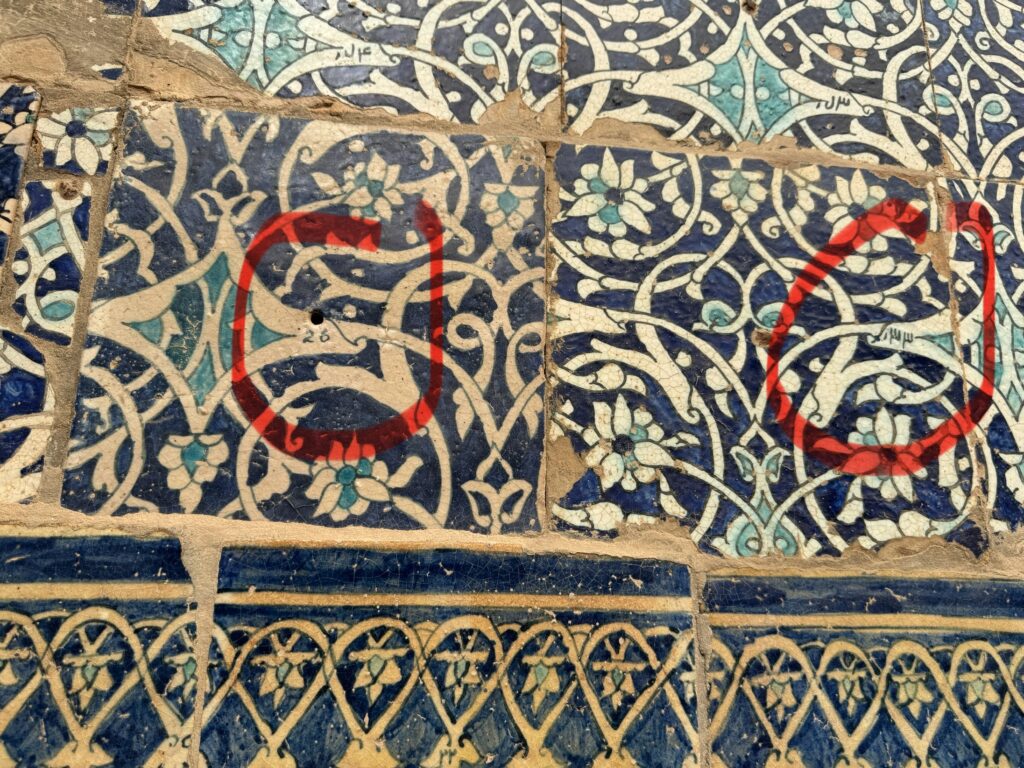
And here’s a little test for you….which of the two tiles looks the older one?

I bet you said the one the left because it looks more yellowed. Well that’s the wrong answer. The one with Arabic numerals is older than the one with Roman numerals. An important lesson for the future?
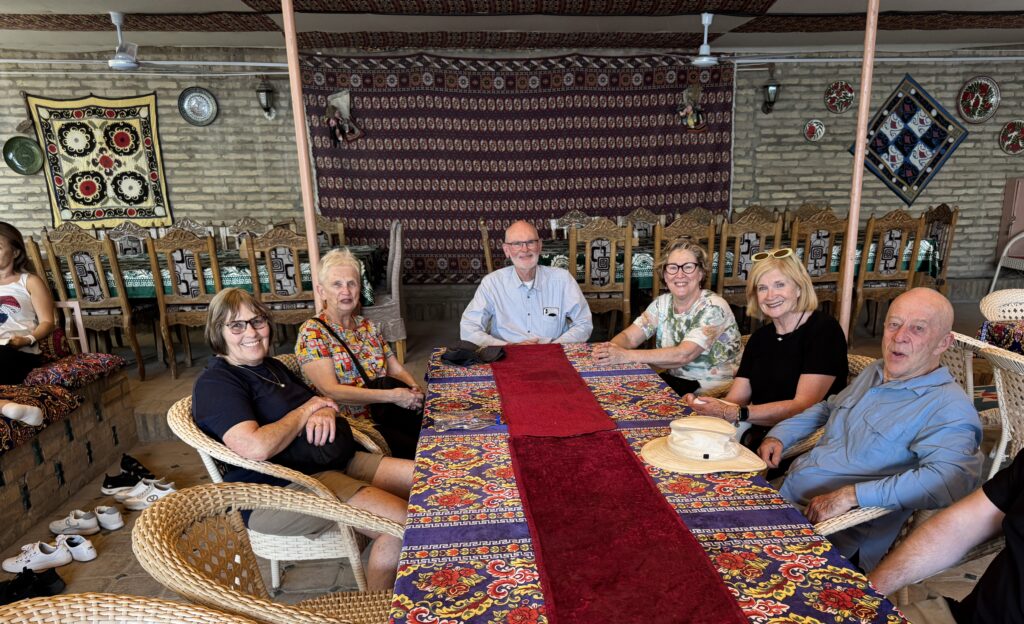
After a hard day of monument viewing, our guide shouted us a well deserved cup of coffee (in a country where 98% of people drink tea, their coffee expertise is somewhat limited)
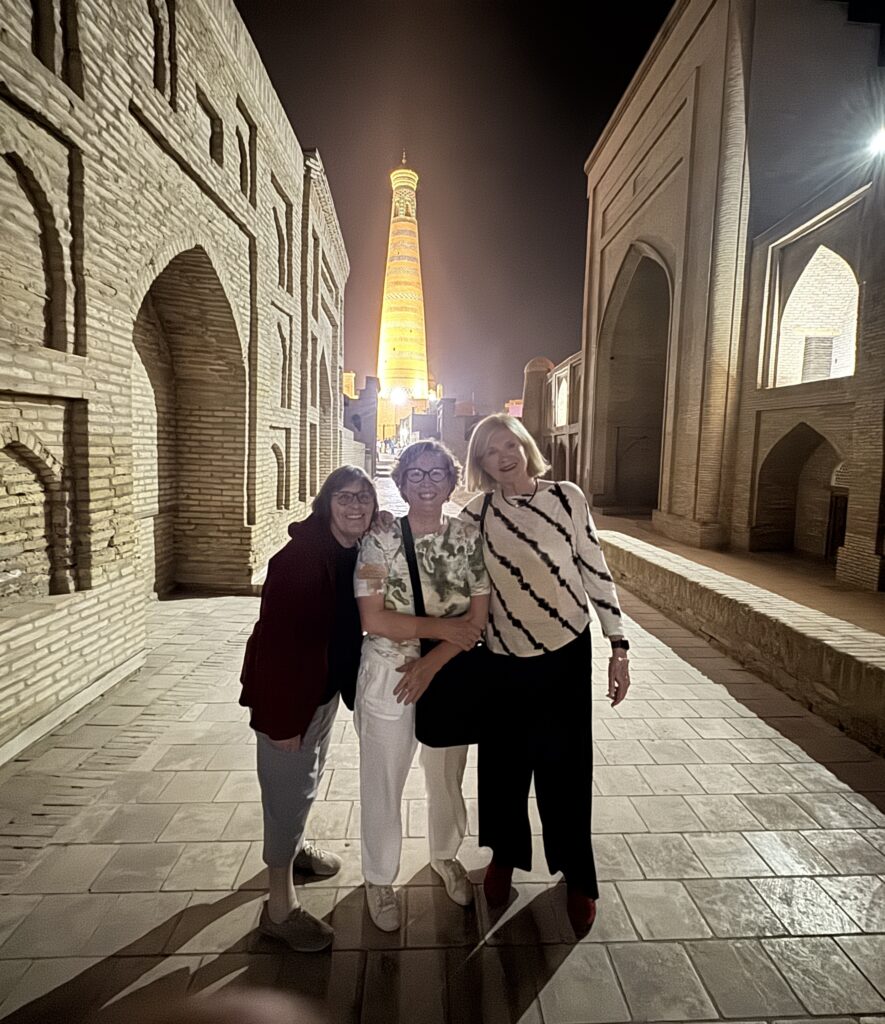
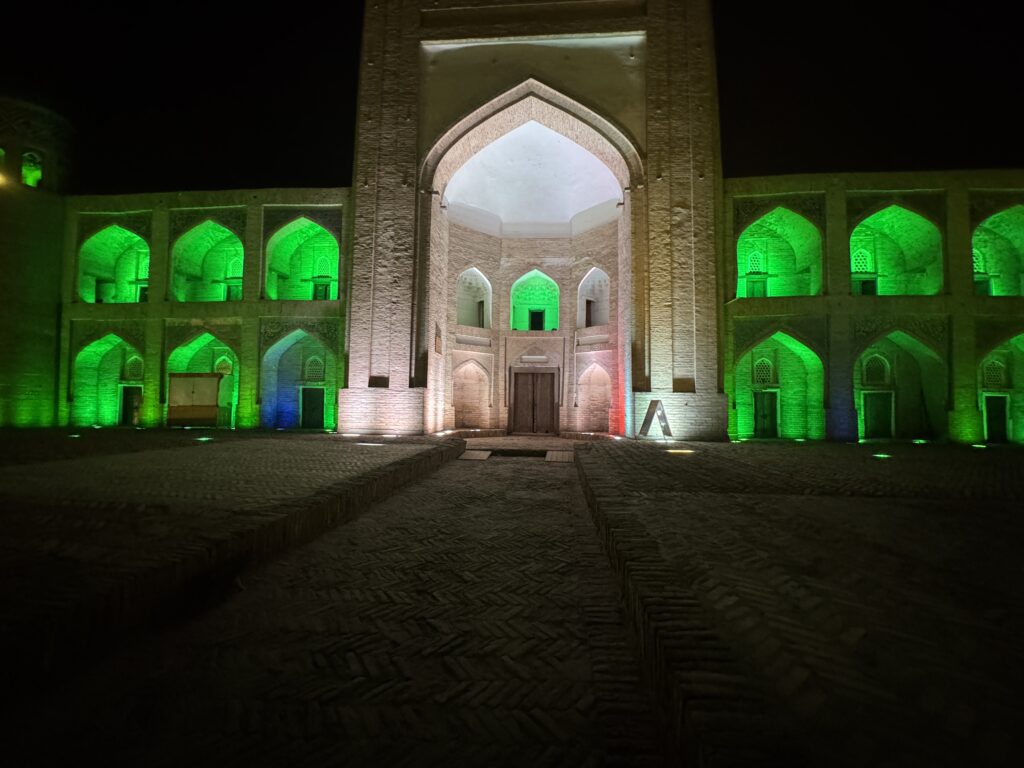
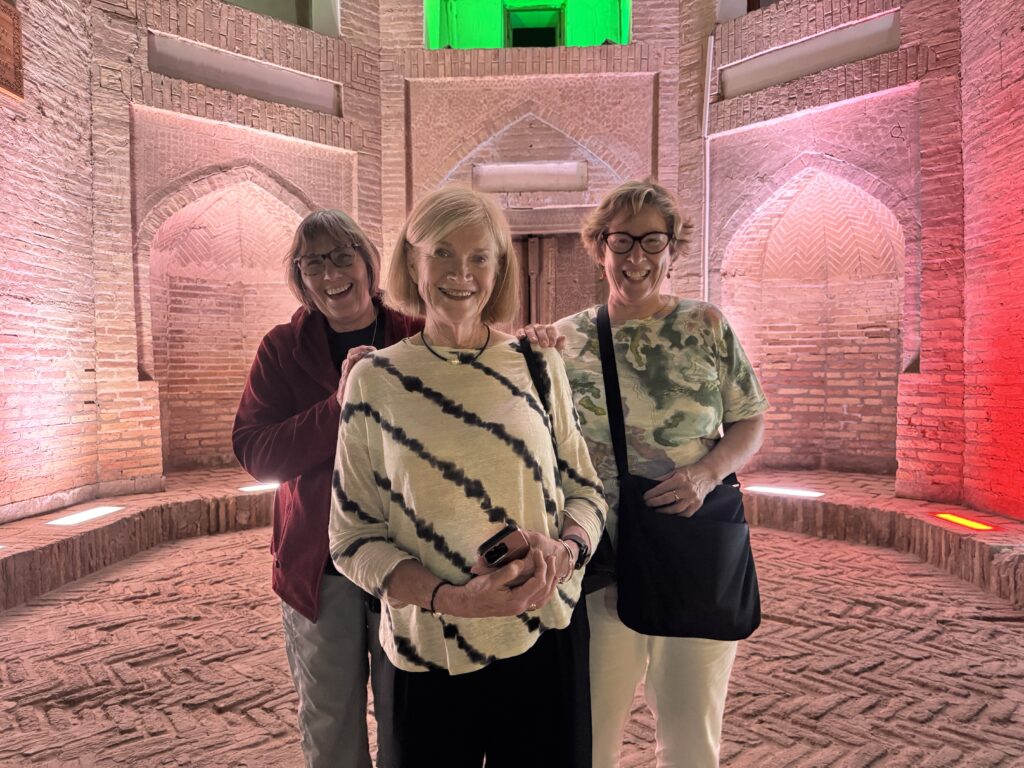
Tonight we had a lecture from our expert guide on the history of the Silk Road, dinner and then a stroll home admiring all the lit up monuments.
Comments
5 responses to “Can the Stans handle the Merck girls?”
Wow 🤩 looks incredible. How’s the food?
So much history and such fascinating buildings. The mosaics are beautiful. Is it very hot and dry? xx
Very ornate – lots of tiles just like Portugal !
I want the name of their cleaners! Everything is so pristine!
Way more spectacular than I would have imagined🙏