September 23: Ashgabat
Good question, Sammy (who asked what happens if your car isn’t clean). Ashgabat is famous for its extreme cleanliness rules — and cars are no exception.
Authorities strictly control what vehicles are allowed into the city:
· Dirty or dusty cars are often stopped at checkpoints on the approach to Ashgabat. If a car isn’t spotless, police may turn it back or require it to be washed before entry.
· It’s not just about dirt — there are also restrictions on car colour. If you’re driving a blue car from another country, you have to leave it outside the city!
· Owners have reported having to repaint their cars or keep them meticulously polished to avoid trouble.
· Within the city, drivers can be fined for a vehicle that doesn’t meet the regime’s standards of cleanliness and order.
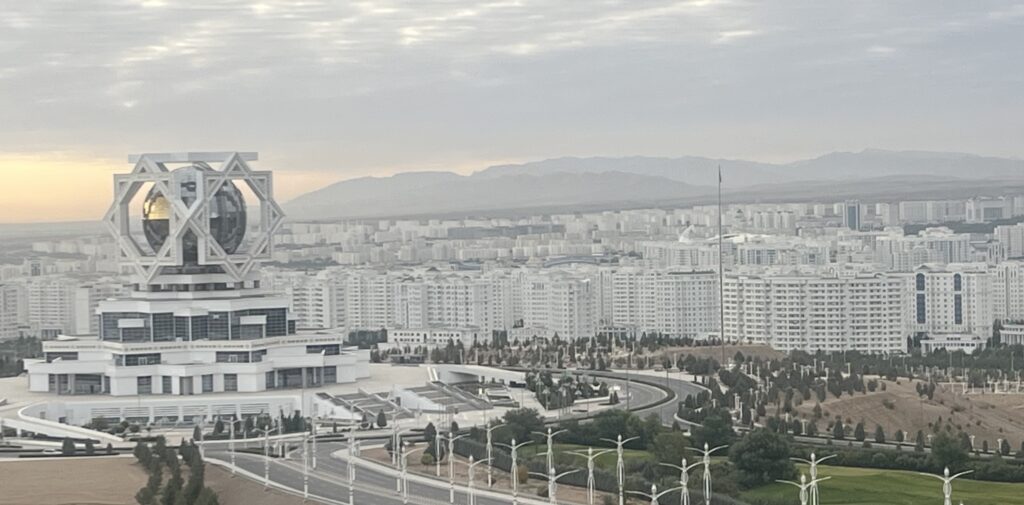
Here’s the white (marble) buildings of Ashgabat. Not a colour in sight!
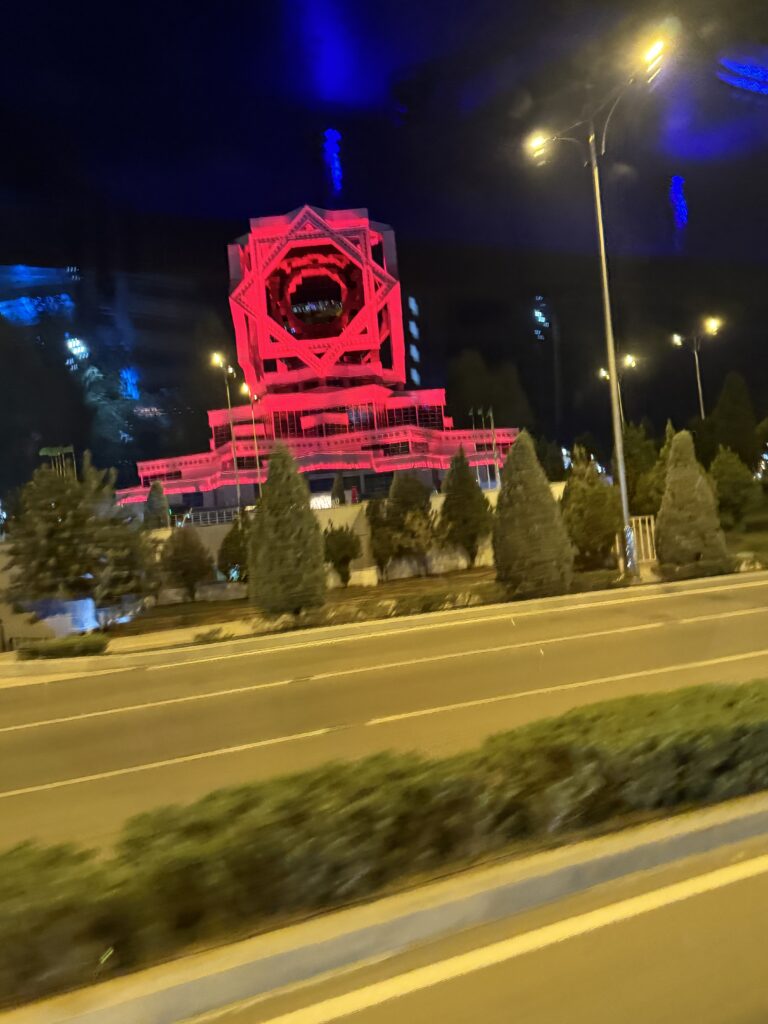
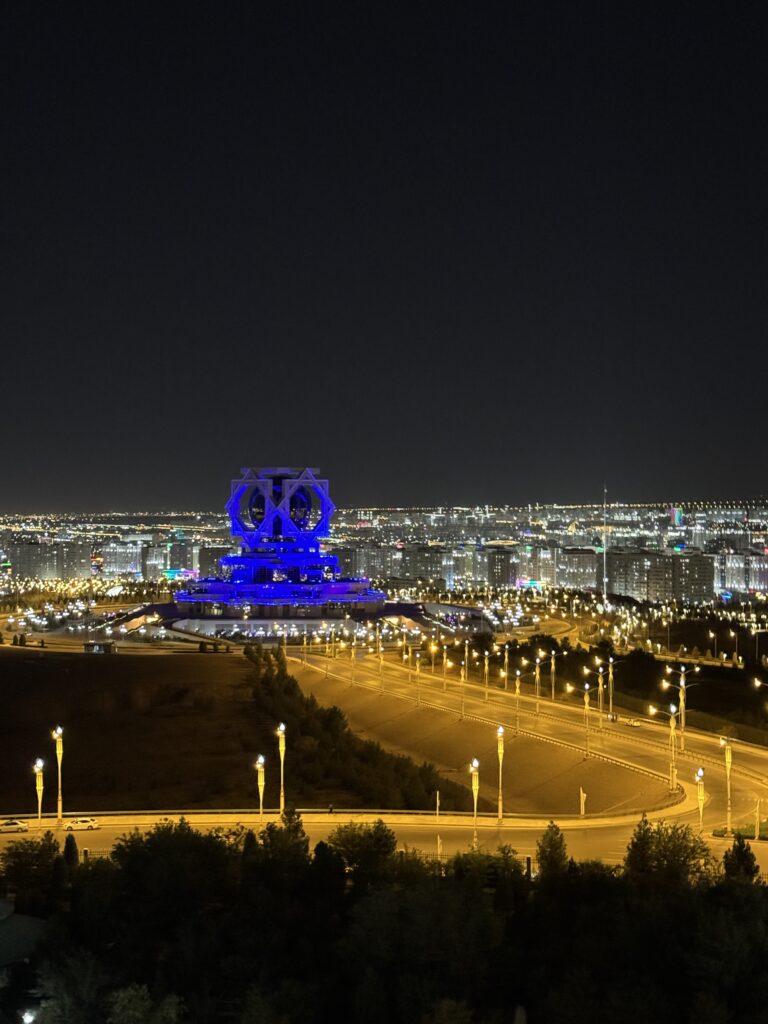
And this is what the city looks like at night
Today we visited Nisa, which was one of the great capitals of the Parthian Empire. Its ruins near Ashgabat (Turkmenistan) are a UNESCO World Heritage Site. The Parthians were one of the great powers of the ancient world — a dynasty that ruled a vast empire stretching across Iran, Mesopotamia, and beyond for nearly five centuries.
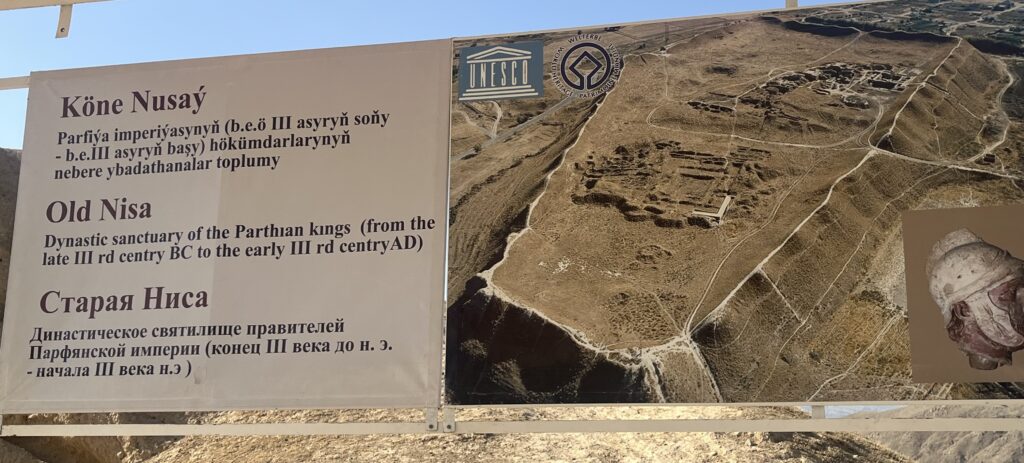
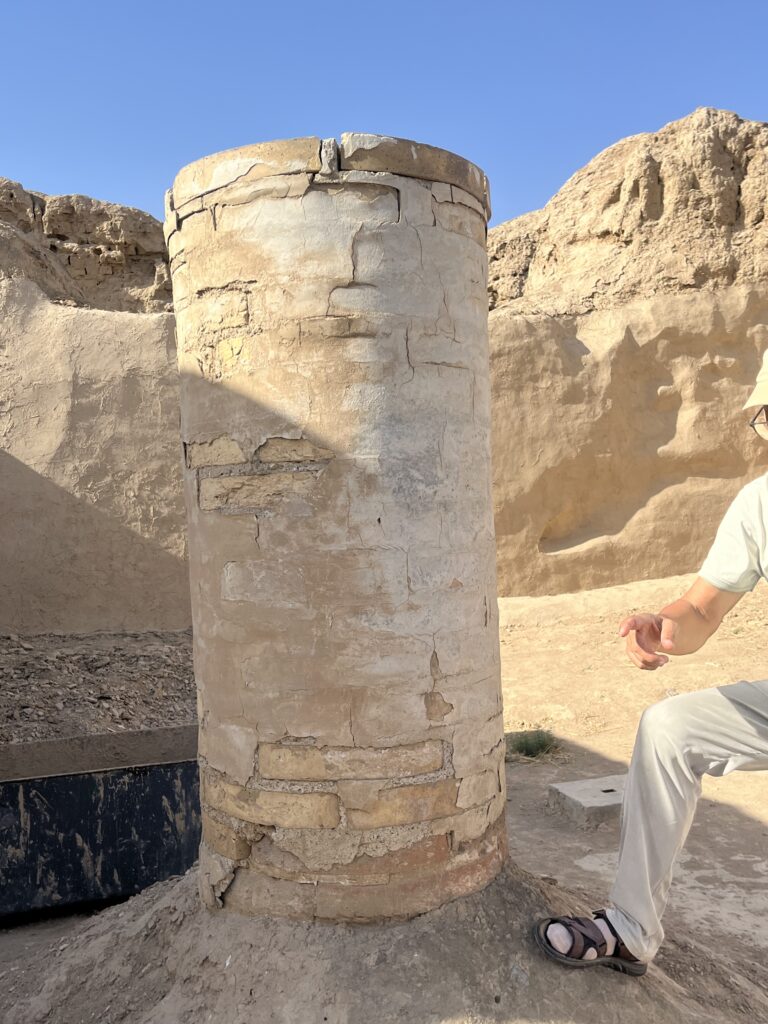
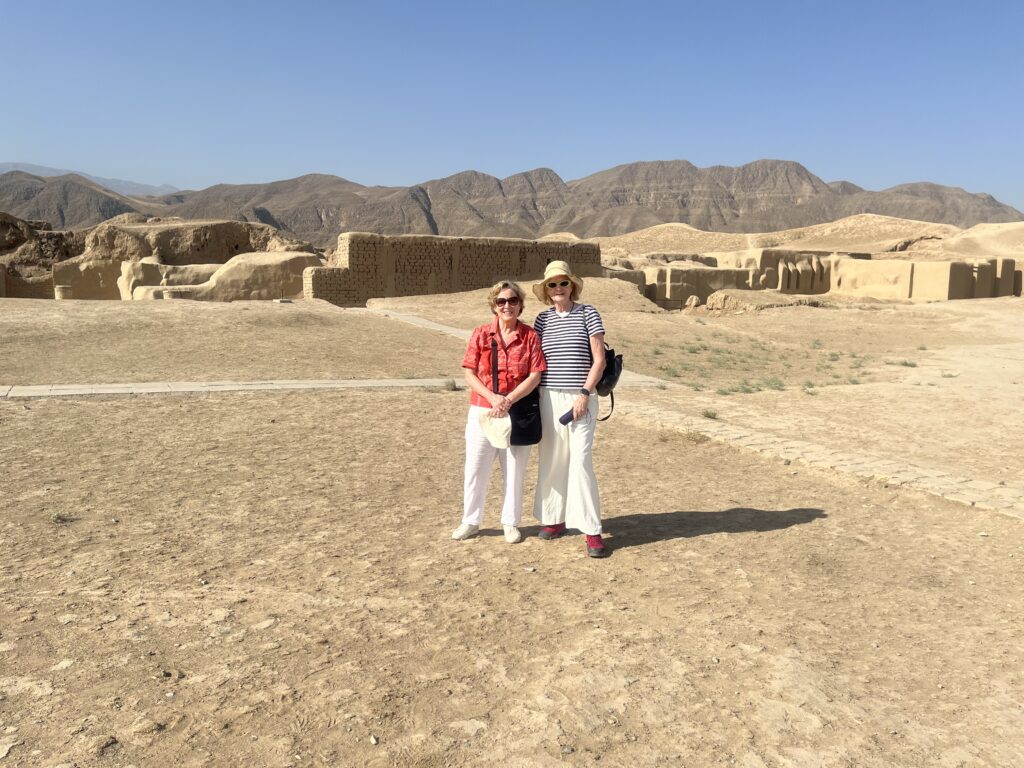
The Parthians were originally a semi-nomadic people from northeastern Iran. Around 247 BC, Arsaces I led a revolt against the Seleucid Empire (successors of Alexander the Great) and founded the Arsacid dynasty. It acted as a bridge between Rome in the west and China/India in the east, controlling key stretches of the Silk Road.
Founded in the 3rd century BC,Nisa served as one of the early royal residences and possibly the dynastic cult center of the Arsacid kings. Excavations in the 20th century uncovered treasures that give us a vivid picture of Parthian culture.


Then to the Turkmenbashi Ruhy Mosque which is one of the largest and most imposing mosques in Central Asia — and a symbol of Turkmenistan’s mix of grandeur, politics, and religion. Opened in 2004, during the rule of President Saparmurat Niyazov (“Turkmenbashi”). It intended as both a national symbol and Niyazov’s personal legacy project.
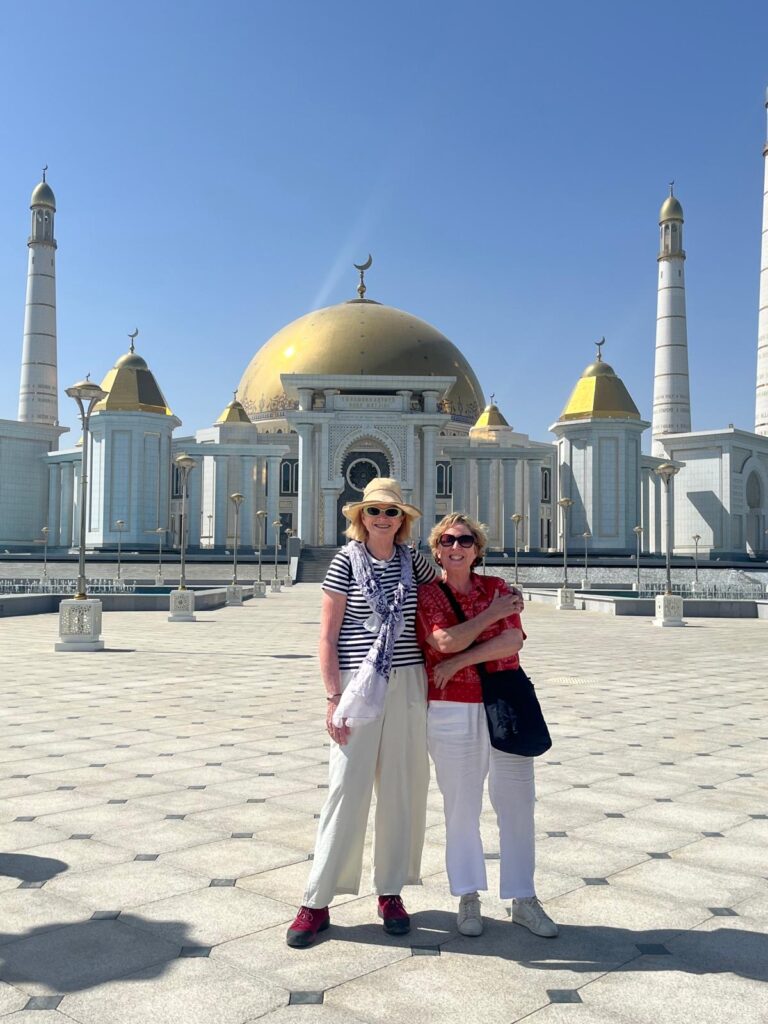
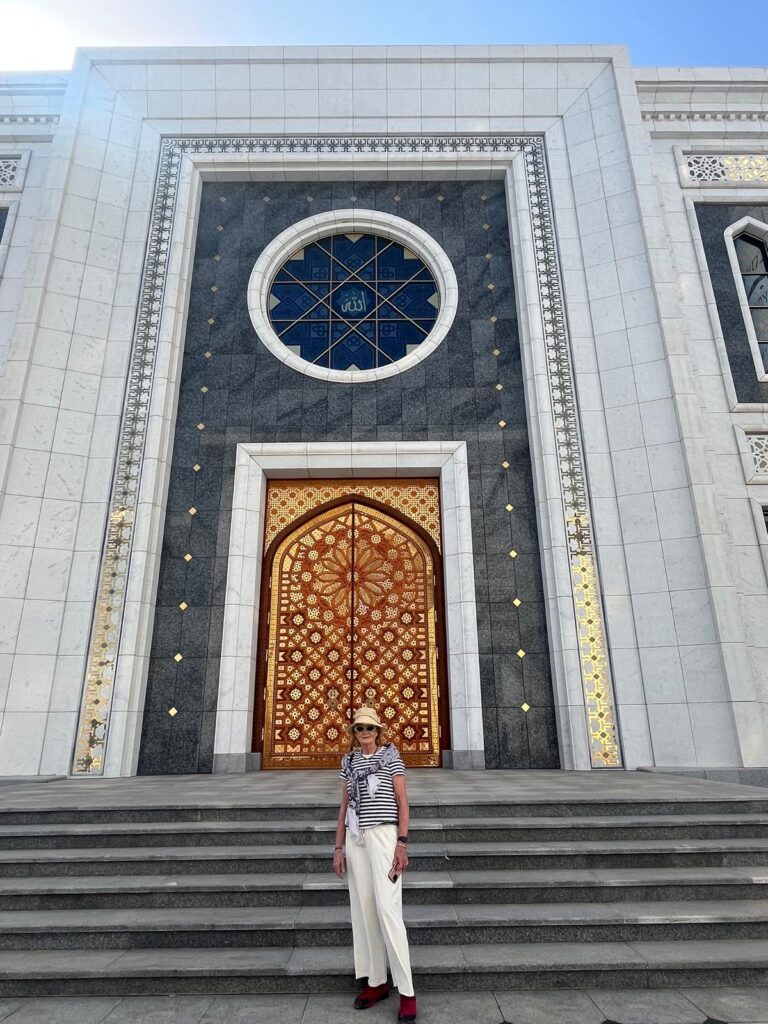
The mosque can hold 10,000 worshippers, making it the largest in Turkmenistan. It features a massive white marble structure, crowned with a golden dome and surrounded by four minarets, each 91 meters high (symbolizing 1991, the year of independence). Inside, the decoration is lavish: marble, gilding, stained glass, and intricate geometric patterns.
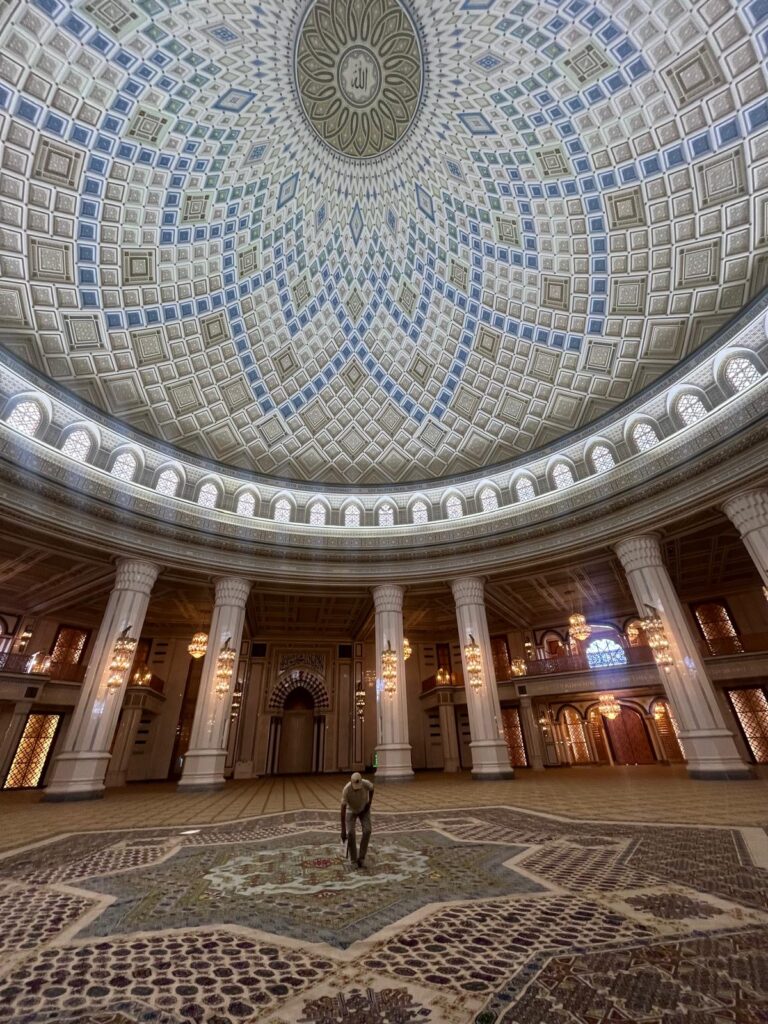
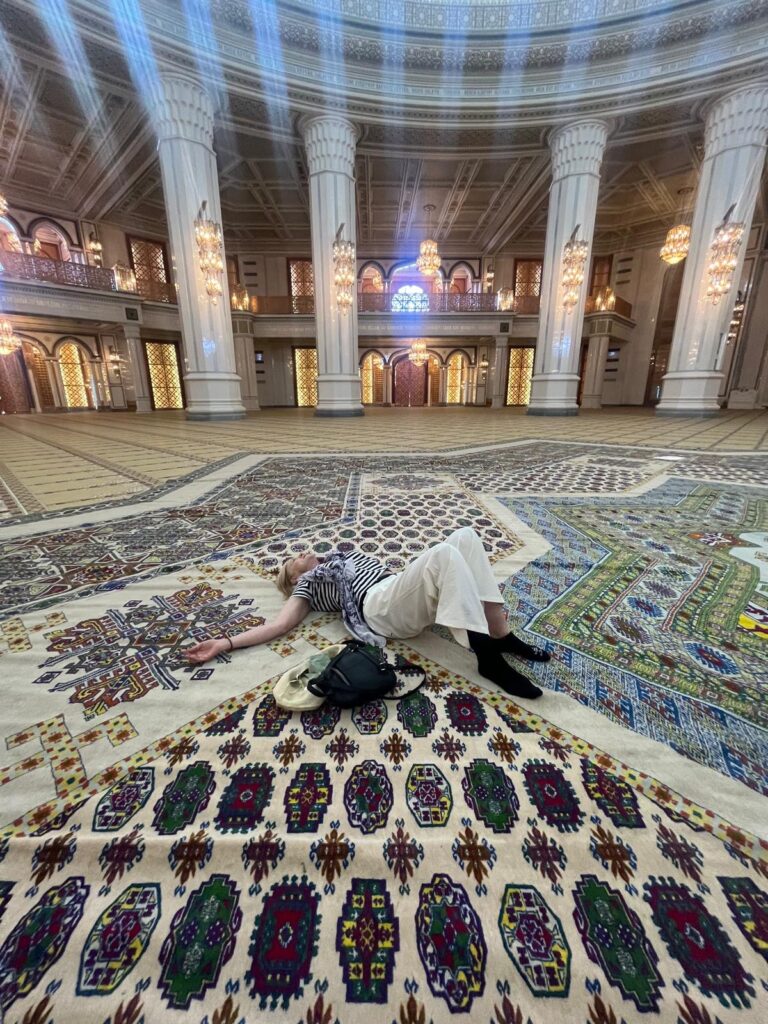
The mosque is controversial. Most mosques have only Koranic inscriptions, but this one also includes quotes from Niyazov’s book, the Ruhnama, engraved alongside verses from the Koran.This blending of a political text with sacred scripture shocked many Muslims and was criticized as blasphemous.Despite this, it became the official venue for state religious ceremonies.
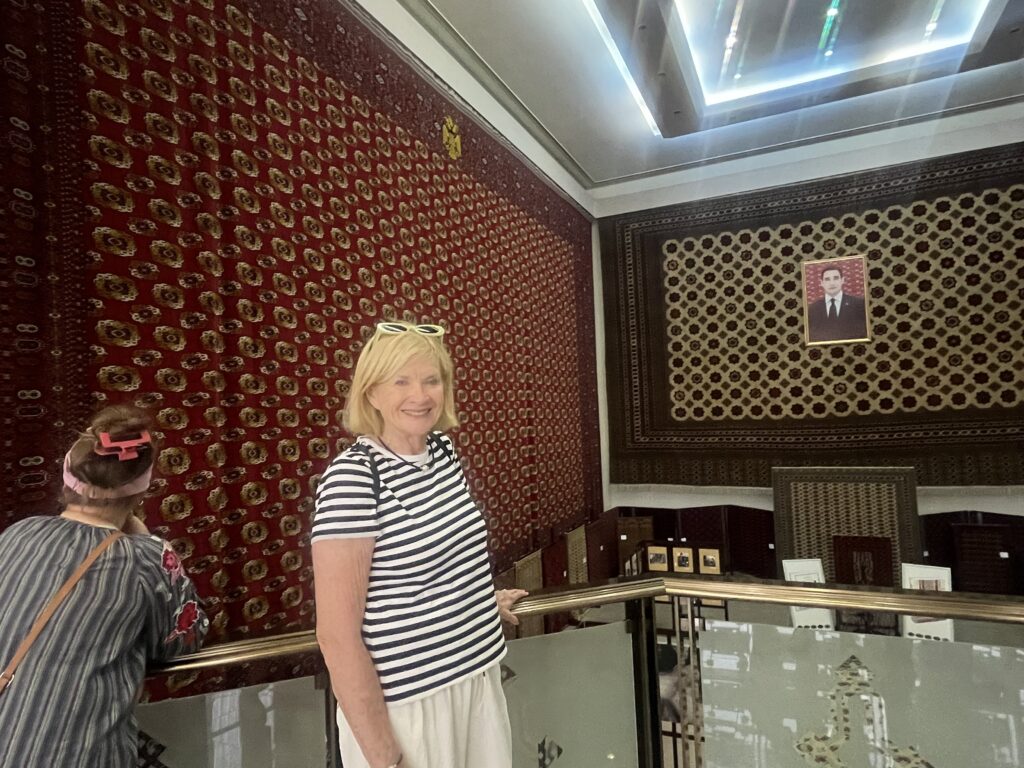
Onto the Turkmen Carpet Museum. And Marg is standing in front of the largest carpet in the world. It took 8 months to create with 40 women doing 2 shifts. It weighs 1.2 tonnes and was created in 2001 to celebrate the 10th anniversary of Independence. The other giant carpet was made in 1941 and had to be made outside because of its size.

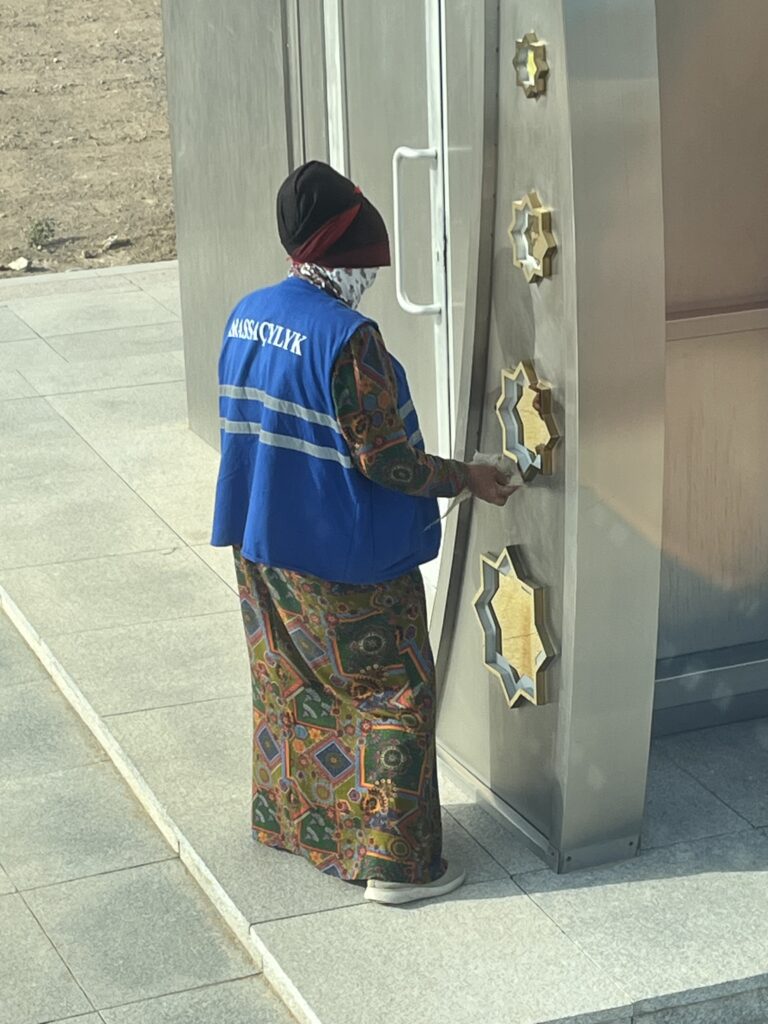
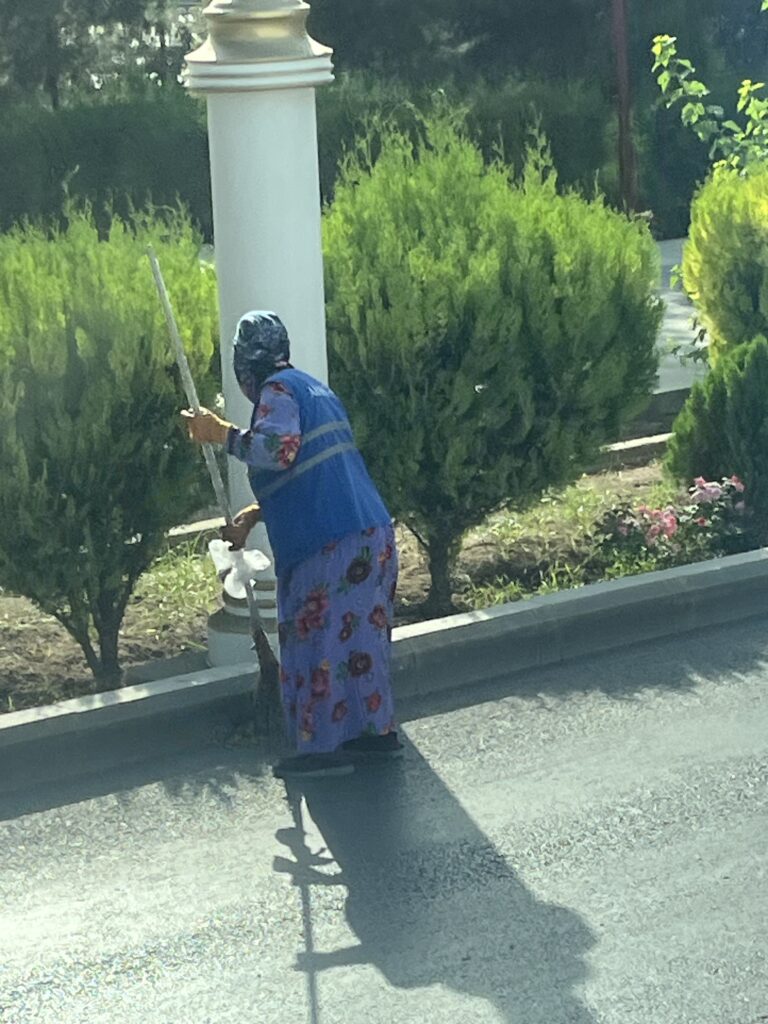
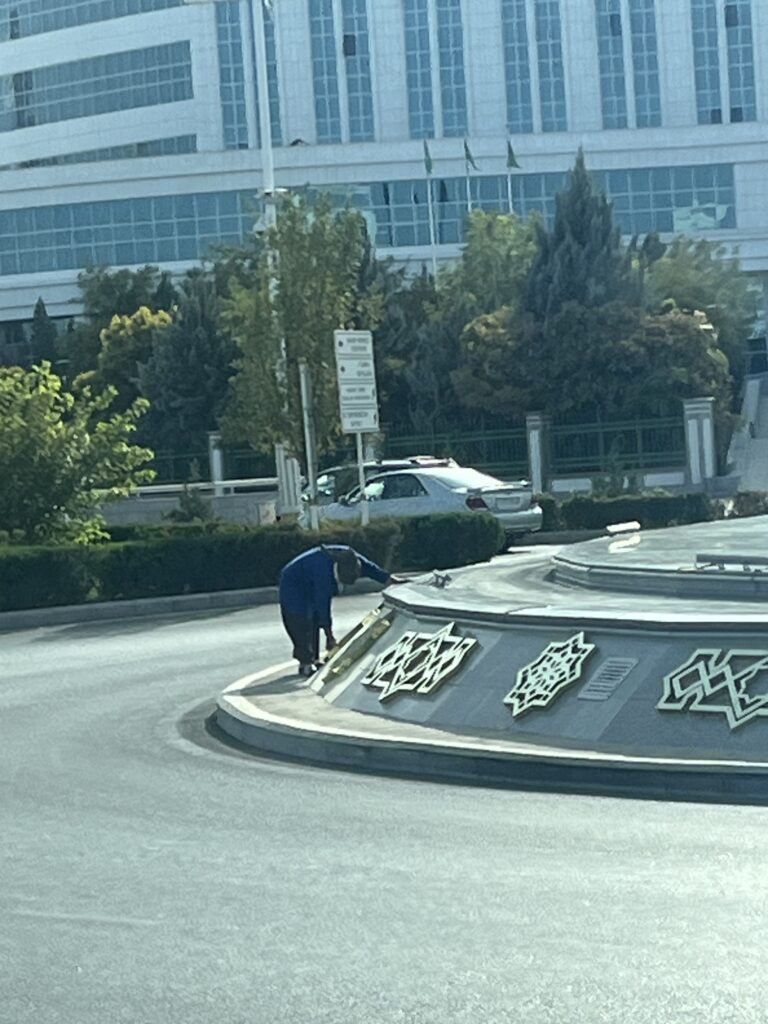
Lots of “make work” examples of workers around Ashgabat.
Final visit today was to the Ertogrul Ghazi Mosque, the ones used by locals, and which is famous for its stained glass windows.

Finally dinner overlooking Ashgabat with two of our tour mates, Peter and Anne.

Comments
3 responses to “Can the Stans handle the Merck girls?”
Interesting and great photos. Keep up the blogs, well worth reading.
Enjoy,
Terry
I’m Absolutely loving the history lesson of
of all the Stans!! Thank YOU
Sara :)) xxx
Thanks Sar really interesting and great pics xxoo