
Jan 24-25: Seadays
It’s another Seaday but there is plenty to do. There’s always great lectures on wildlife, the Antarctic explorers, the sleep patterns of penguins and the restoration of the explorer huts.
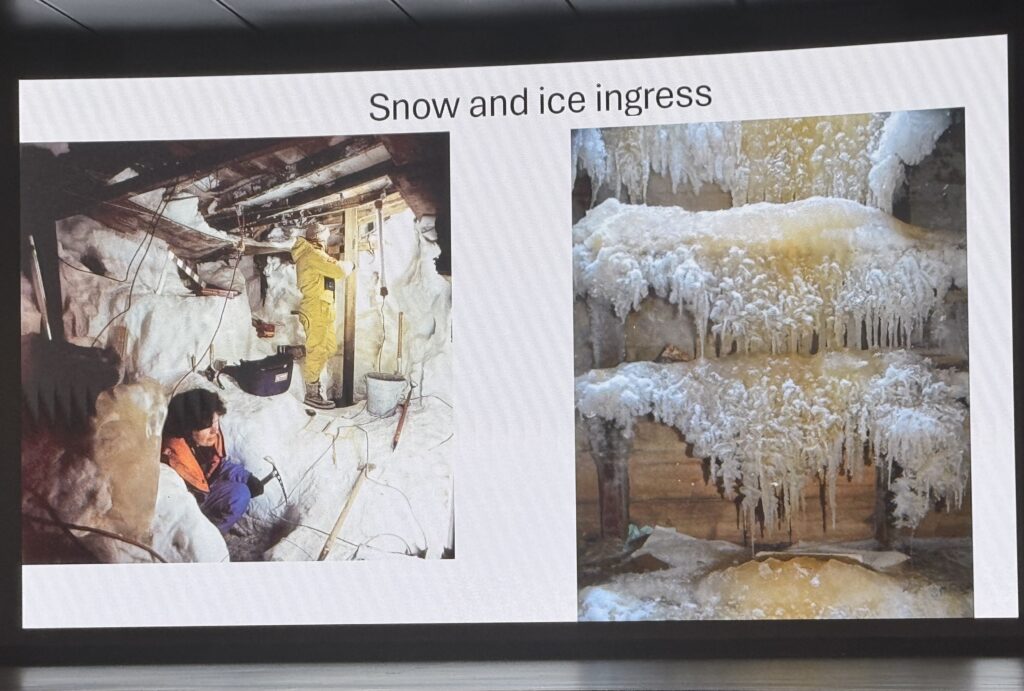
There are 6 historic wooden huts in Antarctica – 4 in the Ross Sea area. And there’s an ongoing controversy as to whether snow and ice are protective of the huts or destructive of them. It’s a double edged sword as while they have protected the structures and artifacts from total destruction for over a century by preserving them in a frozen, “time-capsule” state, they also cause severe structural damage.
Some of the positive effects of snow and ice have been that the extreme cold and ice prevented the rapid decay that would occur in warmer, wetter climates. Artifacts like newspapers, food, and clothing were essentially freeze-dried, preventing decay organisms from damaging them.
On the negative side, snow accumulates around the huts and, during warmer summer days, melts and seeps into the wood and artifacts. This creates a moist, damp environment that fosters mould and rot, and when the water re-freezes, it expands, pushing apart wooden joints and destroying the structures.
So while snow and ice were crucial for long-term survival in the short term, they are currently seen as a significant threat to the continued existence of the huts . The modern conservation approach is to remove huge amounts of ice from inside and around the huts and install waterproof barriers to stop the meltwater from causing further damage
This is how Mawson’s hut looked before snow and ice was removed.
And here are some useless facts about wildlife….did you know that penguins take thousands of power naps throughout the day.
Unlike humans, penguins never really fall asleep. Because they are often prey for predators such as leopard seals and orca whales, they have to constantly remain alert and on guard. Therefore, rather than going into a deep slumber like most other animals, penguins take several short naps throughout the day. For example, chinstrap penguins in the nesting colony take over 10,000 microsleeps throughout the day – amounting to a whopping 11 hours of sleep.
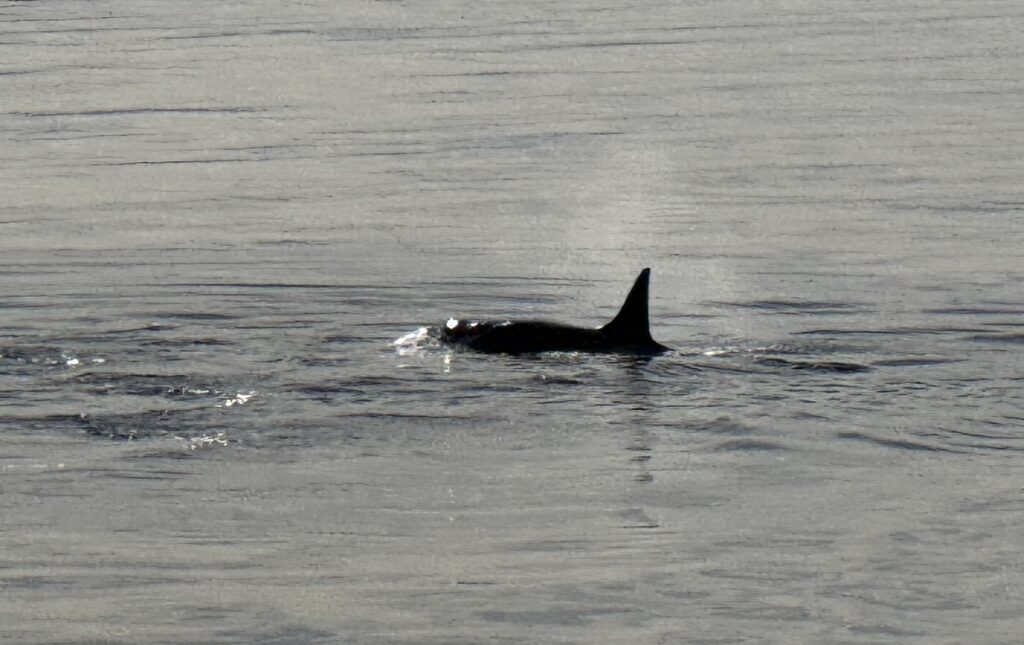
Orcas are pretty fussy eaters..there are 4 types of orca whales( also called killer whales .They hunt large mammals like Minke whales , but only eat the best cuts from a hunted whale – the lips and the tongue, and discard the rest
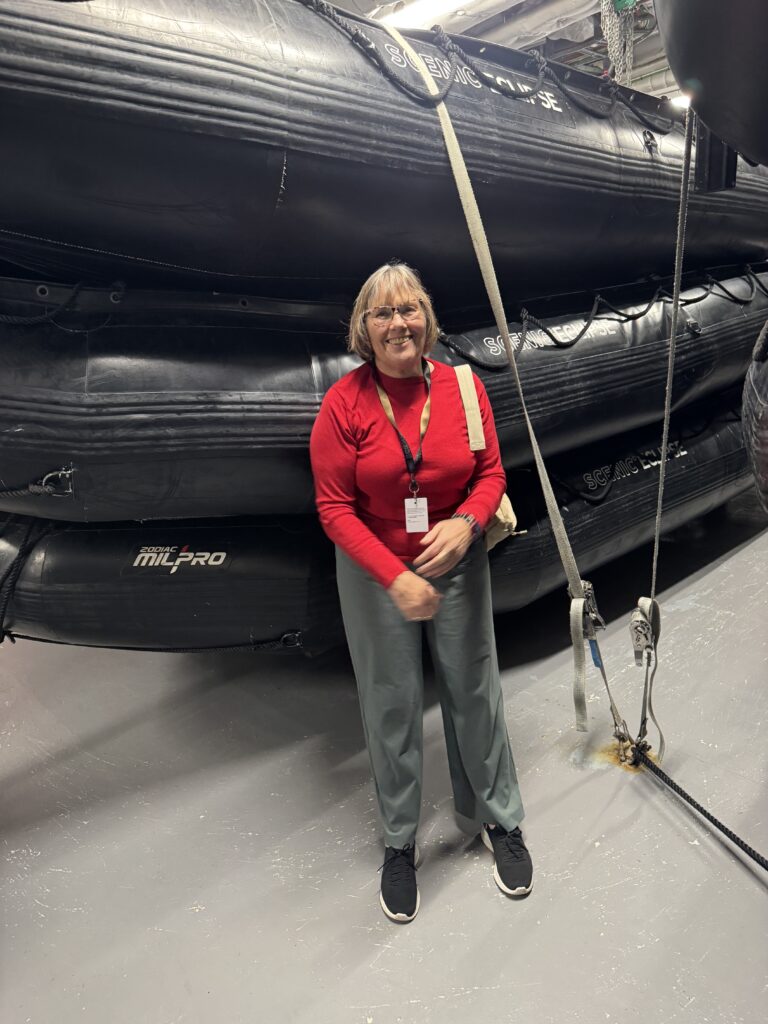
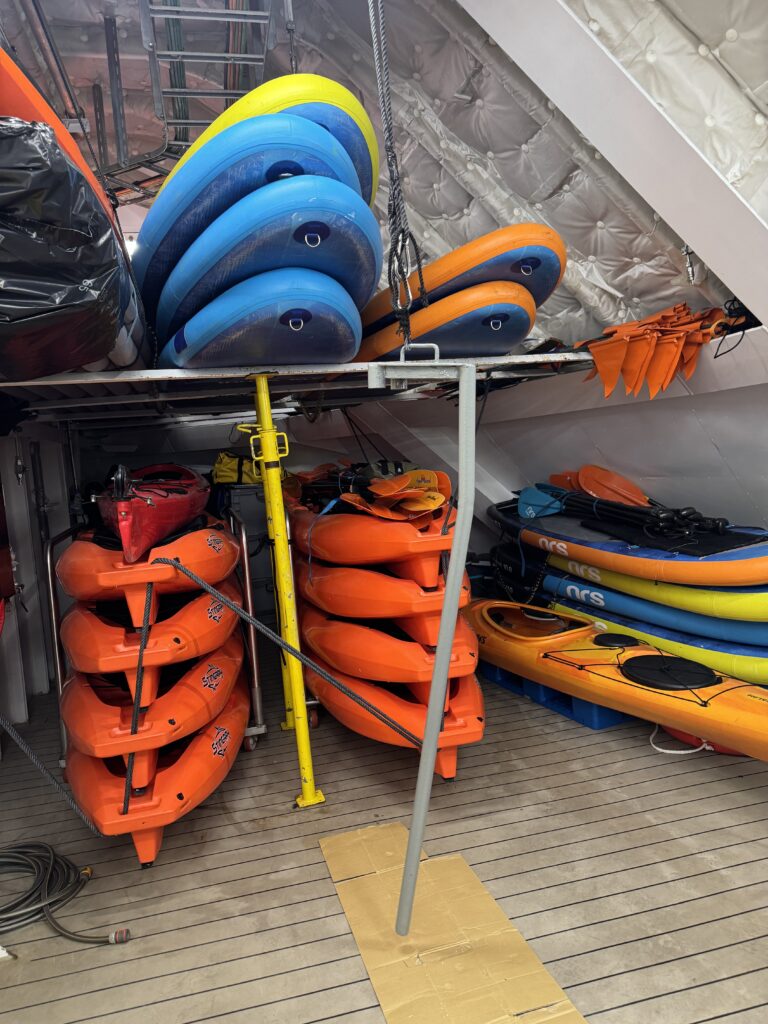
We got to inspect the working parts of the ship today. We saw the garage for the zodiacs, the garage for the kayaks, and the submersible which has been an illusive offering to Scenic passengers. It didn’t operate on the cruises done by Terry, Anne and James and is not operating on this cruise either, but it’s a very impressive looking machine

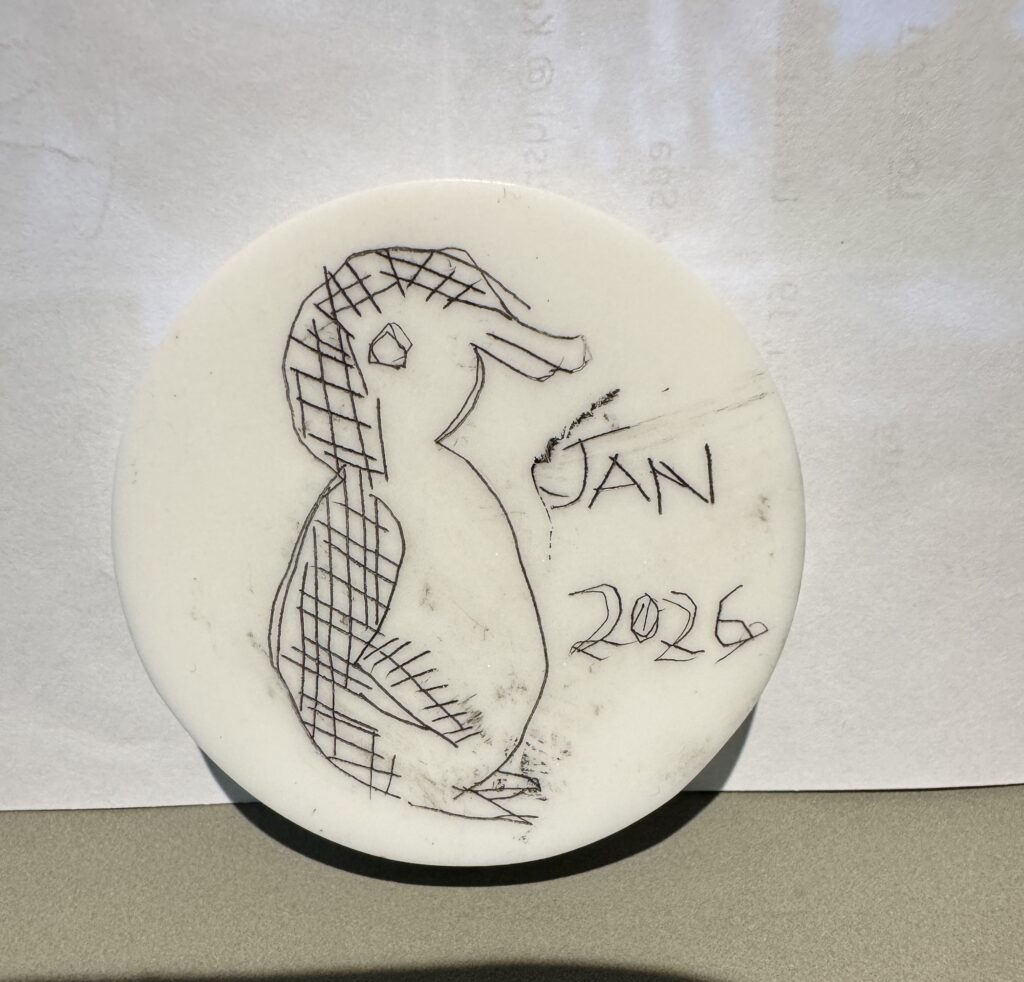
Also, I successfully completed my first piece of scrimshaw…am sure you will all be impressed !!( and yes, Sally, i would contemplate it as a New Years Day exercise but it requires a very steady hand and total focus and I am not sure the New Years Day guests would be up to the task!)
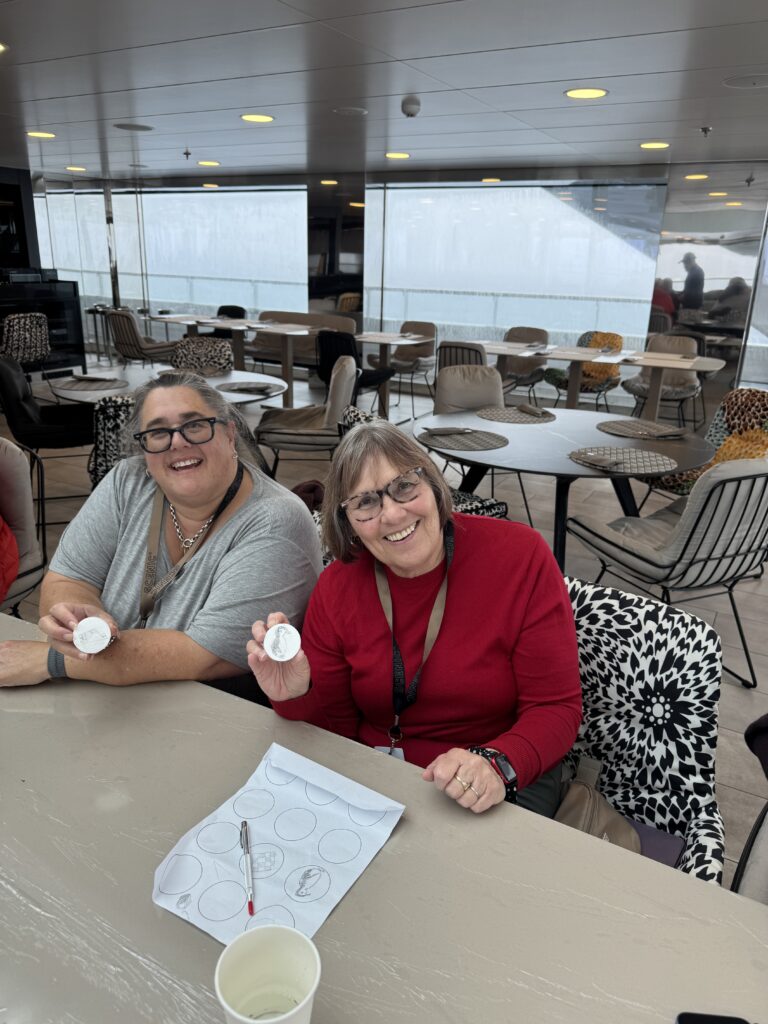
I think I mentioned earlier that there are two scientific teams onboard the ship. The first is scientist Dr Louise Emerson, a seabird ecologist from the Australian Antarctic division. She’s collecting penguin poo and feathers to assess the health of Adélie penguins and see if there are any traces of bird flu (which hasn’t yet reached East Antarctica.)
The other scientific team are Dr. Scott Pallett and Bill Kwok from the UK. This ship dropped them off at Cape Evans ( and will pick them up in a few weeks time) They are conducting a groundbreaking expedition in East Antarctica focusing on understanding antimicrobial resistance (AMR). They are summiting Mt Erebus to collect cave samples for genetic analysis and are working with, among others, senior researchers of the extreme microbiome project at NASA, to shed light on how climate change may drive the evolution of AMR and its potential impact on global human health.
We have been getting updates from the UK team via video and audio links. They did, in fact, reach the top of Mt Erebus via an unchartered route. So they get to name the new route and they are going to call it the “Wonder “ route, to acknowledge the support they have received from Scenic (Scenic’s motto is “never lose your sense of wonder”
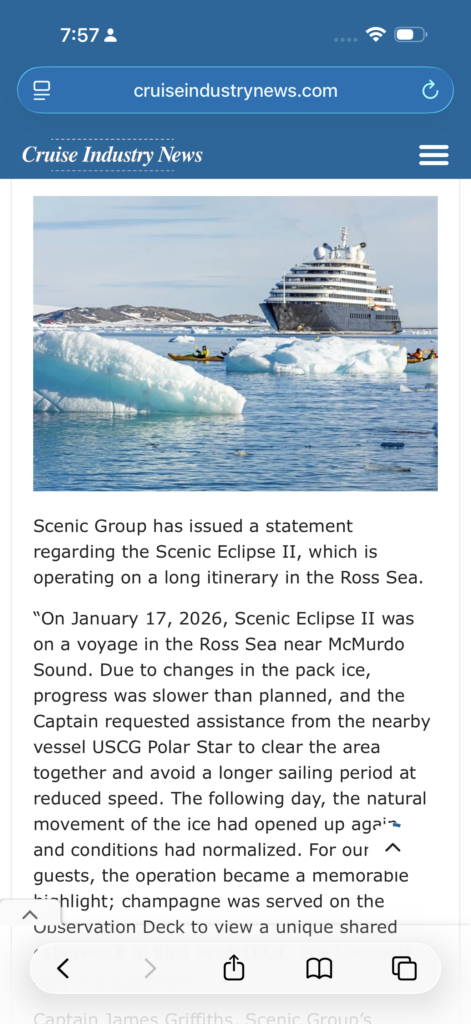
Remember a few days back, I told you how a US icebreaker came and helped us get through the ice which was surrounding our ship….well it made news. Here’s vision taken from the US icebreaker ship…..
https://m.youtube.com/watch?v=p6Y9TDvC9bs&feature=youtu.be
And here’s the press release which Scenic issued!
Comments
6 responses to “Antarctica East 2026”
The film of the ships is awesome! Very cool 😎
Gosh – the ice breaker moved very quickly
It would be quite scary to be trapped by ice, at night especially – and no other vessel in sight!!
Ang, I think the footage has been sped up ….it wasn’t nearly as fast as that in reality
High Drama on the High Seas!!!! Then the calm of Sara’s Scrimshaw, and So Very Well Done too I must say – Brilliant keepsake of a Brilliant Adventure!!
Excuse the brevity ?? That was as long and comprehensive as anything you have blogged all trip xxxx
Wonderful experience Sar. Feel tempted to try it myself…..well trapped in ice might be a turn off.