
Jan 16: McMurdo Sound
Sammy, you asked about the 7 marathons across 7 continents in 7 days….not only can I tell you where they are run, but I can introduce you to the chef on the first marathon, Gerard Baker, who happens to be one of the lecturers on this ship.

This years marathon is being run at the Ultima base in East Antarctica. You just need to charter yourself a jet from Capetown!
Our position today is 77 deg 35 mins S, 164 deg 44 mins east. We are the most southerly ship in the world today! No other ship is further south!
And we’ve just seen a number of Emperor Penguins on the ice. The emperor penguin is the tallest and heaviest of all penguin species, is endemic to Antarctica and is the only penguin species that breeds during the Antarctic winter
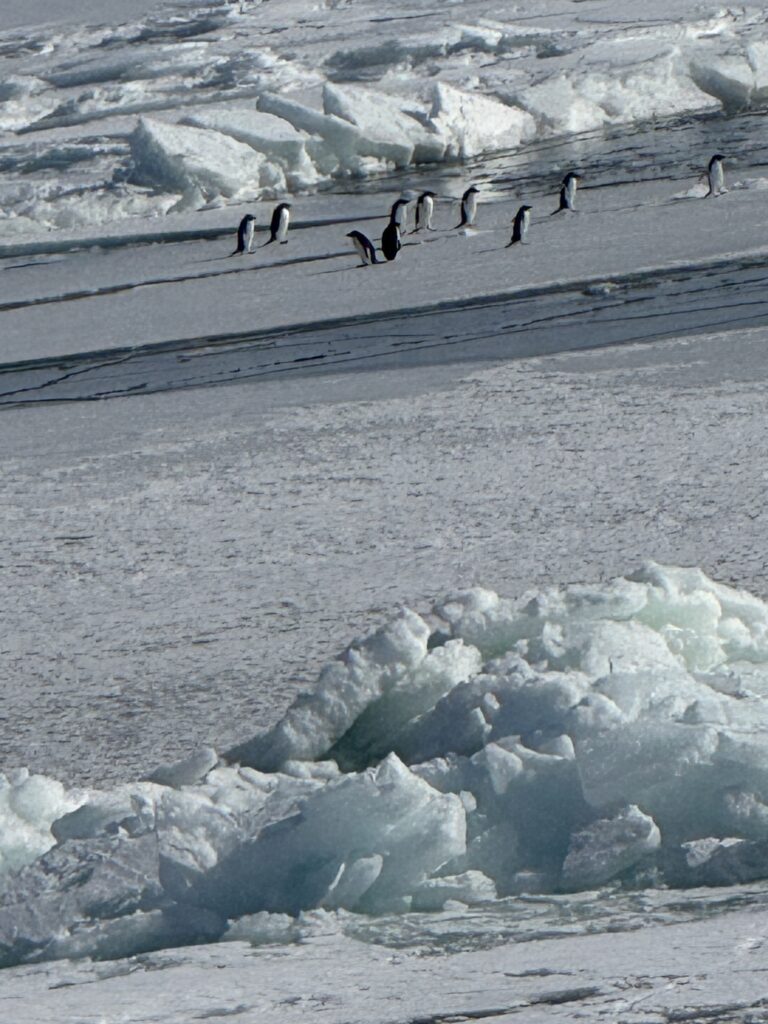
McMurdo Sound is known as the southernmost passable body of water in the world, located approximately 1,300 kilometres from the South Pole. Captain James Clark Ross discovered the sound in February 1841 and named it after Lieutenant Archibald McMurdo of HMS Terror.
British explorers Ernest Shackleton and Robert Scott built bases on the Sound’s shoreline for their overland expeditions to the South Pole.
The landscape is awesome.
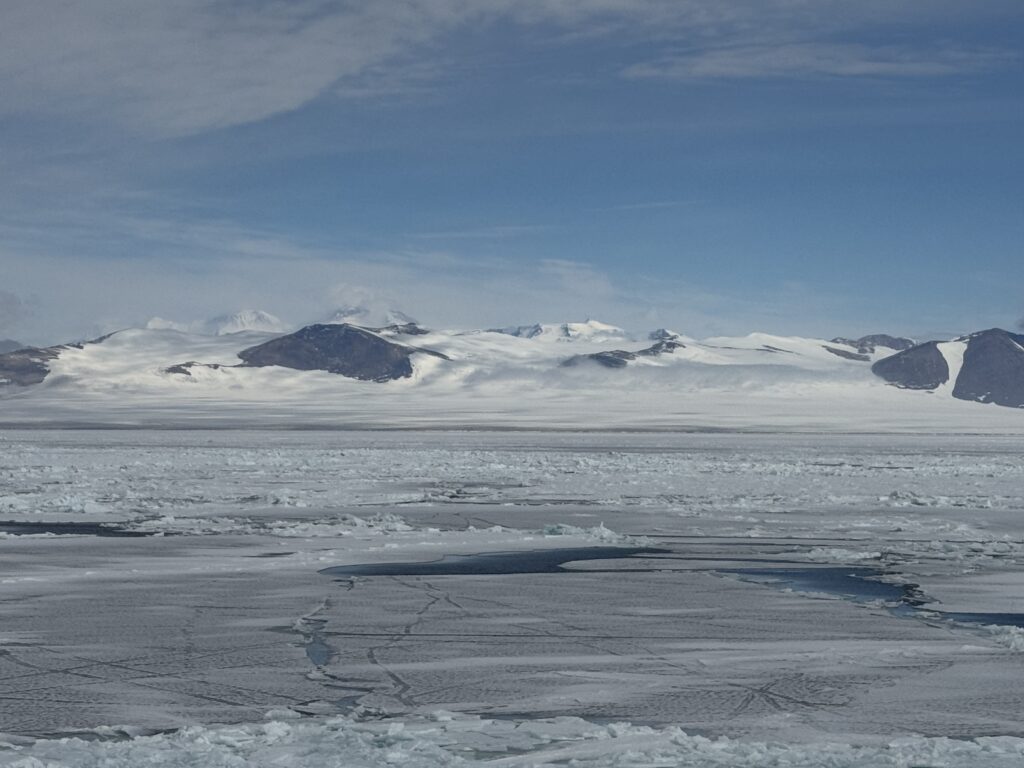
McMurdo Sound remains important today. Aircraft transporting cargo and passengers land on frozen runways on the McMurdo Ice Shelf. And it is an important supply route to the continent’s largest base, the United States McMurdo Station.
From McMurdo Sound, you can access the McMurdo Dry Valleys by helicopter.
The Dry Valleys are notable for being the coldest and driest desert in the world, as well as being the largest ice-free region in Antarctica; as a result, the Valleys have become a hotbed for scientific research in the Antarctic region.
Scientists consider the Dry Valleys to be the closest of any terrestrial environment to Mars and NASA studies the area.
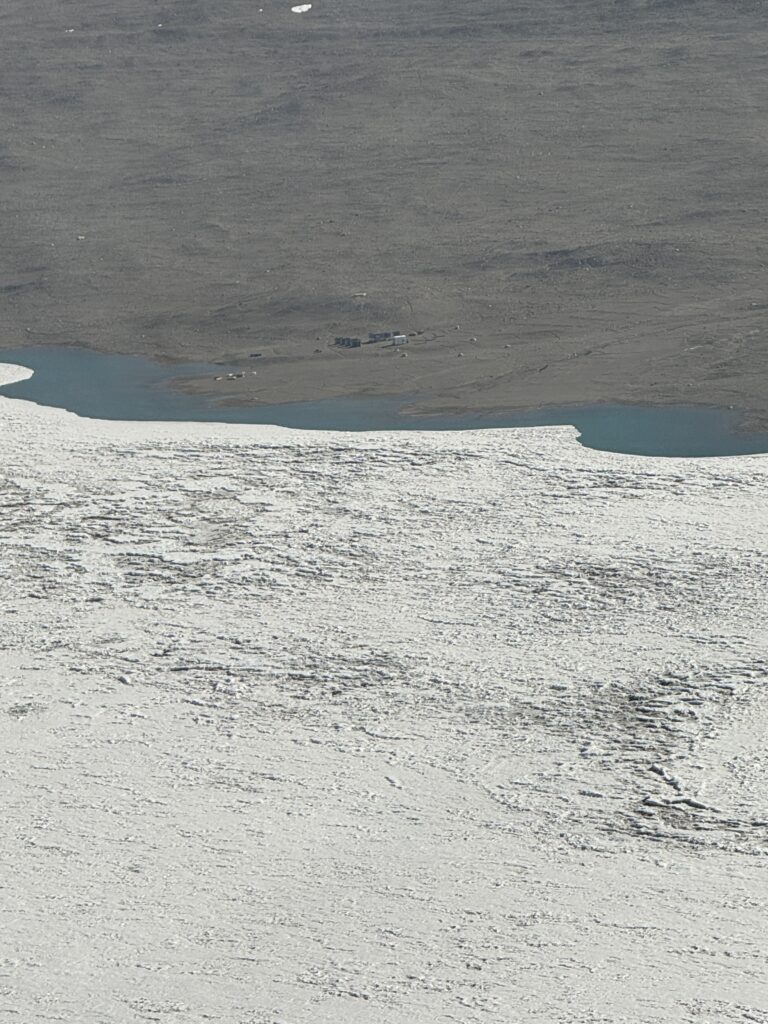
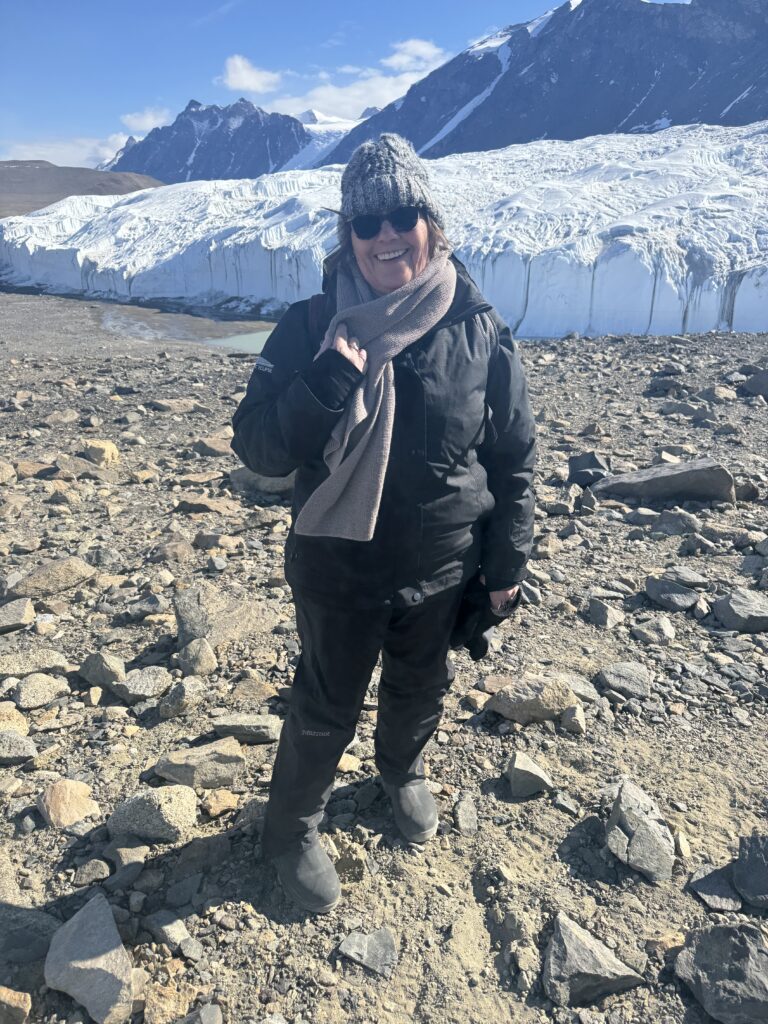
And I took a helicopter ride to land on one of the dry valleys. Here’s some views of the dry valleys from the helicopter as well as on land. In the second picture, you can see a few research huts.


And here’s a mummified crab eater seal.

Flying back to the ship, you can see that it is surrounded by ice. The captain has to keep moving the ship to ensure we don’t get iced in! You can also see some passengers walking on the ice

And here’s some of the wonderful food we are having…


Comments
6 responses to “Antarctica East 2026”
Passengers walking on the ice looks pretty scary to me
It was so great to see and talk to you tonight – you look wonderful. The blog is wonderful too
Keep on enjoying – love you ❤️
Extraordinary narrative and extraordinary photos Sar.
Very cool…in many ways🐧🦭
Gosh what a surreal pic of the ship navigating its way through ice – thank goodness for modern technology!
Loving all the pics xx
Who needs National Geographic when we have you!🙏🩷