
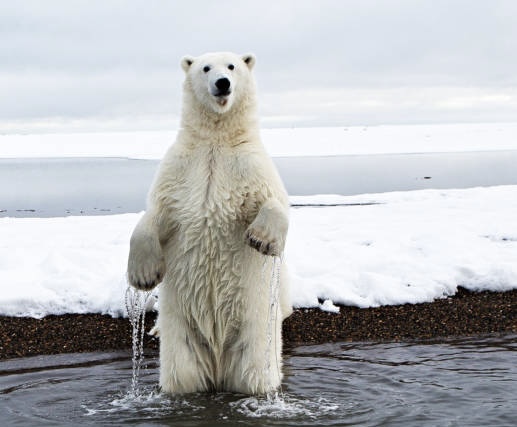
Day 4: Oslo to Svalbard
Very early start with coaches taking us to airport at 5.30 am. We flew to Longyearbyen which is in the Arctic circle and is the world’s northernmost settlement with a population of around 2000 and the largest inhabited area of Svalbard, Norway. Actually Svalbard is not strictly part of Norway because we had to go through passport control to get there.
Svalbard lies under the sovereignty of Norway, but the Svalbard Treaty places several restrictions on Norway. Among other things, Norway cannot use the archipelago for warlike purposes.
The scary thing about the restriction on “warlike purposes” is that planes flying into Longyearbyen are prohibited from using radar. They have to fly using their sight which can be tricky in cloudy conditions. If they can’t land after 3 attempts, they have to turn around and go back to from where they came!
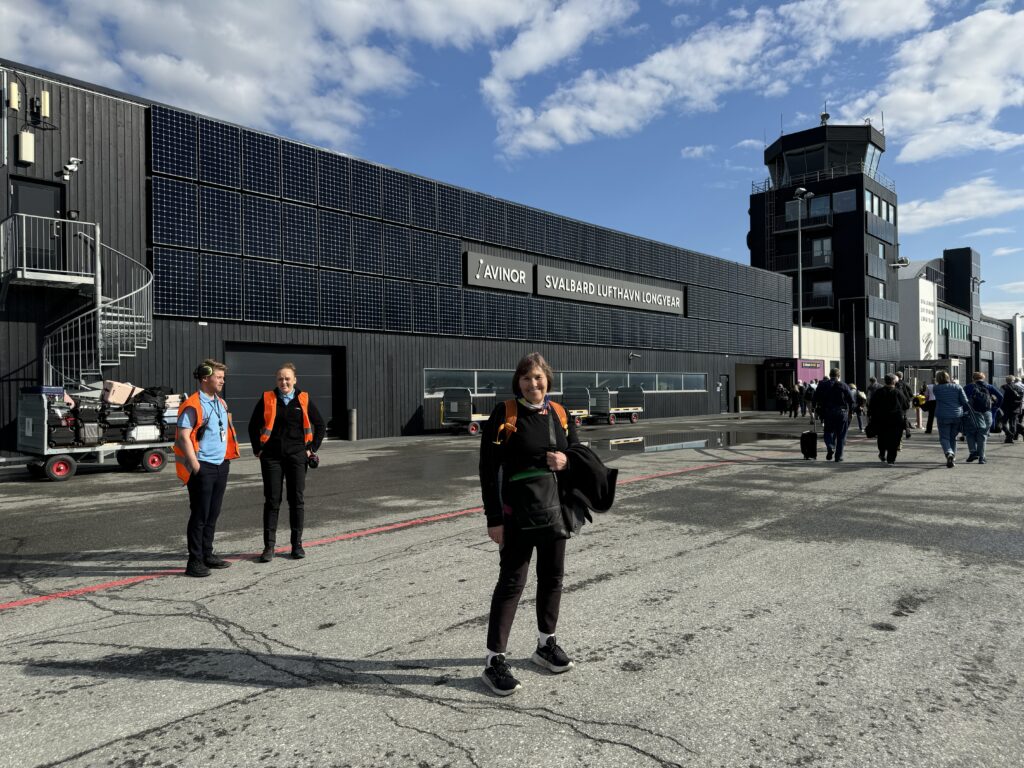
Here’s some interesting facts about Longyearbyen, which I know you’ve been hanging out for……
1. They don’t bury people in Longyearbyen anymore. This is because they found that people who had been buried there during the time of the Spanish flu in 1918, still had traces of the flu in them, preserved because of the permafrost beneath the surface.
2. And who can tell me the significance of these structures…?
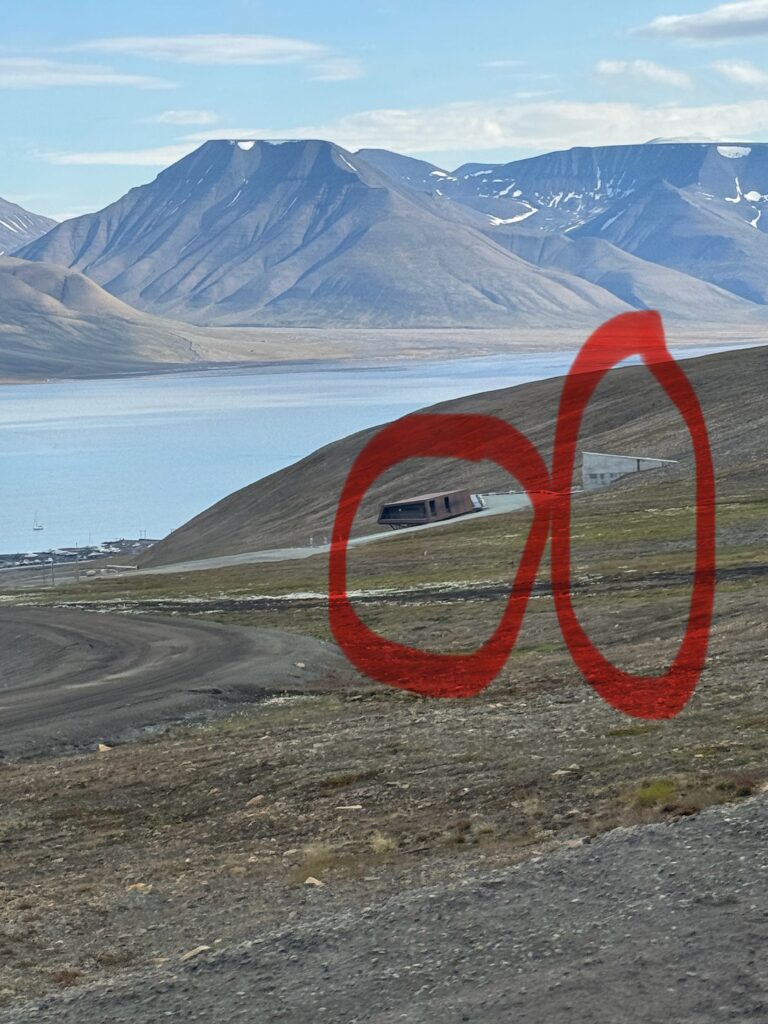
Well this is the Global Seed Vault……..the Seed Vault safeguards duplicates of 1,301,397 seed samples from almost every country globally, with room for millions more. Its purpose is to back up genebank collections to secure the foundation of our future food supply. It’s the ultimate insurance policy for the worlds food supply.
A temperature of −18°C is required for optimal storage of the seeds. Permafrost and thick rock ensure that the seed samples will remain frozen even without power. The seeds are sealed in custom-made three-ply foil packages, which are sealed inside boxes and stored on shelves inside the Seed Vault. The low temperature and moisture levels inside the Seed Vault ensure low metabolic activity, keeping the seeds viable for long periods of time.
3. There’s also an Australian connection to Longyearbyen. The Australian company PolarX, founded by Jason Roberts has an office here. It is the world’s foremost provider of highly specialised polar logistical support for film productions and photographers journeying to the ends of the earth.
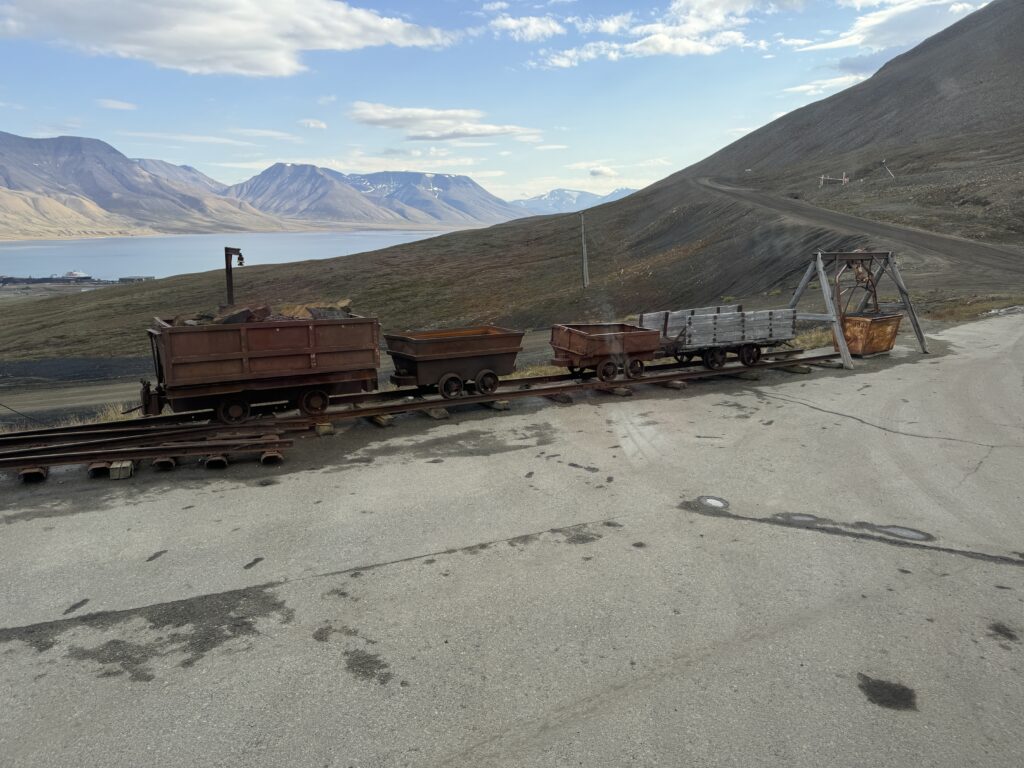
Longyearbyen used to be the site for a number of coal mines. But the last one is due to close next year.
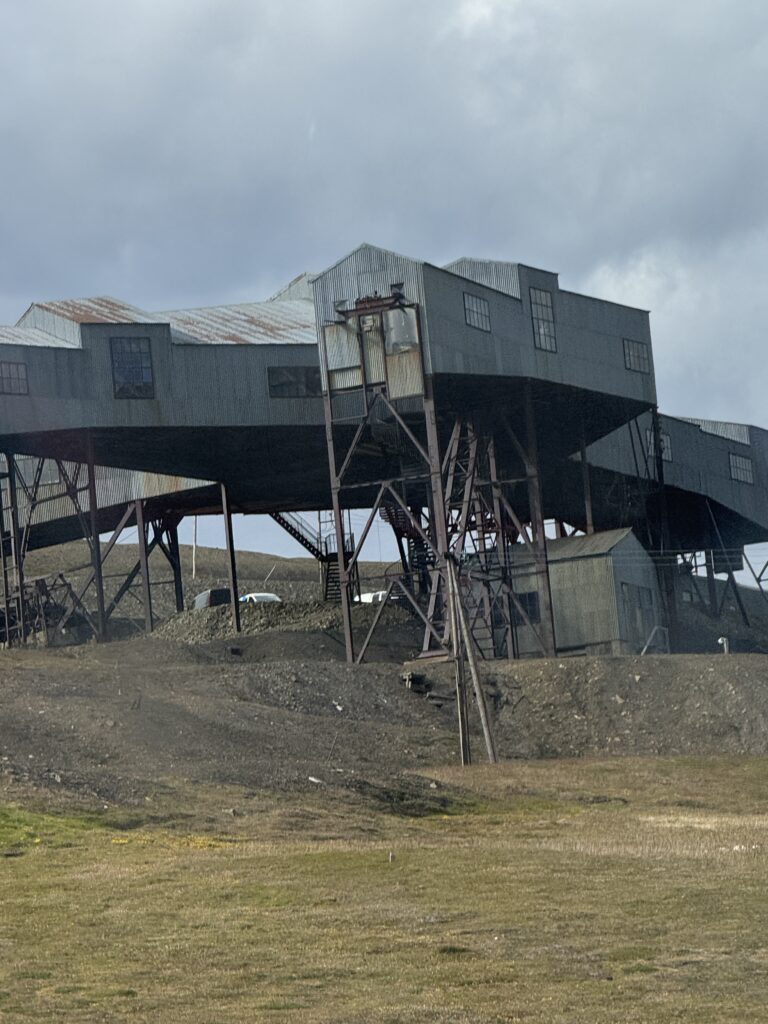
Interesting approach here to polar bears….
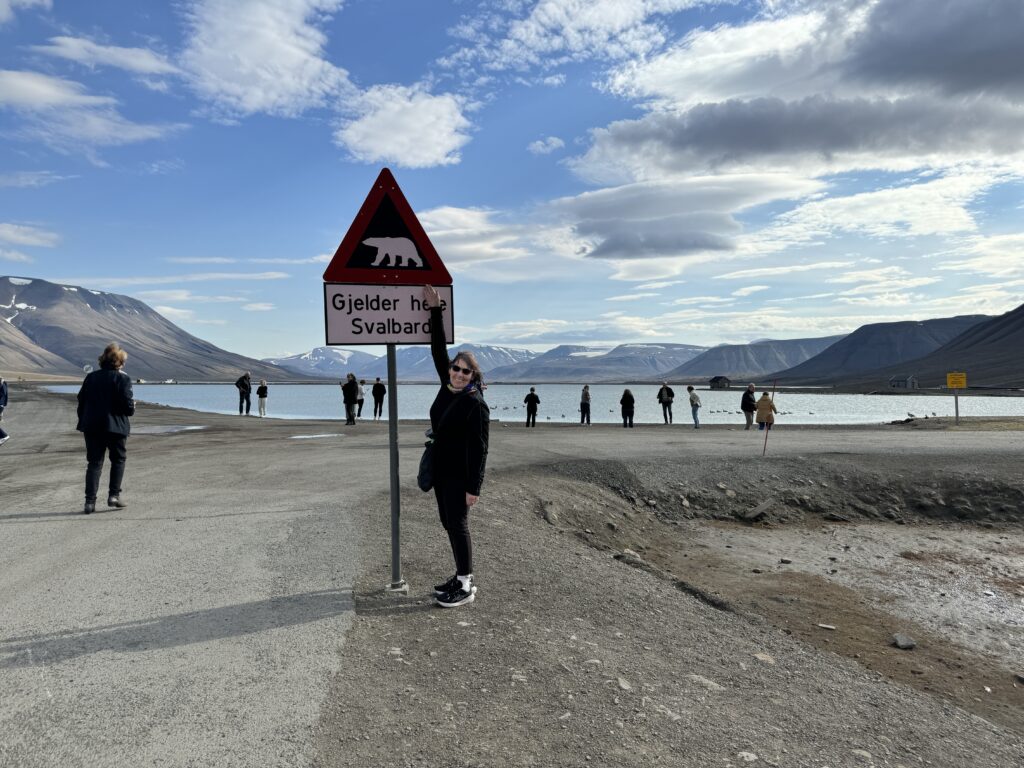
Everyone here leaves their cars and homes unlocked so if a polar bear is near to you, you can seek shelter in anyone’s home or car!
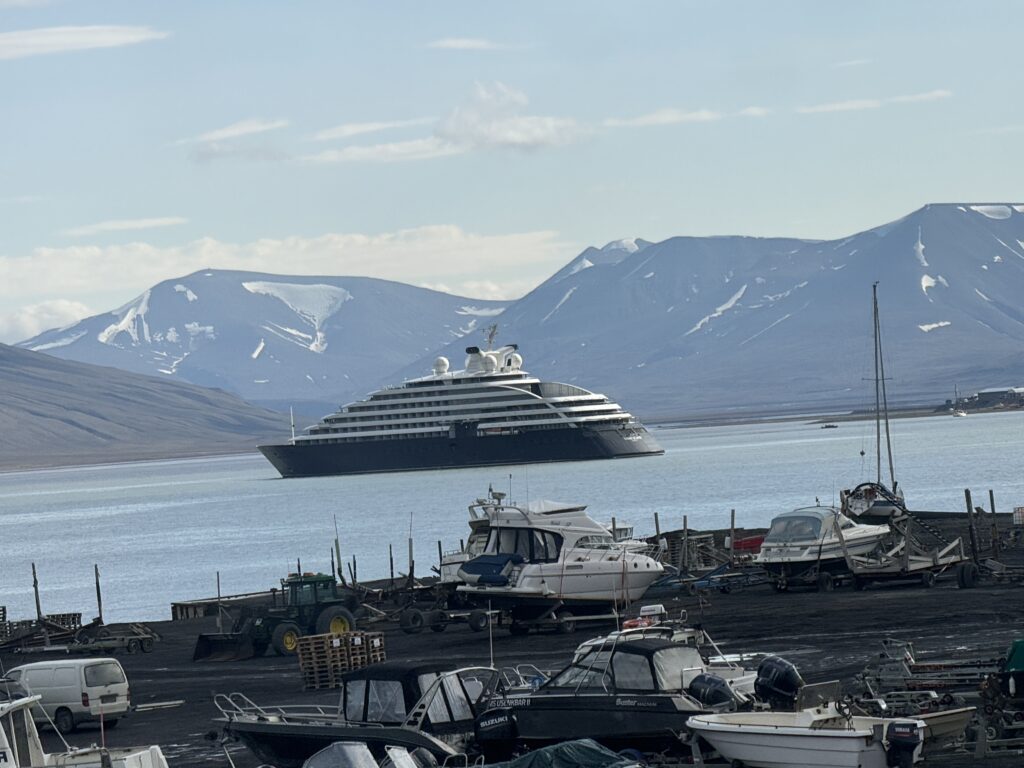
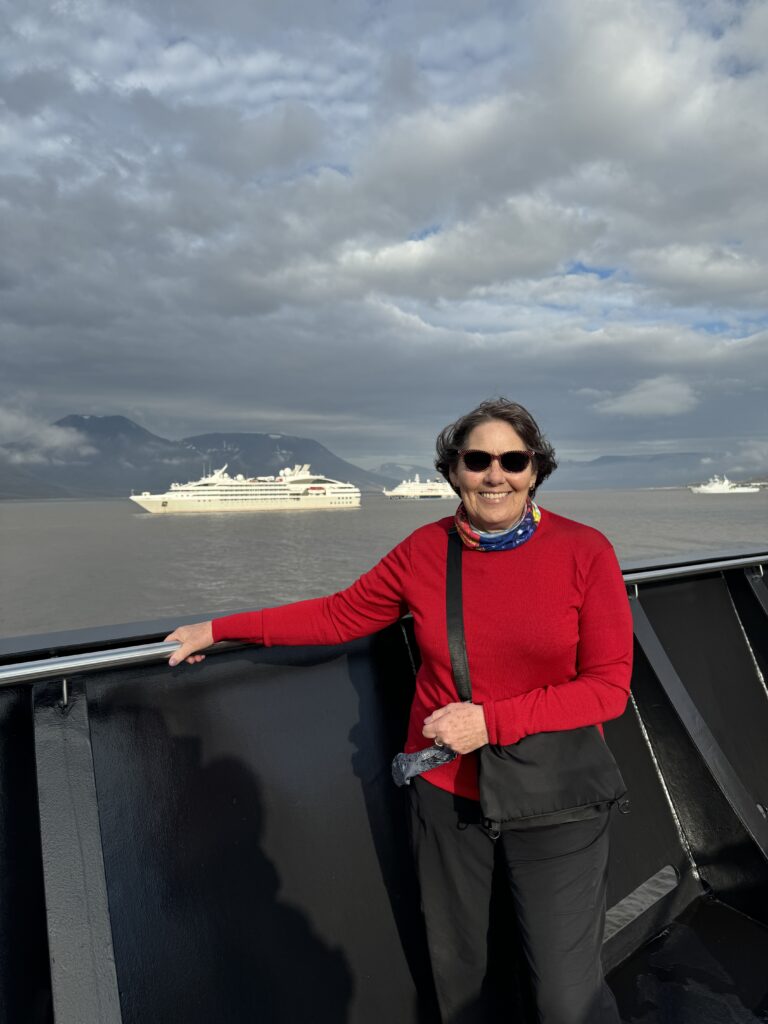
We finally boarded our ship around 2 pm and sailed away around 7 pm
Comments
10 responses to “Hello from the Northern Hemisphere”
What’s the temp? You don’t look that cold in yr red jumper & no gloves. Seen any bears?
Looks pretty chilly to me
Happy sailing xxx
Looks terrific. I’ve booked for April next year. Thanks for all the research and Iinfo on Svalbard !
Looks like a wonderful start to an amazing holiday.
So what do they do with dead bodies? Incineration??
You are an amazing blogger!!
A fascinating start to your trip.
Thanks Sar. You are the mistress of interesting facts. I have heard of the seed vaults – just amazing. And I love the polar-bear emergency exits (OP’s cars and homes). Take care, Jody
Truly a wonderful assortment information Sara,
and Certainly a special part of the world.
Happy Travels. Paula :))
Wow some interesting facts! Did you see a polar bear?
We just boarded the Indian Pacific and are on the way to Perth!
Gorgeous photos! Yay, finally on board👏🏻👏🏻👏🏻