
Day 3: Yabuhara to Narai
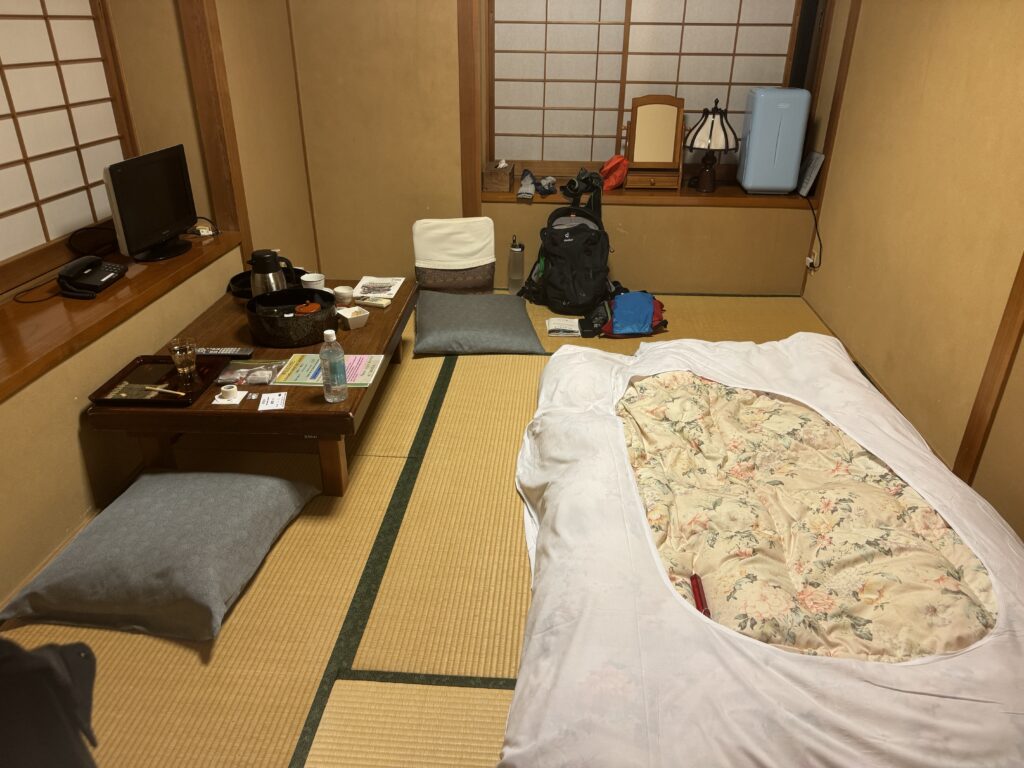
Firstly a huge apology as I have misled you as to the sleeping arrangements…we aren’t sleeping on tatami mats; we are in fact sleeping on a thin futon bed on top of the tatami mats plus wheat pillow. It’s still almost on the floor so getting out of bed is like you’re getting off the floor!
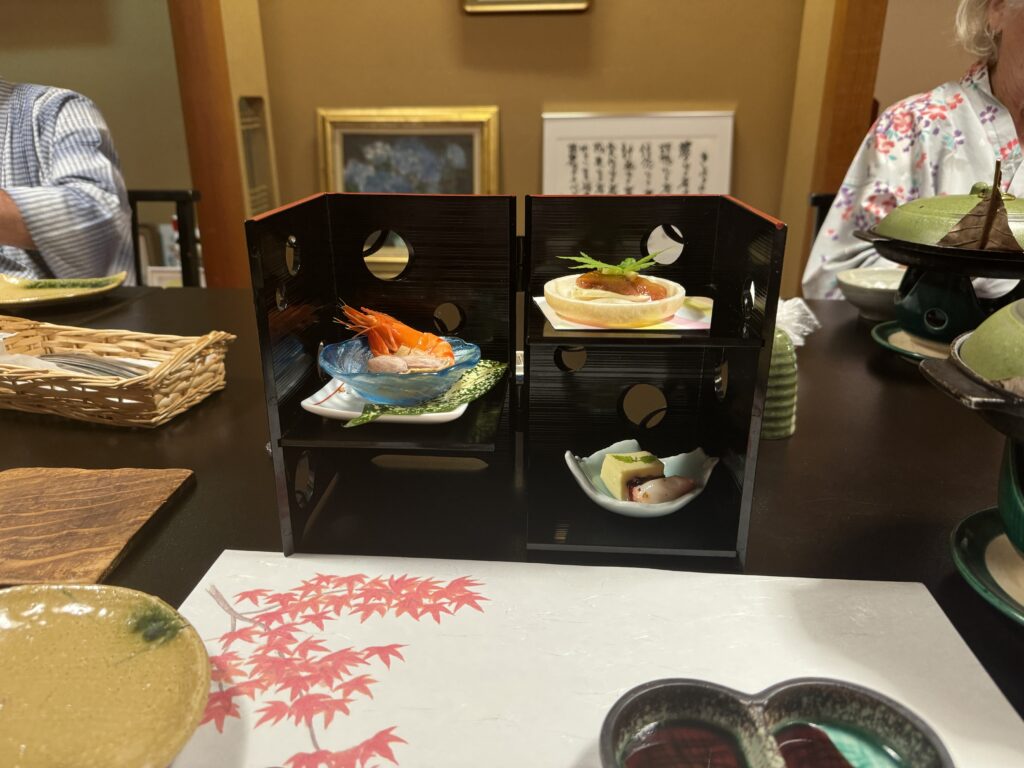
And we have had the most amazing dinners: things like rainbow trout, sashimi, mushroom noodles, walnut tofu, tempura, sticky rice, miso soup. And that’s all part of one meal and all so delicately presented. So we are certainly not starving.
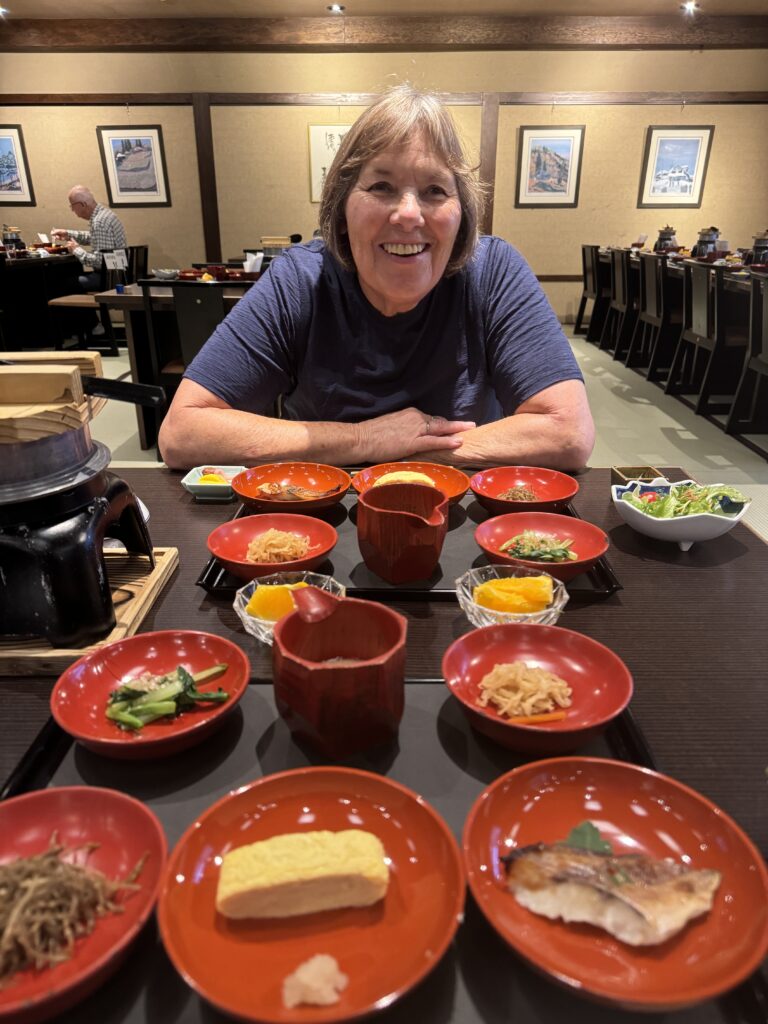
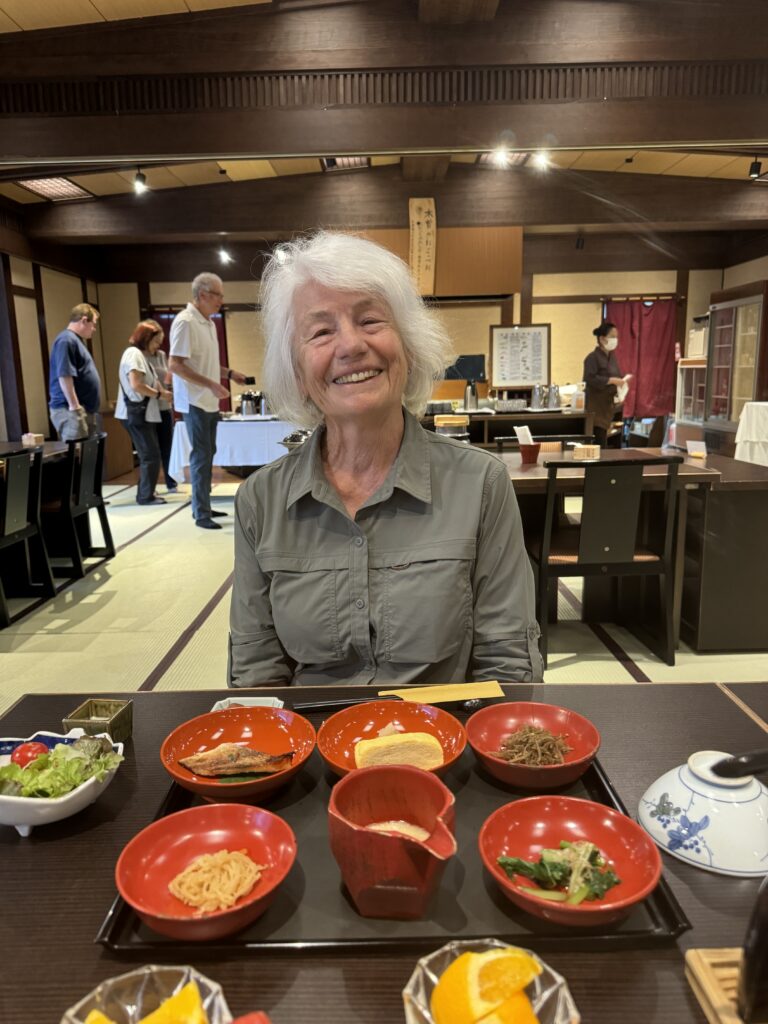
And here we are at breakfast. Also a gourmet spread.
Today’s walk took us from Yabuhara to Narai. Yabuhara flourished as a post-town during the feudal Edo period, though almost no original buildings remain due to repeated fires in the past. It was also famous for ‘Oroku-gushi’ a hair comb made from the Minebari tree (Alnus firma) which belongs to the birch family and is native to Japan. Legend has it that a girl named Oroku suffered from a brain disease. One day she climbed Mount Ontake (3,067 m) and prayed to the spirit of Mount Ontake for healing. She heard a divine voice saying ‘Make a comb using the Minebari tree and comb your hair every day.’ She followed the advice and before long she was free from the disease. Oroku-gushi became popular in Edo-period Japan and they were sold in Edo and Kyoto too. The Oroku-gushi industry declined in the 1960s when plastic combs appeared, but in 1973 it was designated an ‘important intangible folk cultural property’ in Nagano Prefecture and the tradition has been maintained and passed on.
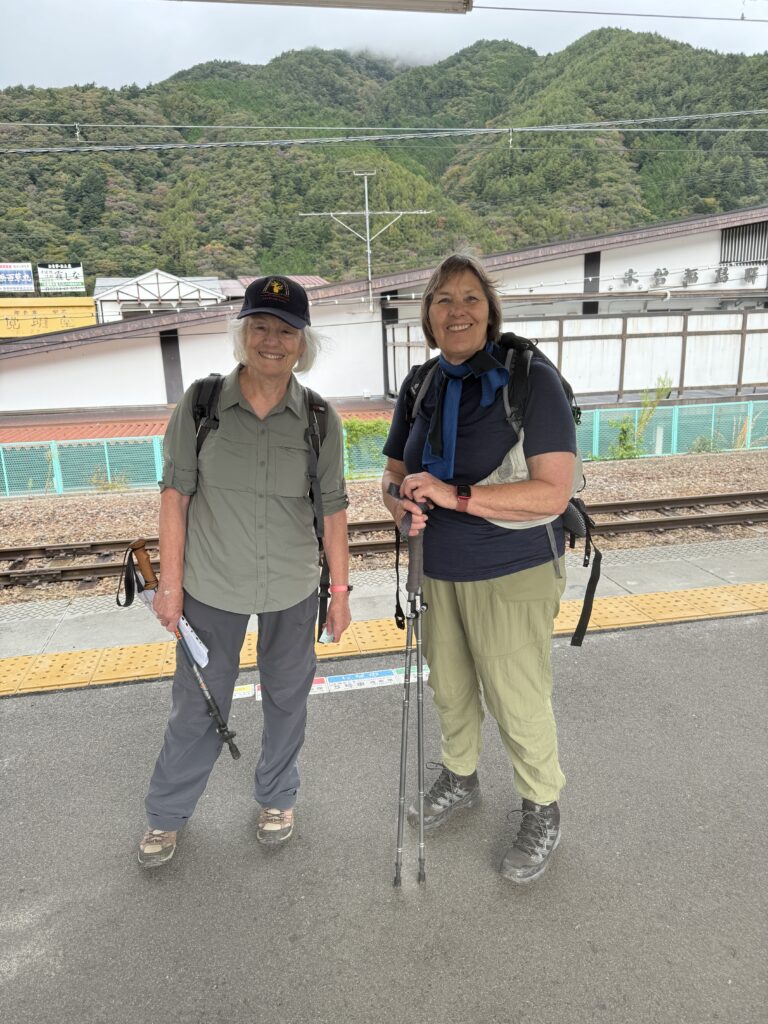
Here we are fresh faced waiting for a train to take us to the start of our walk at Yabuhara ( you will notice a decline in my fresh-facedness as the day went along)
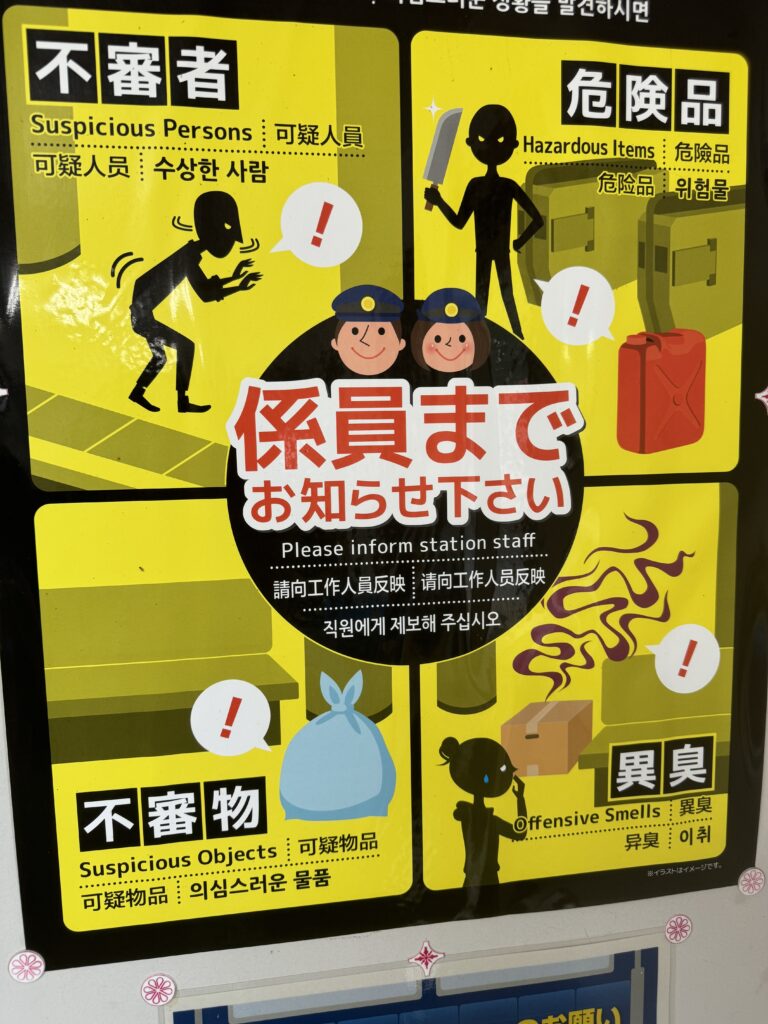
And I was taken by this sign in the train station waiting room. It’s interesting that they put “ offensive smells” in the same category as “suspicious persons”!
Between Yabuhara and Narai, the trail climbs the Tori-toge pass, one of the hardest parts of the Nakasendo. It was akin to doing Smuggler mountain in Aspen(but with an 8 kg pack).
Along the way we passed the Ontake shrine, the northern point of Mount Ontake (which saved the girl with brain disease) set high on the mountain.
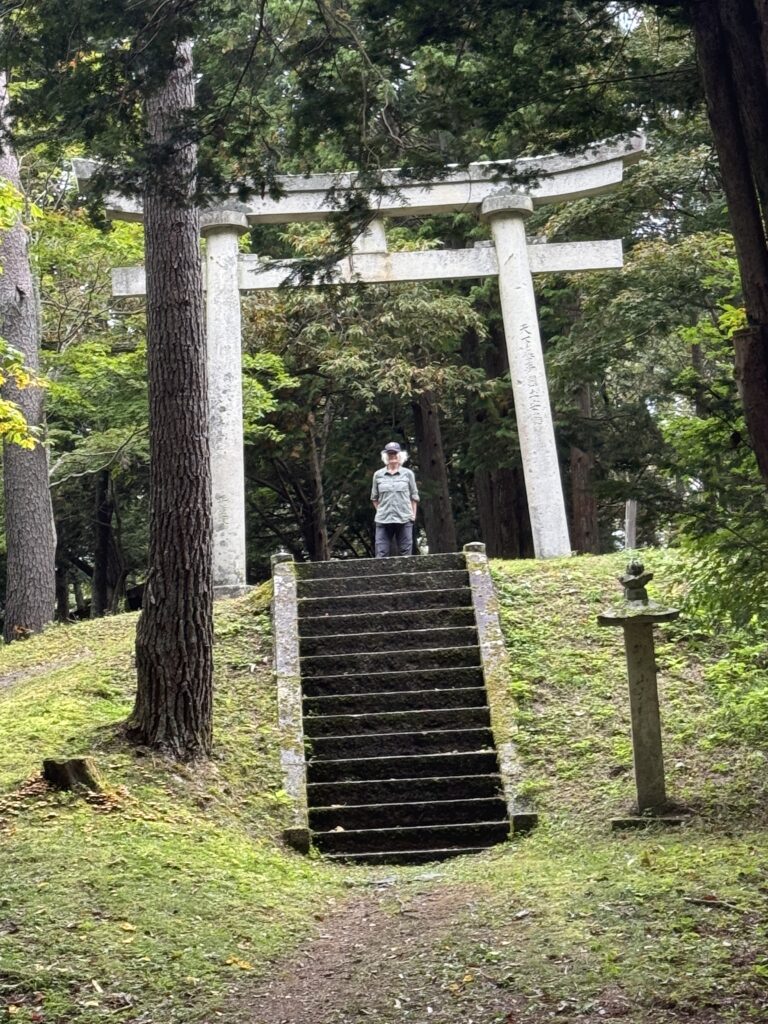
And we got lots of encouragement as we ascended with signposts marking every 100 metres completed
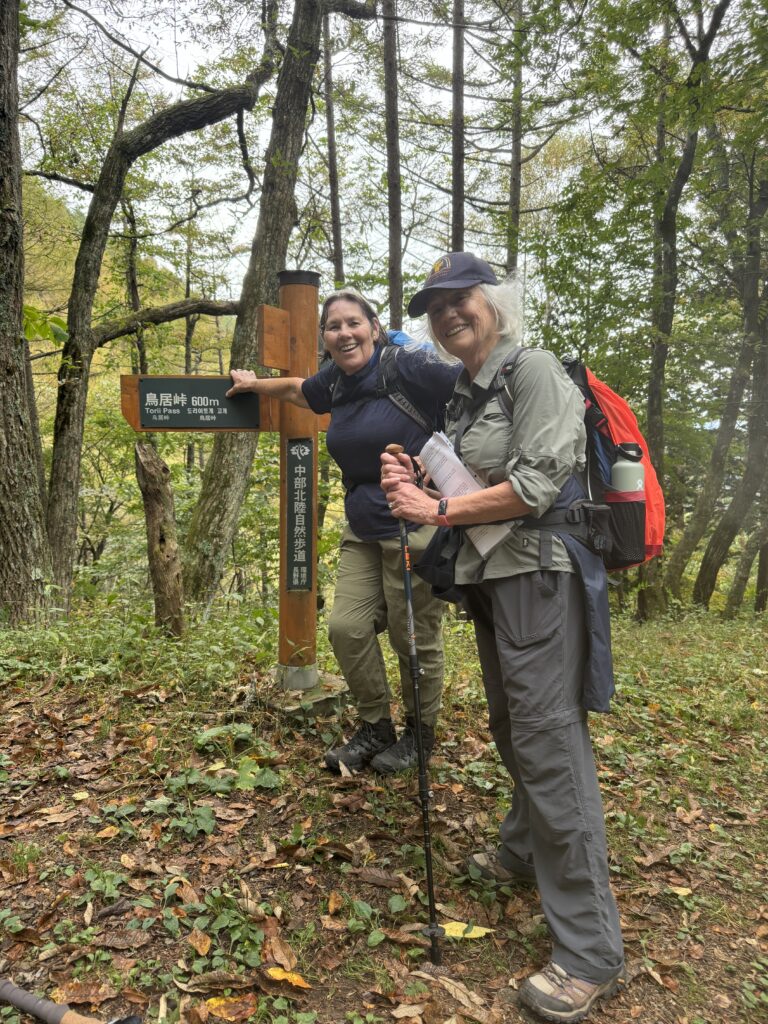
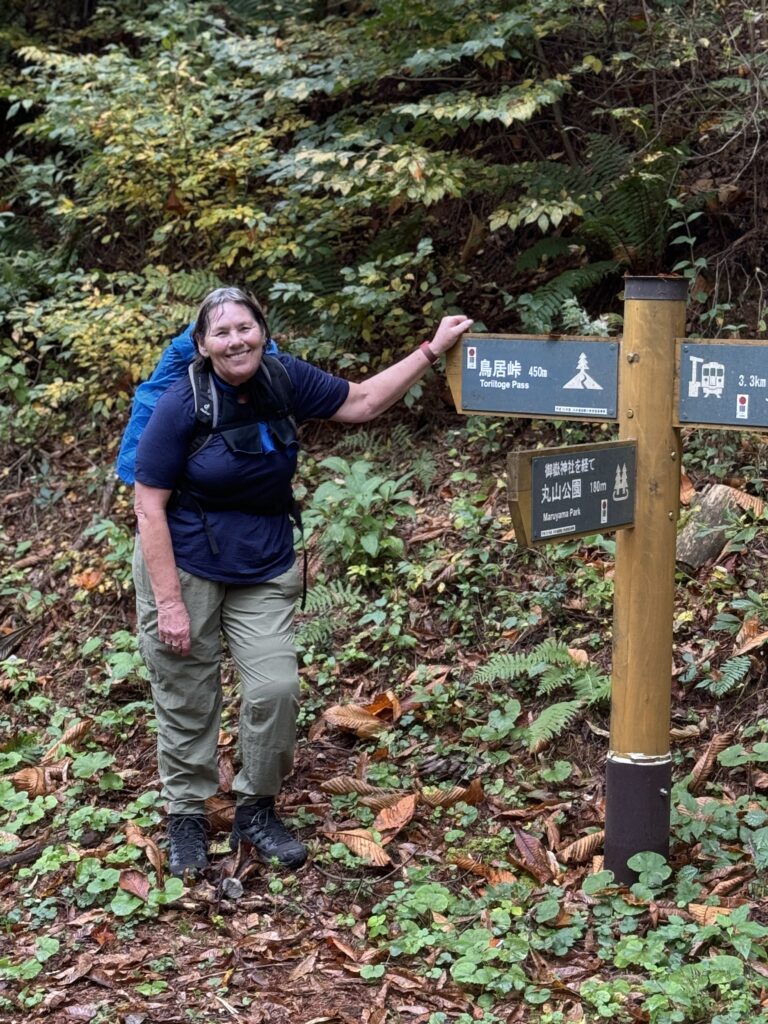
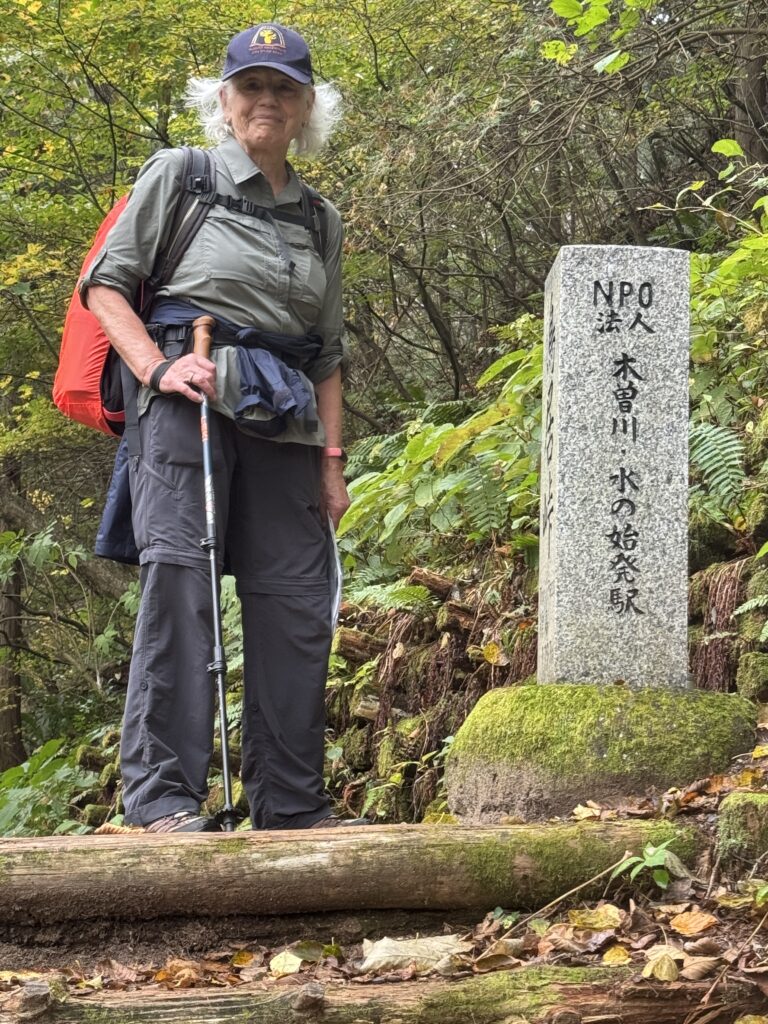
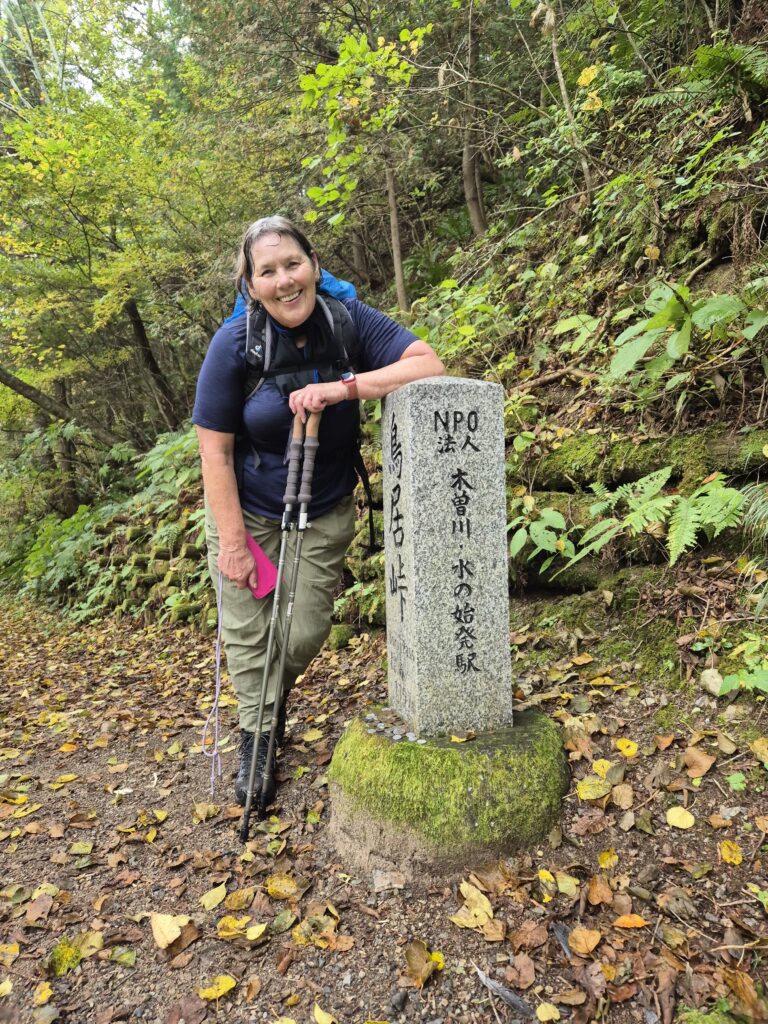
Finally we reached the top which is marked by a Tori-toge stone marker (which I was thrilled to reach).
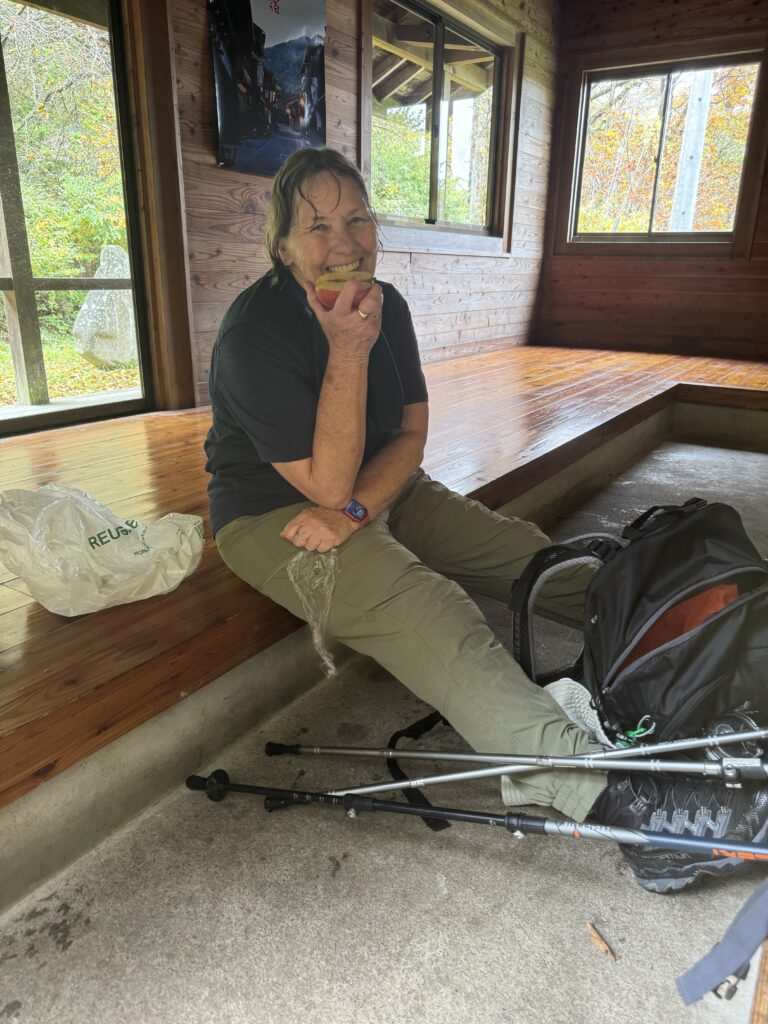
We rewarded ourselves by eating a lovely apple (the apples are huge so we had cut it in half to share) at a rest house on the trail.
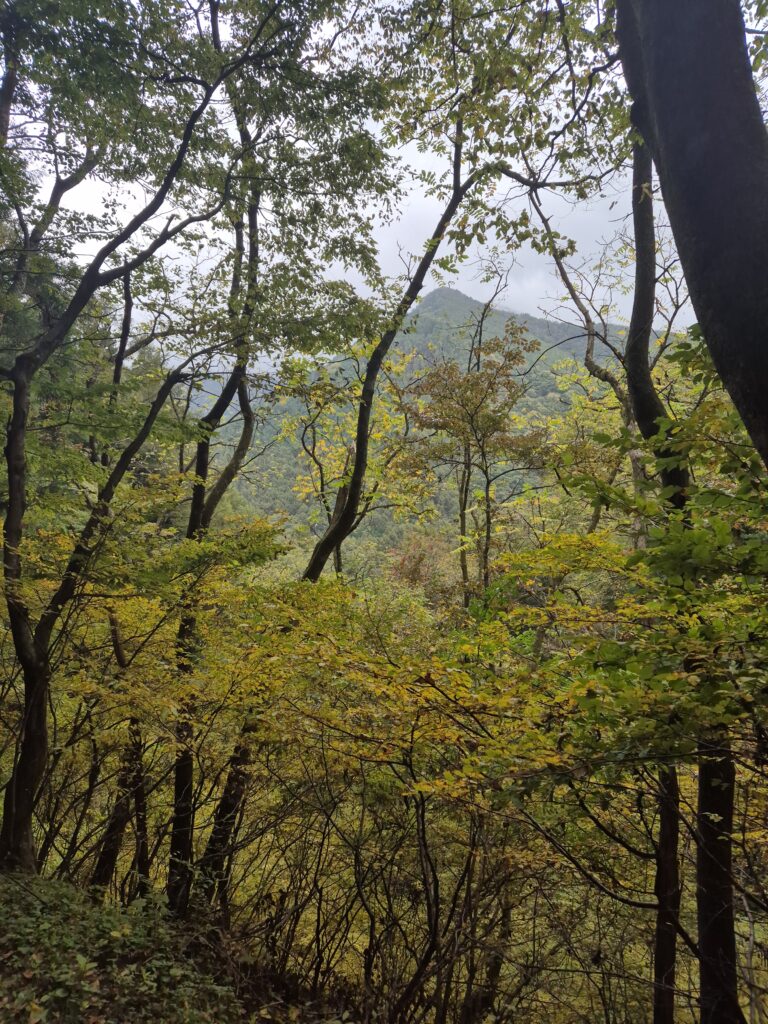
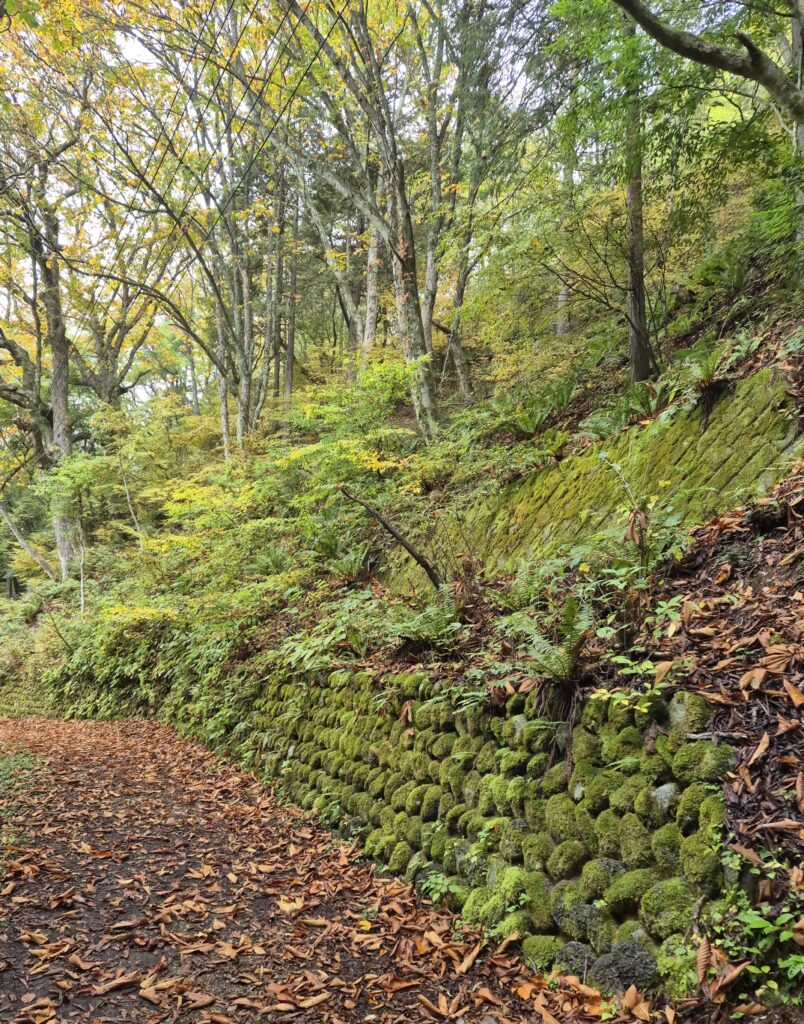
Of course once you go up, you have to come down! Lovely scenery going down (although my knees didn’t think so!) The trees were just starting to change colour.
As we arrived to the town of Narai, the rain came so the town looked very grey and dour apart from a colourful red shrine.
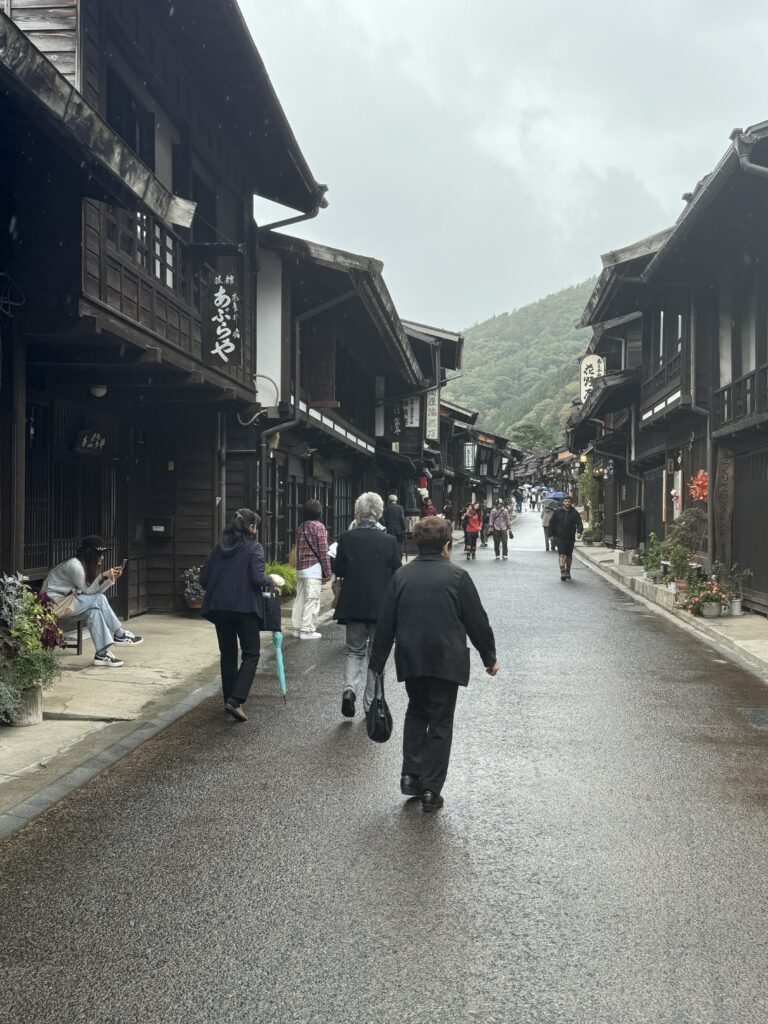
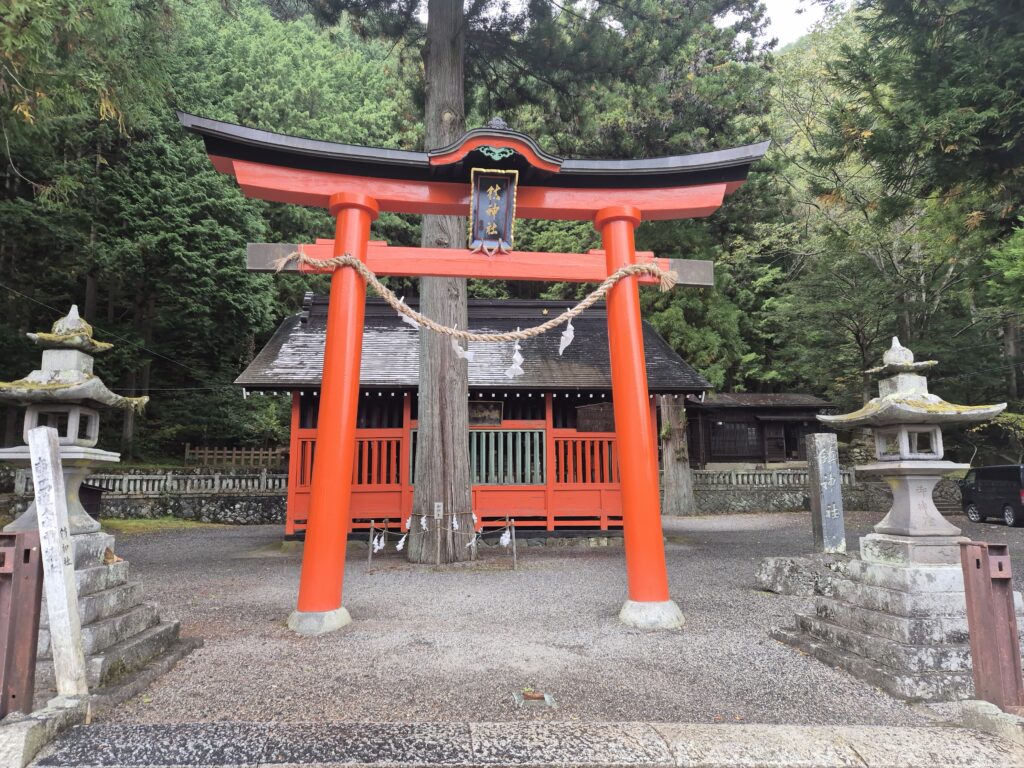
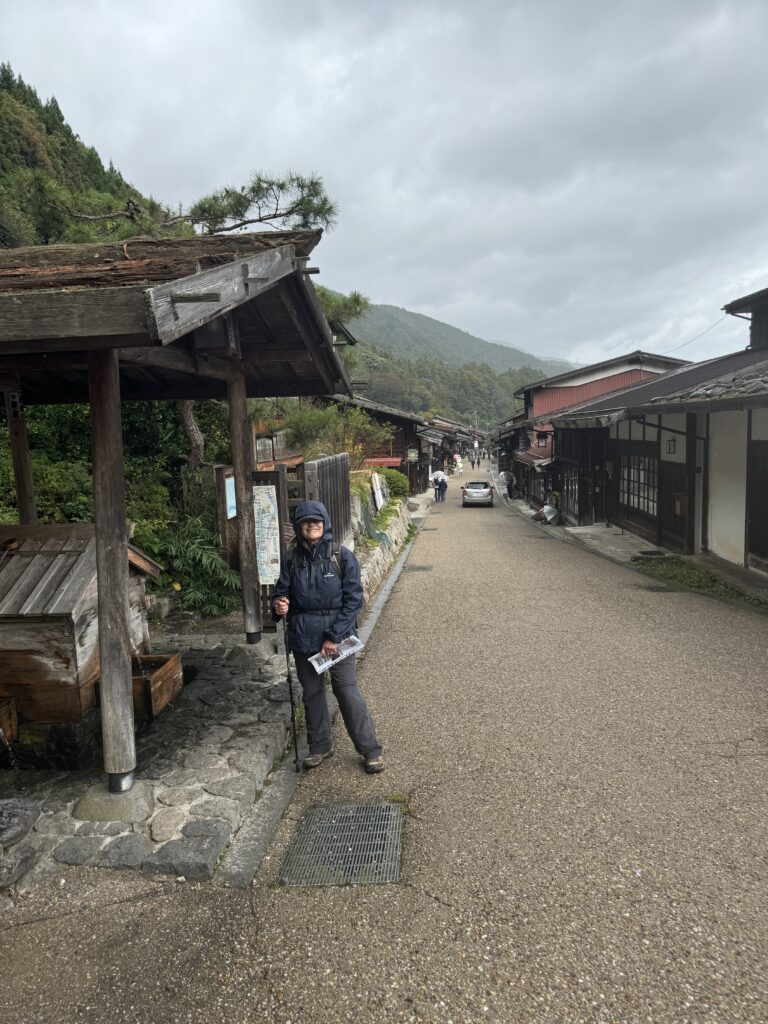
Narai was once known “Narai of a Thousand Inns”, the most prosperous of the 69 post towns along the Nakasendo trail. Here travellers prepared for, or recovered from, the steep Tori-toge pass. The residents of Narai chose to renovate their historic houses and impose strict rules on their ownership and use.
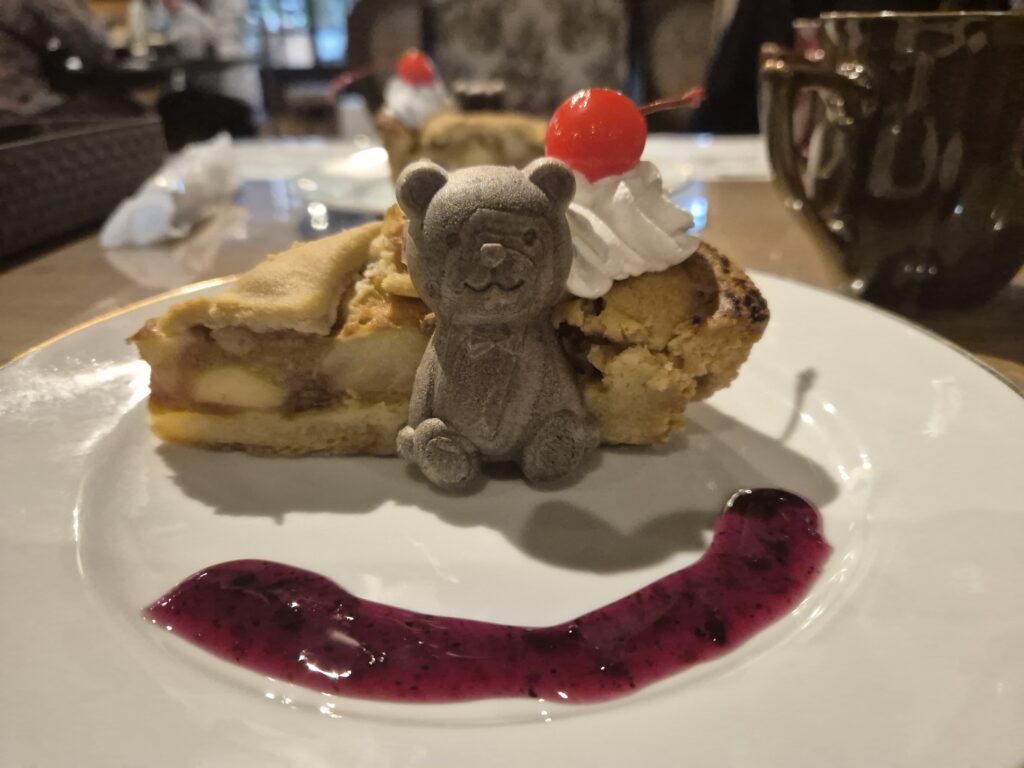
Narai now relies on tourism for its income including a small contribution from Sara and Lesley – cafe latte and apple pie!
We then walked from Narai to Kiso-Hirasawa (in the rain) to catch the train to Matsumoto where we are spending the night.
This ryokan is not as glamorous as last night’s.
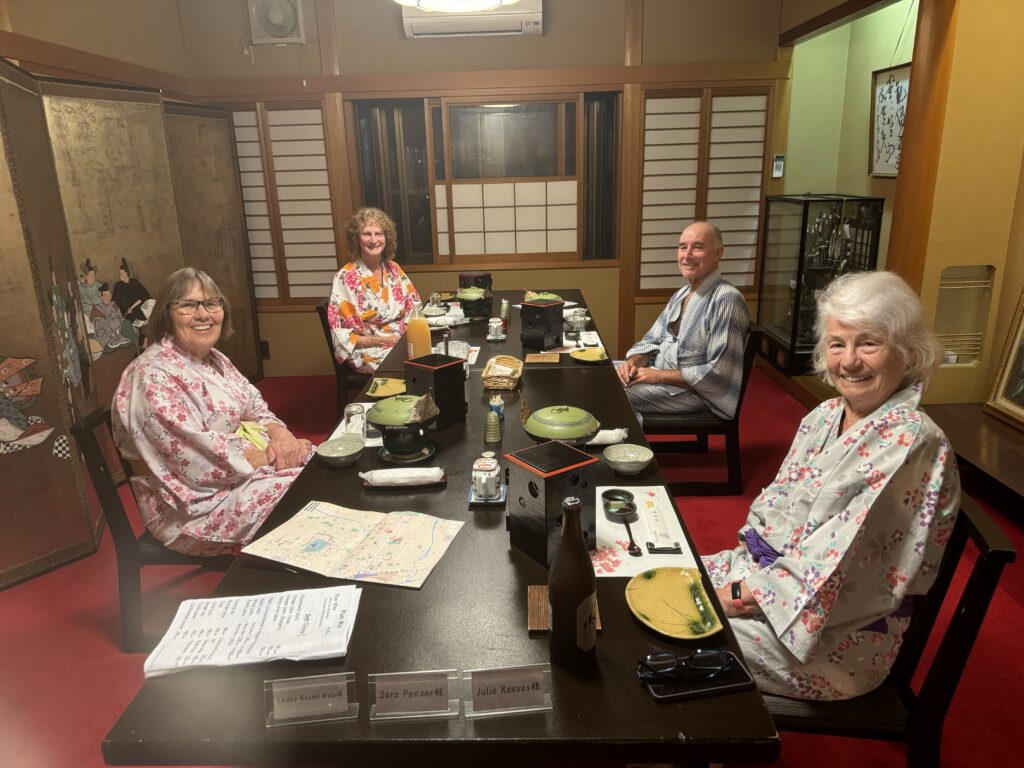
James and Julie happen to be staying here too so we had dinner together (after using the onsen of course). Notice the black boxes with red trim on the table. They unfolded to become three entrees
Comments
2 responses to “nakasendo 2024”
Knackered on the Nakasendo?
Yes – you are right Sara – your fresh face abandoned you as the walk went on!!
How come you (the four of you) are sitting on chairs for dinner – is that allowed???