
September 25: Ashgabat to Merw
Warren, they don’t speak Russian – they have their own language but many of the signs have both Russian and their language. And Ang, no I don’t intend to bring that rug home!!
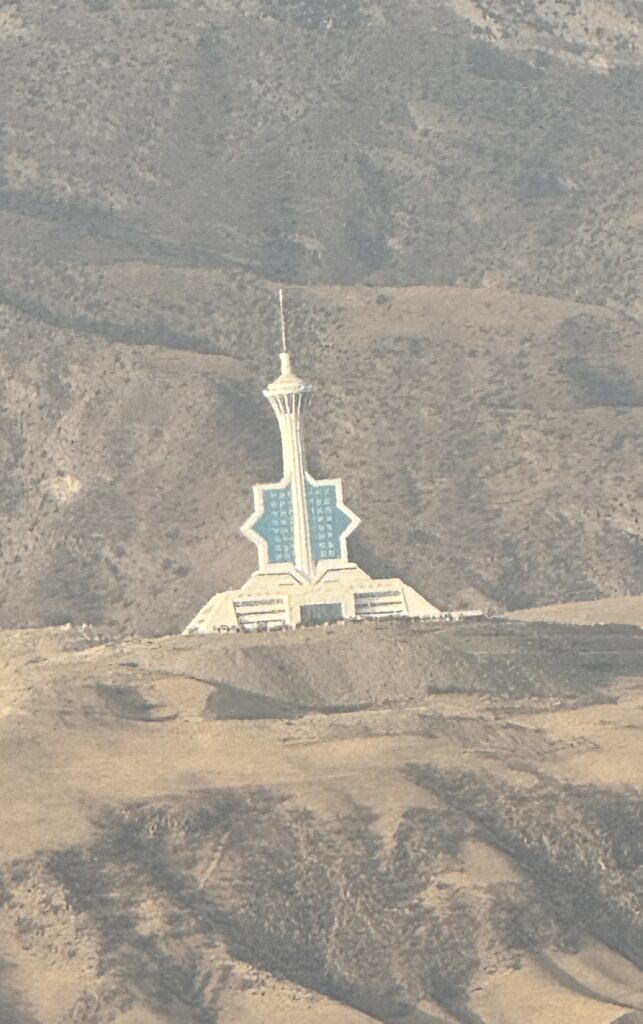
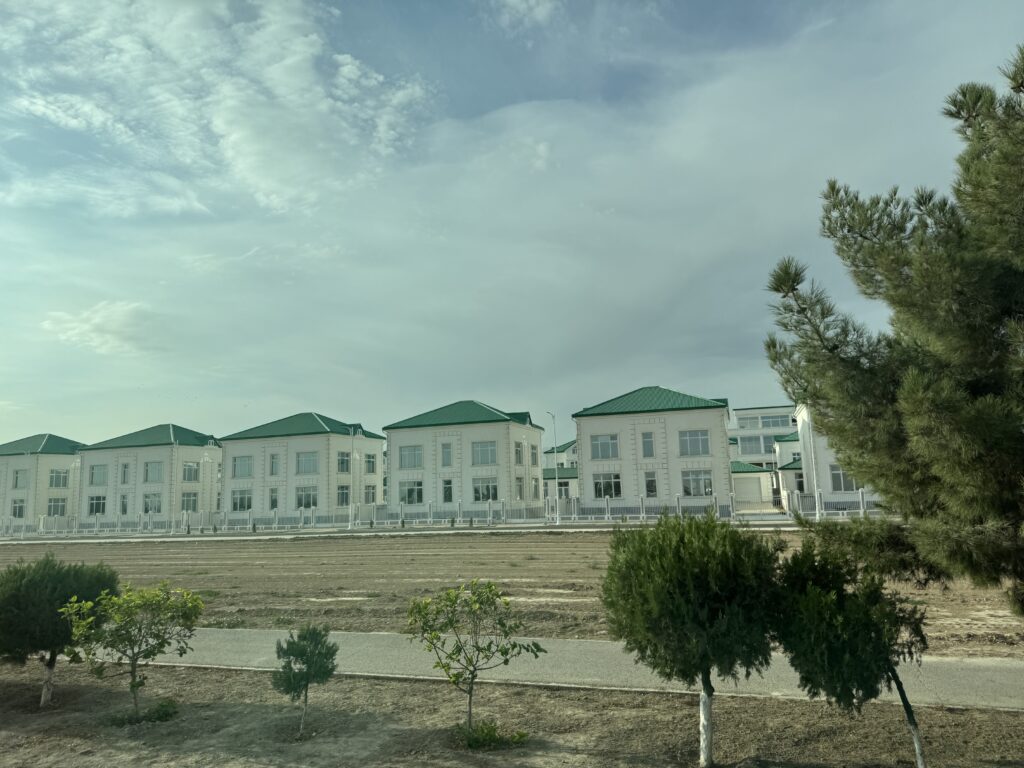
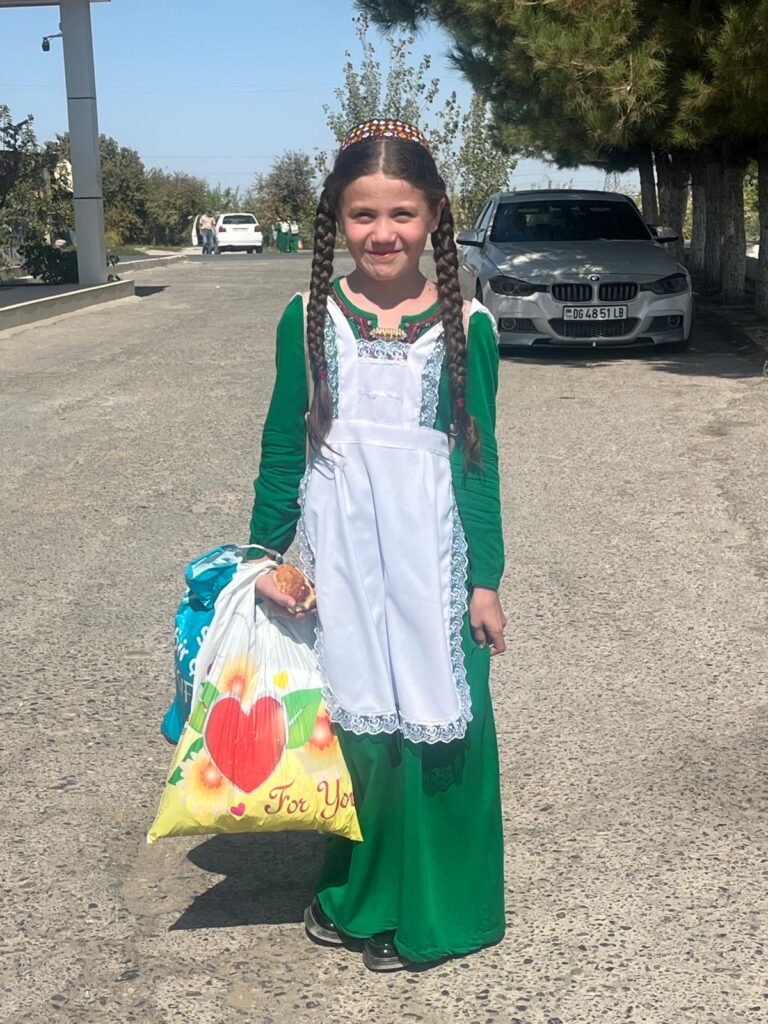
Today we had an early departure from Ashgabat. On the way out you cannot miss the colourful television tower on the mountains near the Iranian border. Nor can you mistake the rows and rows of apartment blocks with green roofs, in the outer suburbs. Haven’t been able to establish whether green is a mandated colour like white! However, green is the colour mandated for every school child in Turkmenistan ( the white apron is to keep the green uniform clean), and maroon is the mandated colour for uni students.
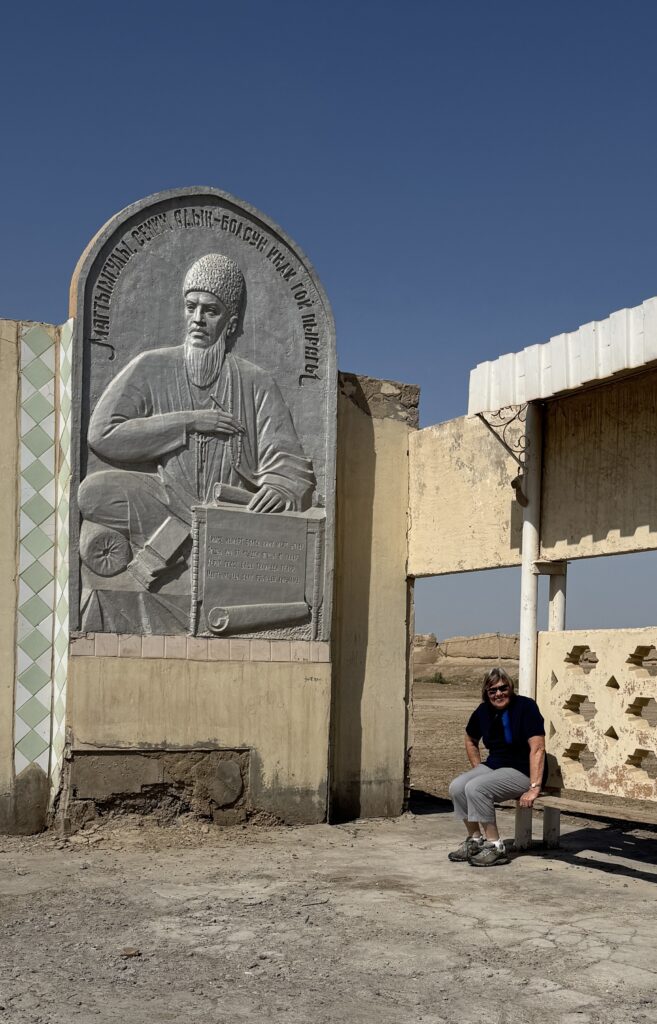
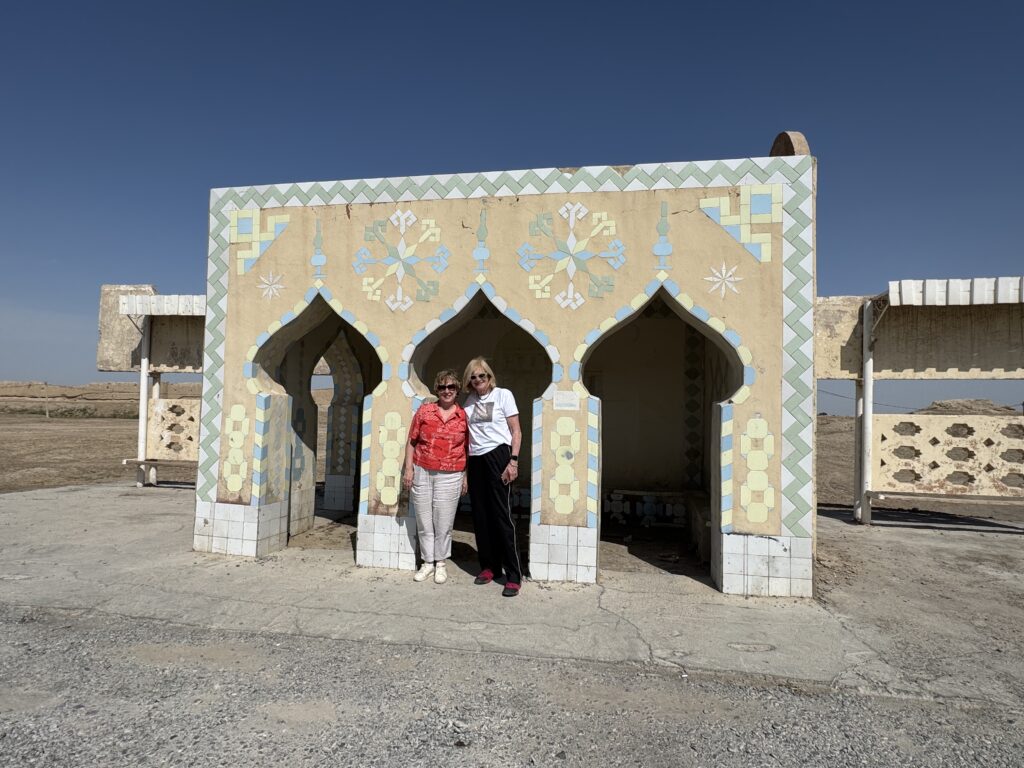
We travelled to Mary, where we are staying overnight ( about 10 stars below our Ashgabat hotel but it’s apparently the best in town) before travelling to the ancient site of Merv. On the way, our driver kindly stopped to show us a Russian bus shelter.
A World Heritage site, Merv is one of the oldest and best-preserved oasis-cities along the Silk Road, with continuous human habitation going back to the 3rd century BC.
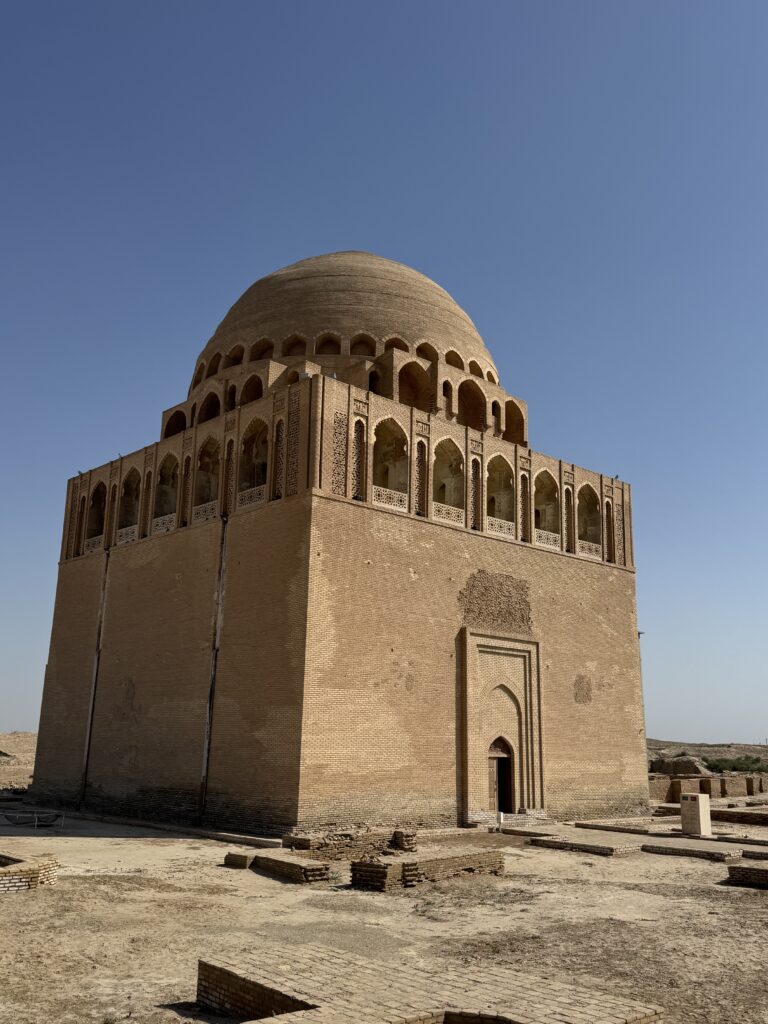
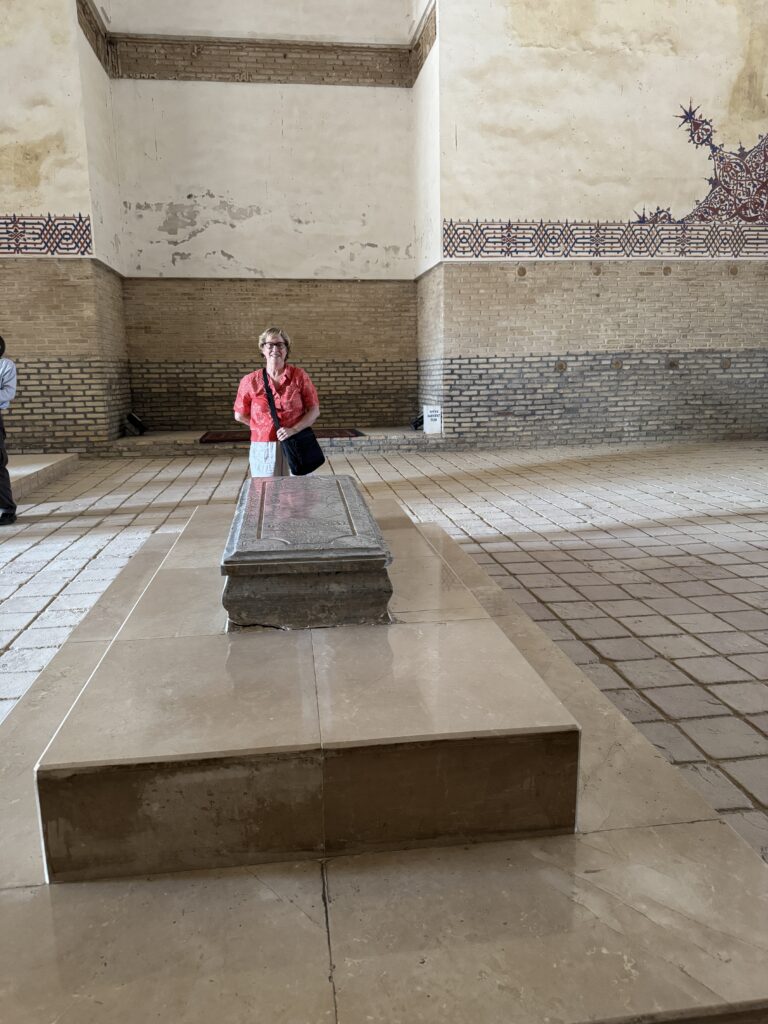
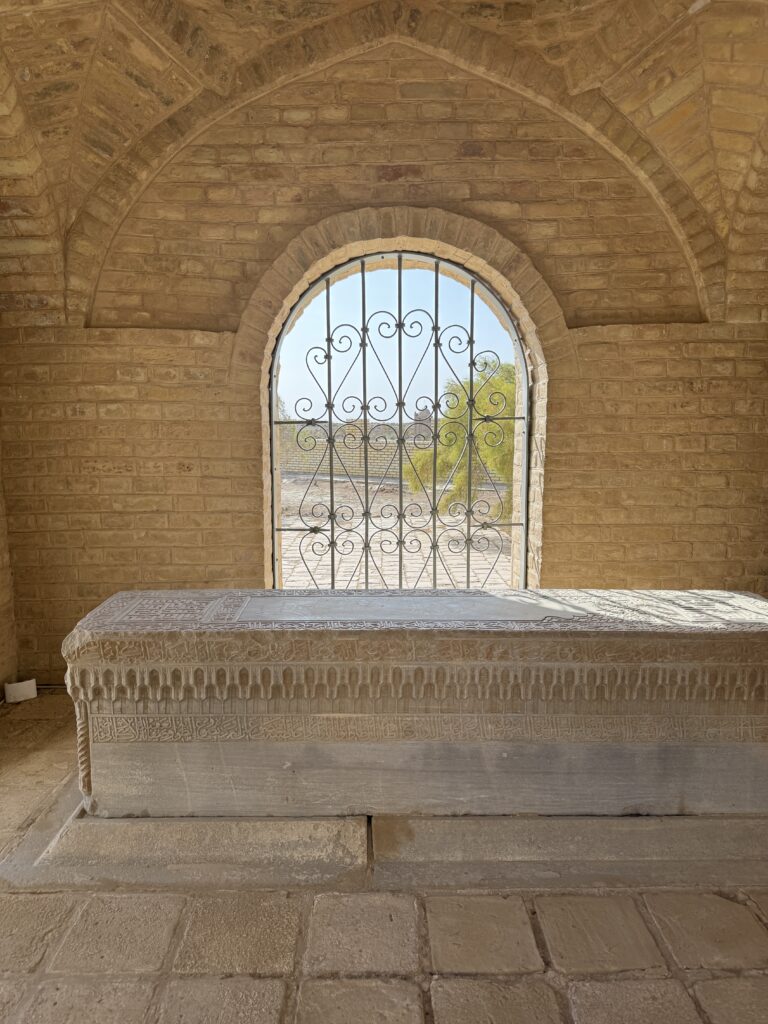
It was a major centre of trade, culture, learning, and religion in Central Asia. During the Seljuk period (11th-12th centuries), under Sultan Ahmad Sanjar, Merv was at its peak: large, wealthy, and highly important. And our first ruin was Sanjar’s mausoleum which was built in the 12th century and restored in 2004.
Next the library where you can see them using brick formations to form vertical arches (rather than just horizontal brick laying).
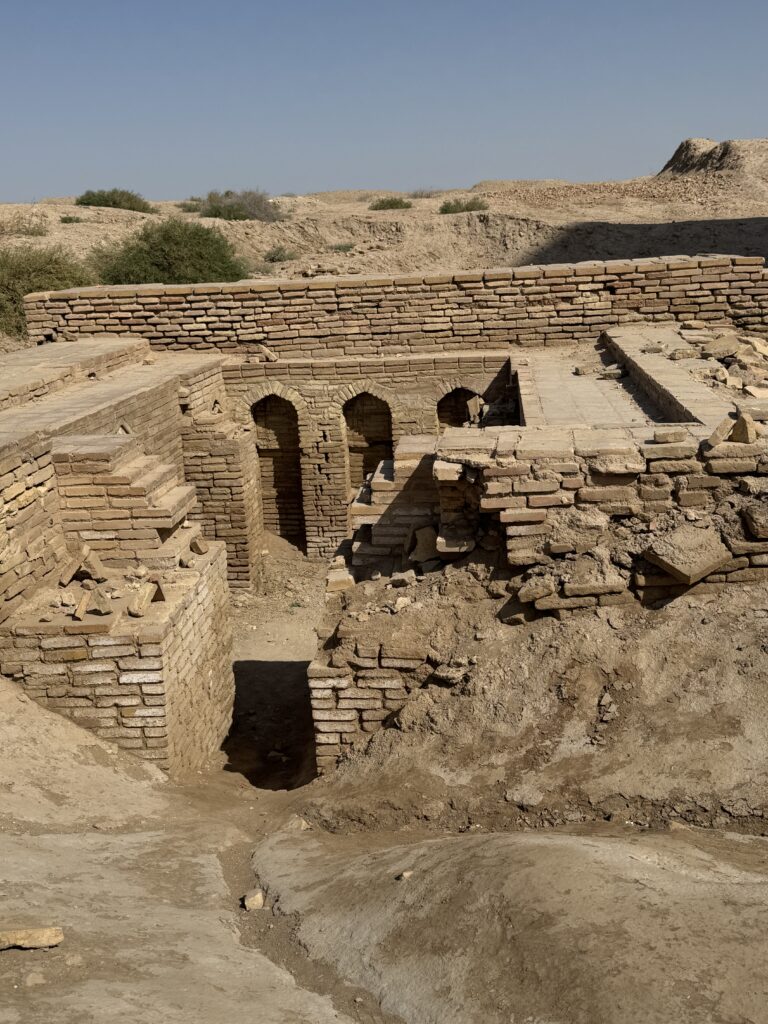
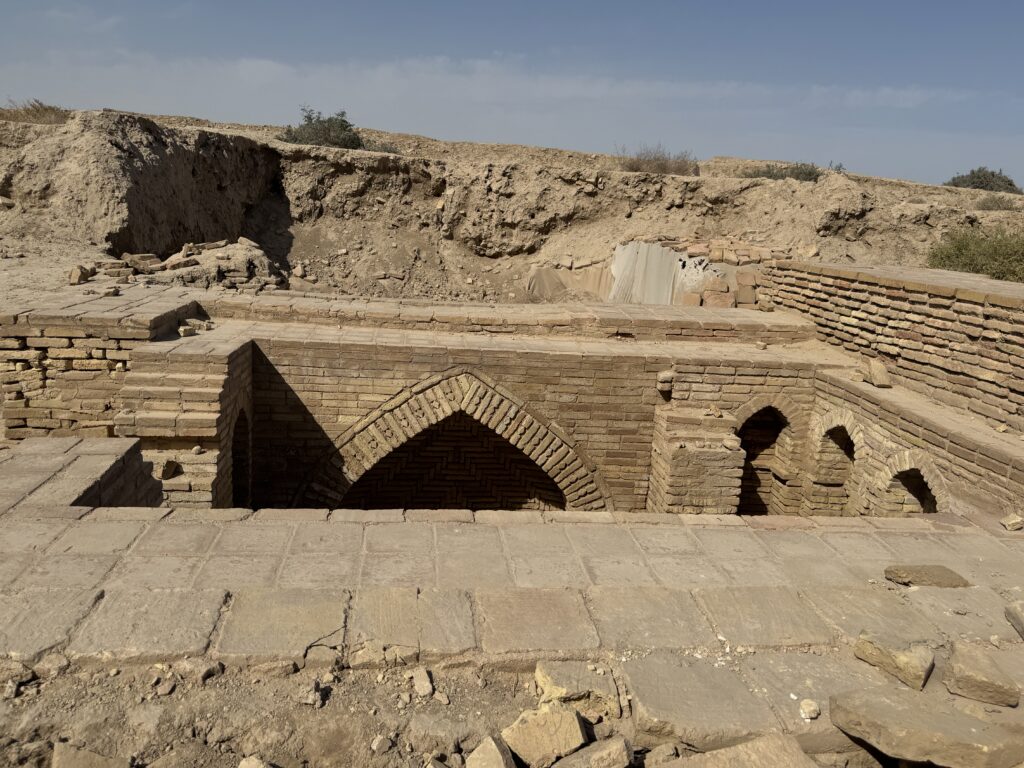
Then to the Tomb of Yusuf Hamadini, who was regarded as one of the founders of Sufism and who died in 1140.
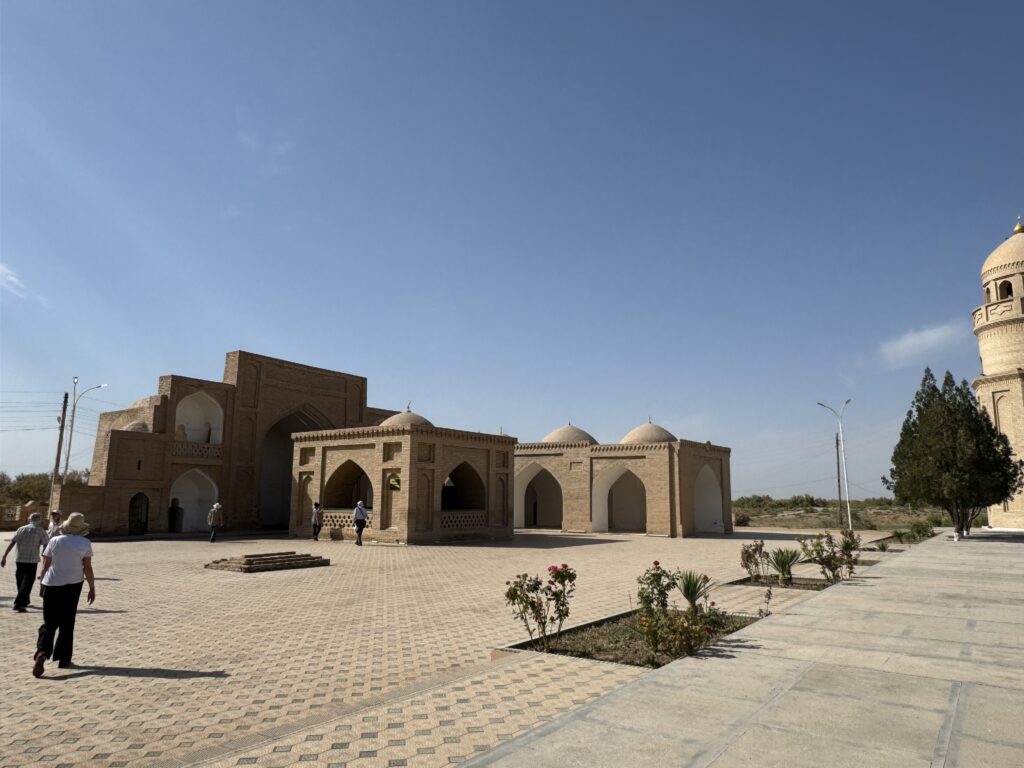
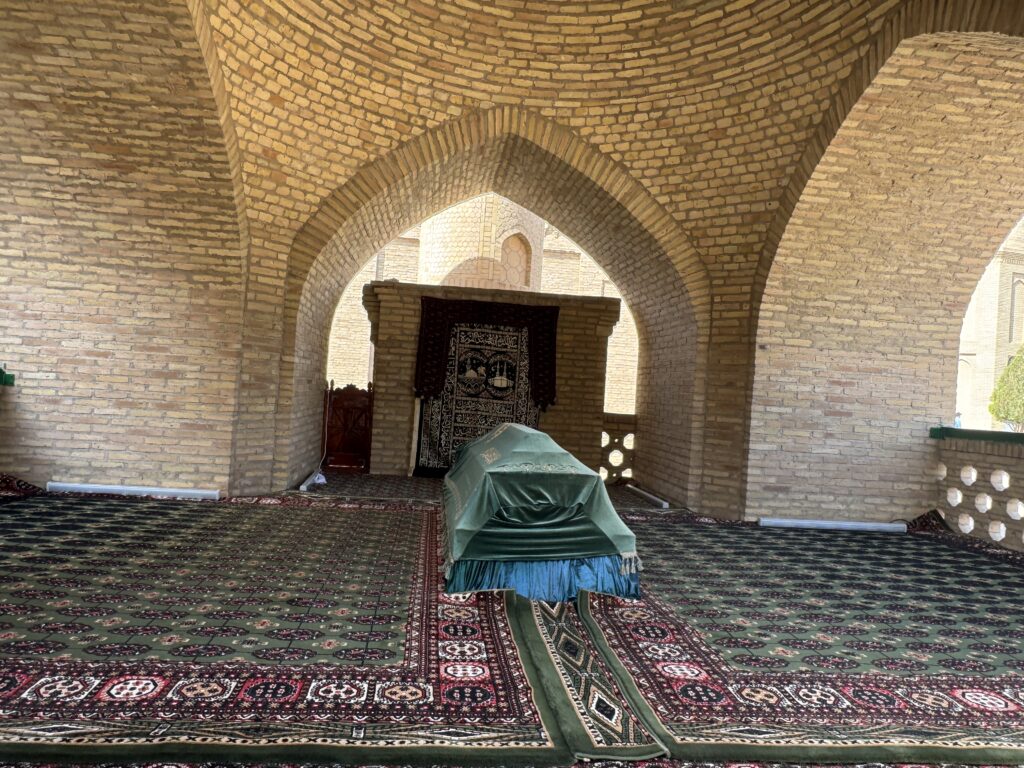
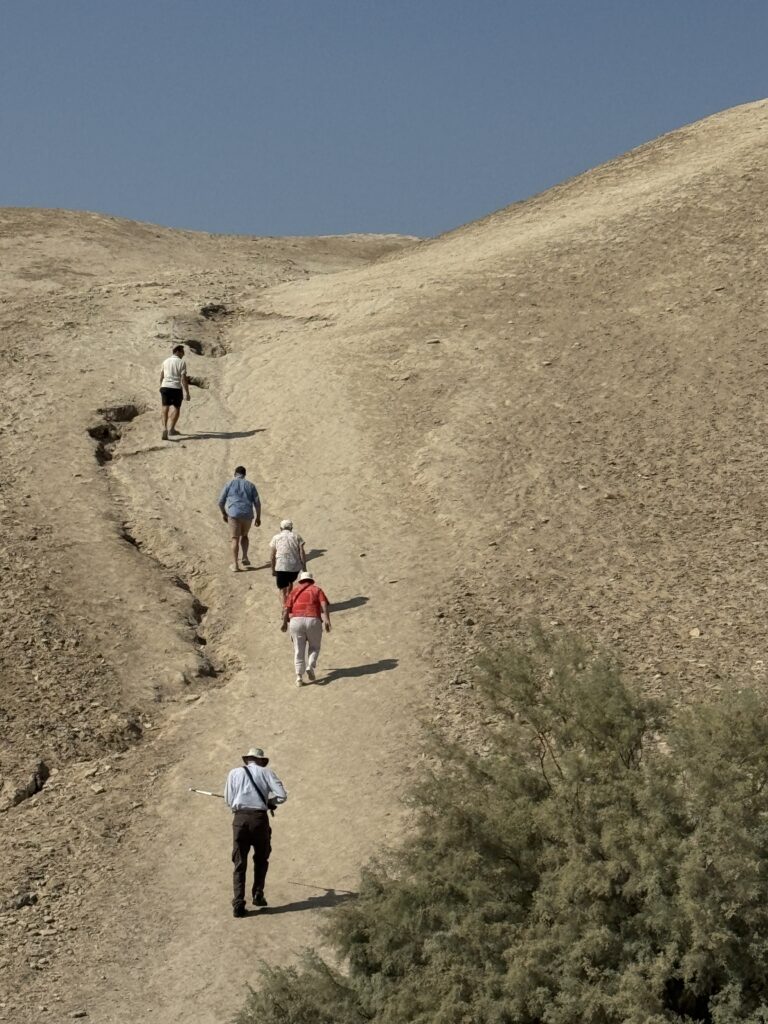
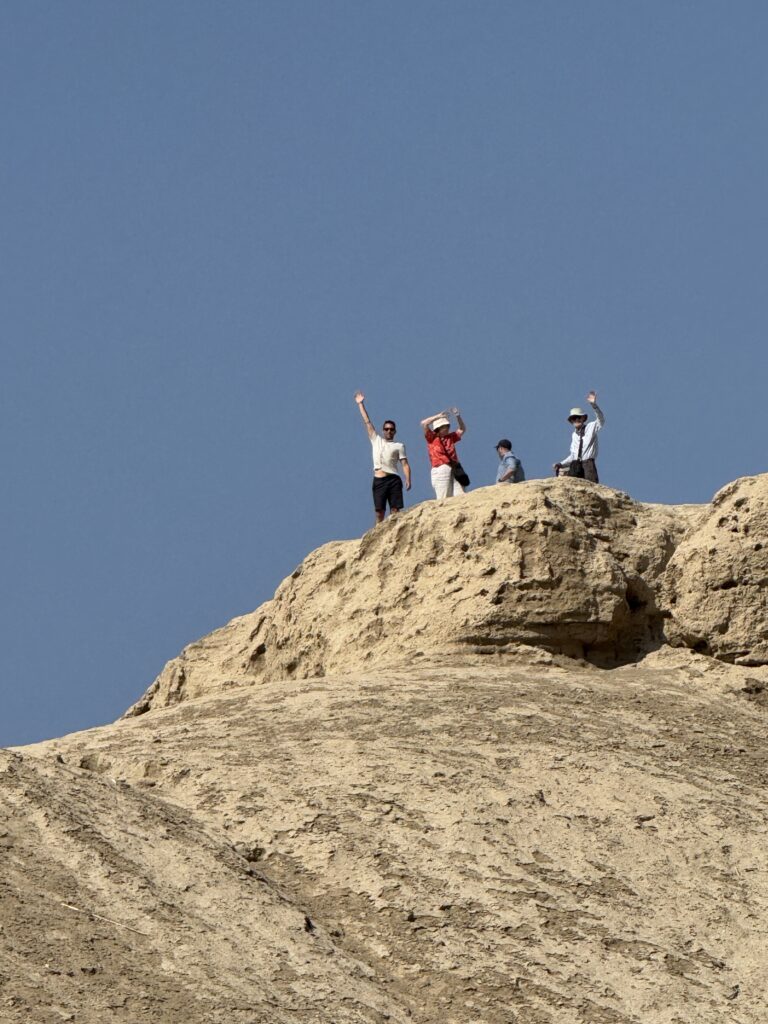
A few of our group (including Lisa) walked up a steep ramp to view the fortified walls from the 3rd century BC.
Then to the complex of the Askhabs …the tombs belonged to 7th century “standard bearers” of the Prophet Mohammed. Behind them is a pair of portals from the 15th century, with beautiful tiling. And there’s a good view of the walls of the city.
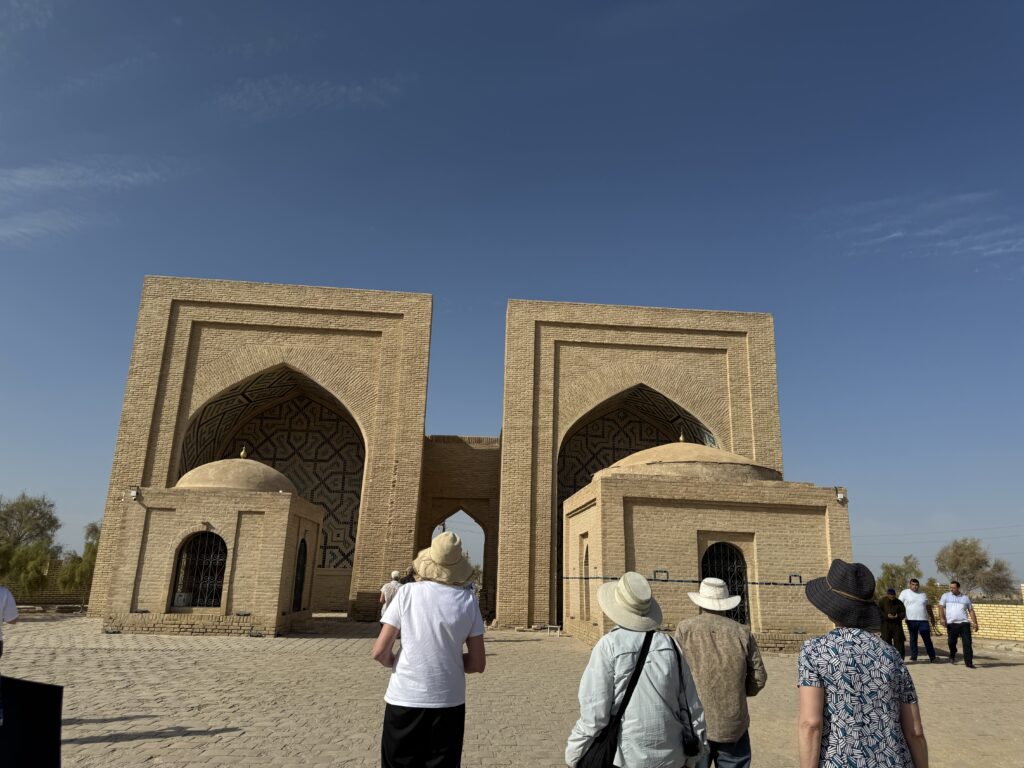
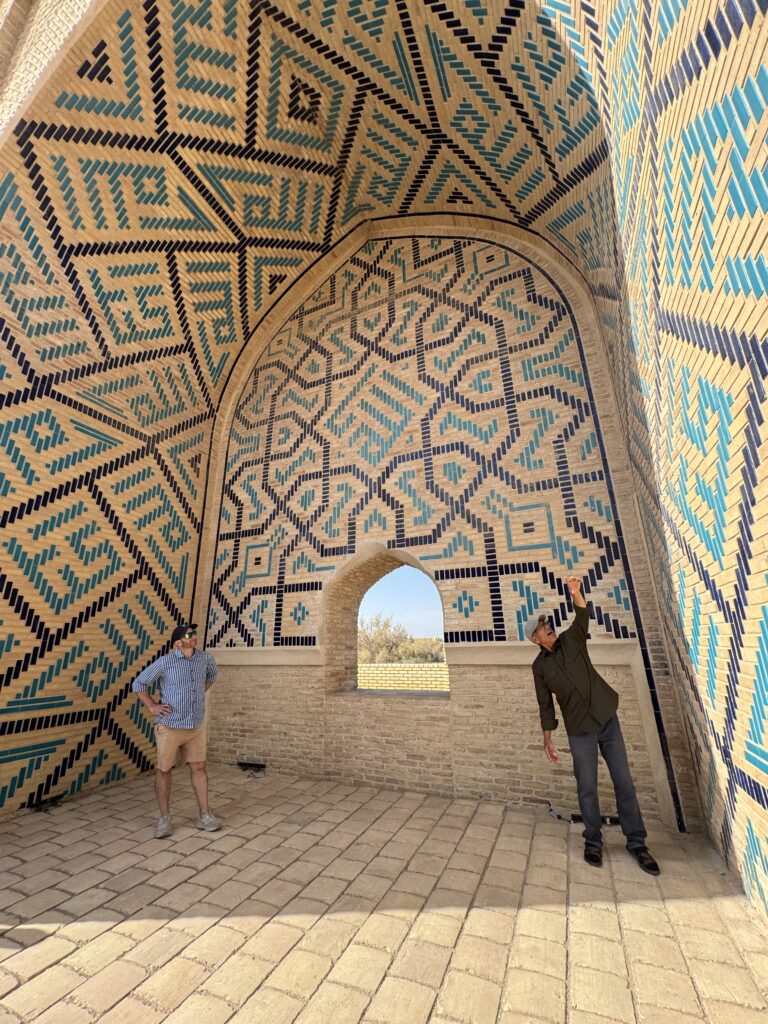
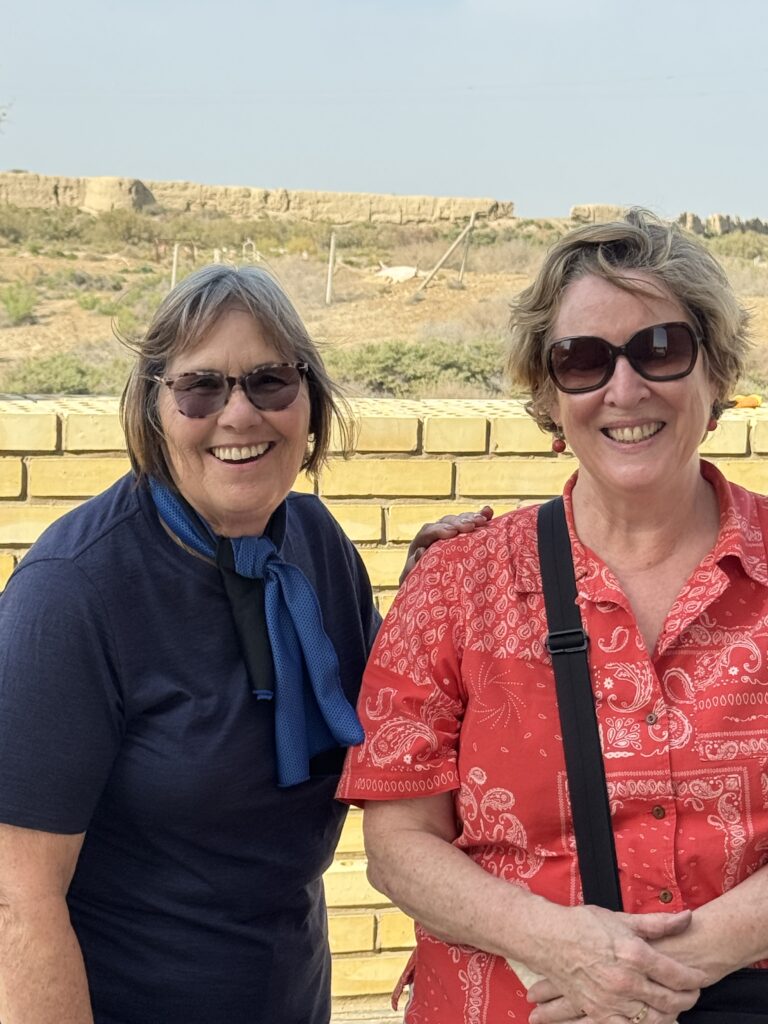
And this is a good example of what’s unique about Merv .It has multi-layered ruins (different cities, citadels, walls etc.) built side by side rather than always overwriting the previous one, which helps preserve much of the archaeology.
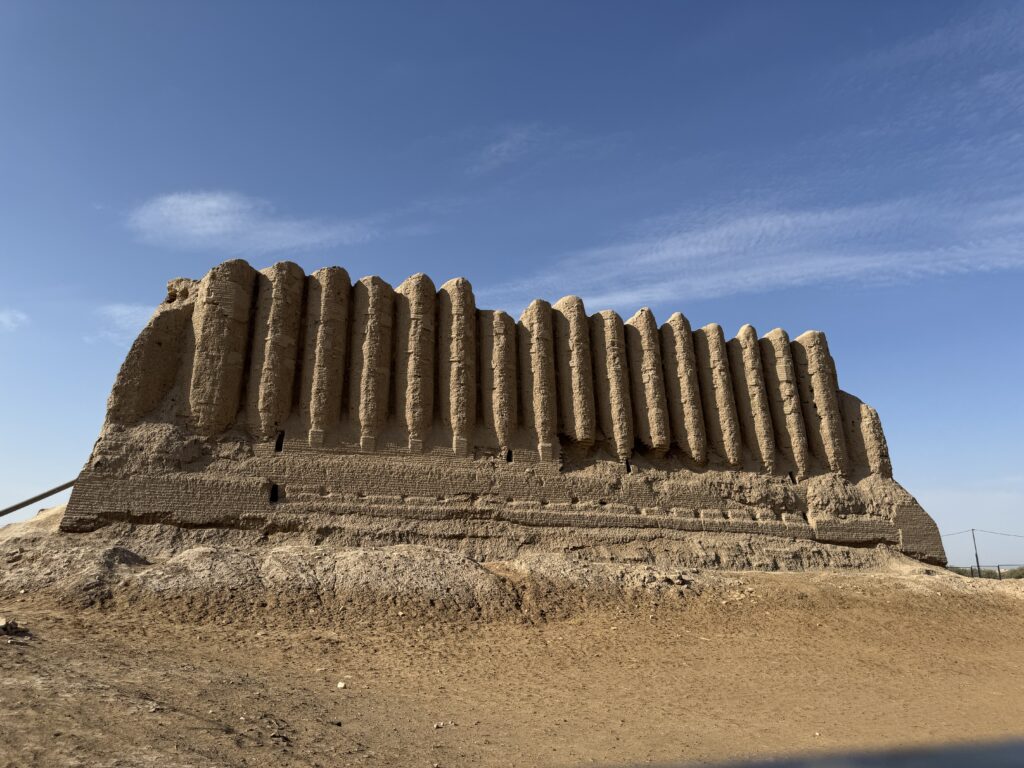
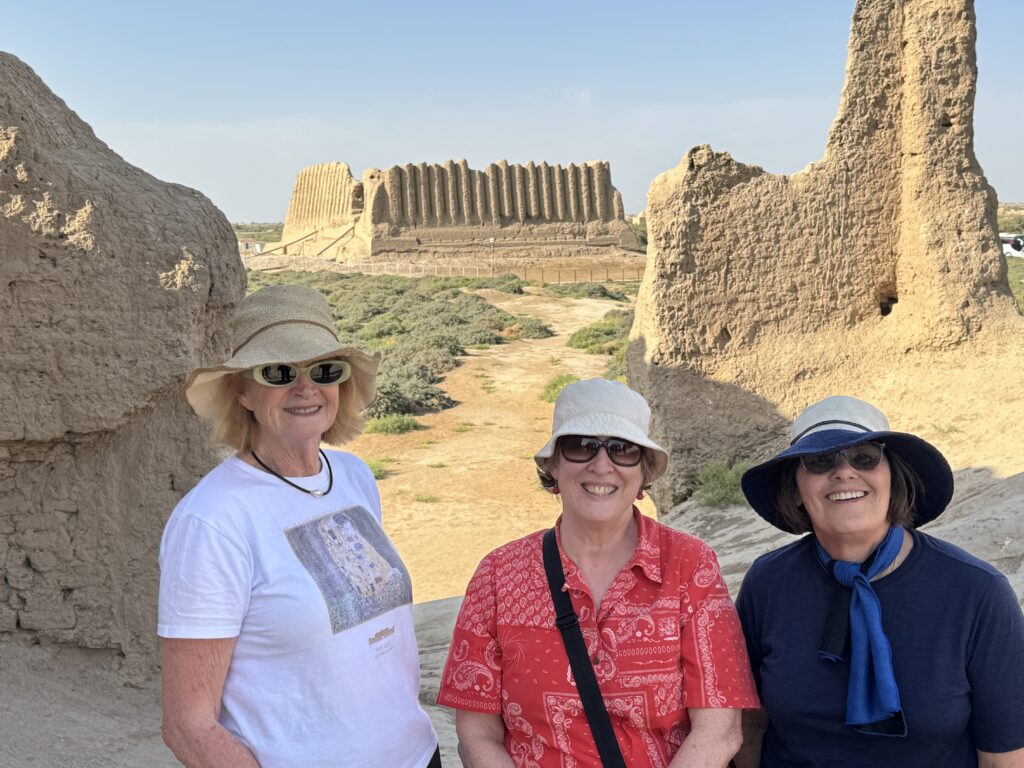
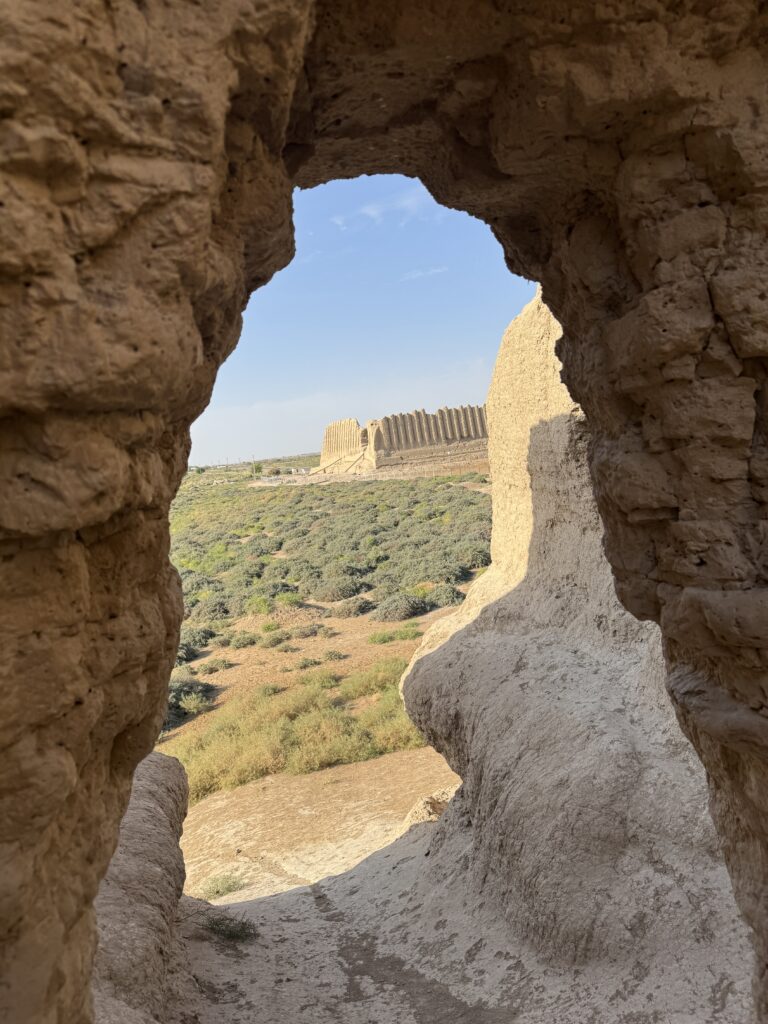
My favourite was the girls palace or garden, a corrugated mud brick structure from the 8-9th century, called the Great Kis Kala and its nearby Little Kis Kala.
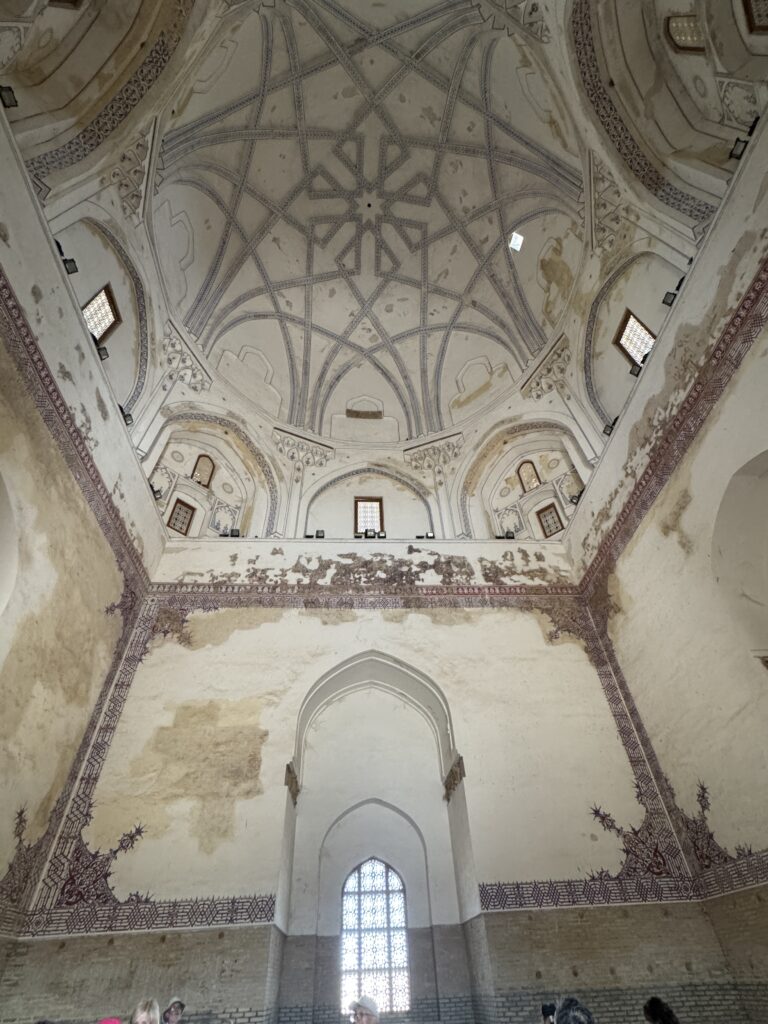
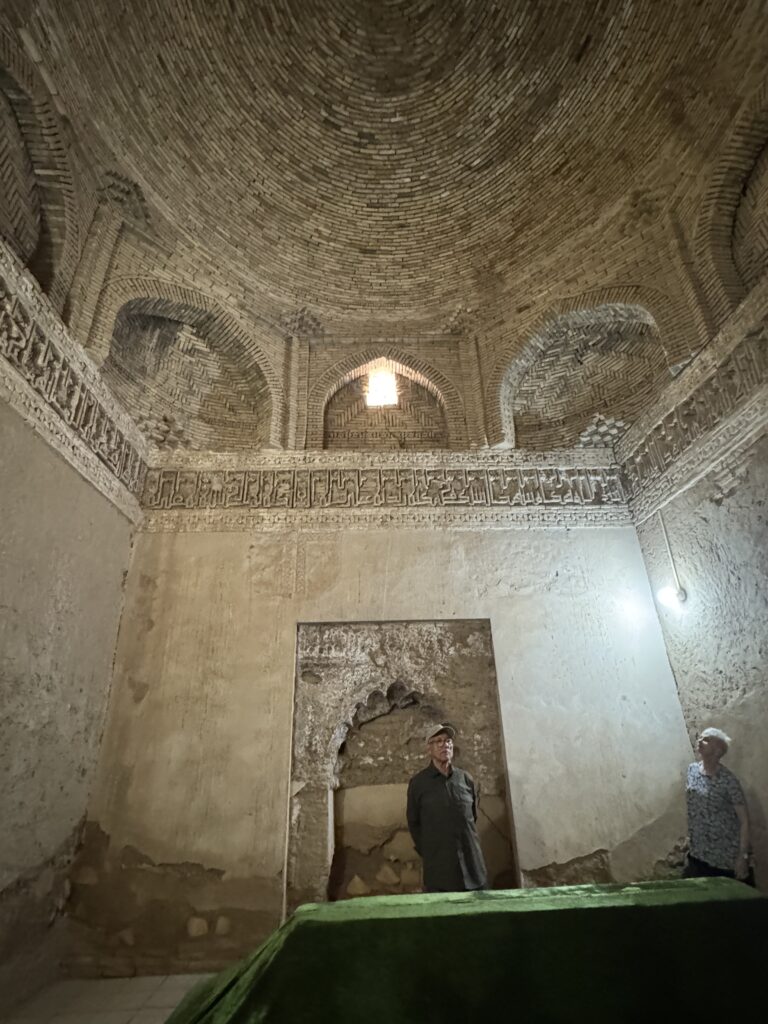
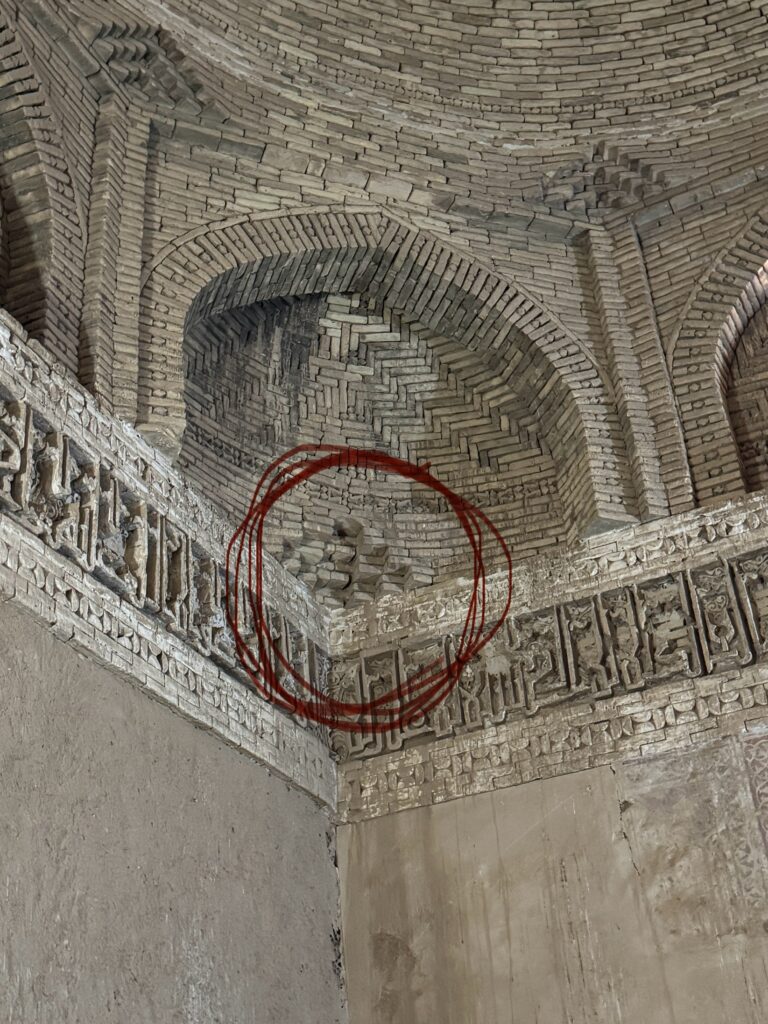
Our final stop was the 12 th century Mausoleum of Muhammad ibn Zayd, believed to be one of the descendants of the founder of Islam. And I learnt a new word today….”squinch” which means a straight or arched structure across an interior angle of a square tower to carry a superstructure such as a dome. See below.
Merv was destroyed by the Mongols in 1221. The city was sacked, population decimated, and many structures destroyed. After that, though some rebuilding took place, it never returned to its former glory.
I realise this is a day late but the wifi in Mary and Turkmenistan generally is very limited
Comments
One response to “Can the Stans handle the Merck girls?”
At least there is some colour to be seen but not as pristine as Ashgabat
Love you Sar – travel safe xxxx