
September 27: Bukhara
Bukhara is in central-western Uzbekistan, in the Zerafshan River valley. It’s an oasis city, which made it a natural hub on the Silk Road. The city is over 2,000 years old. Settlements existed there by the 2nd century BC; it began to gain real importance in the first few centuries AD. It has experienced many dynasties. After the Arab conquest in 709 AD, it became an important centre of Islam. In 892 AD, the Samanid dynasty made Bukhara its capital. Under them, it became one of the most learned cities in the Muslim world, a place of scholars, poets, philosophers. Over time it came under Karakhanid, Mongol, Timurid and Persian rule until the 1860s,when it became part of Russia. Included in the USSR in 1964, and became independent when the Soviet Union collapsed.
With all those dynasties and cultures, its no wonder that Bukhara is famous for its very well-preserved old town and for having a large number of monuments from many eras.
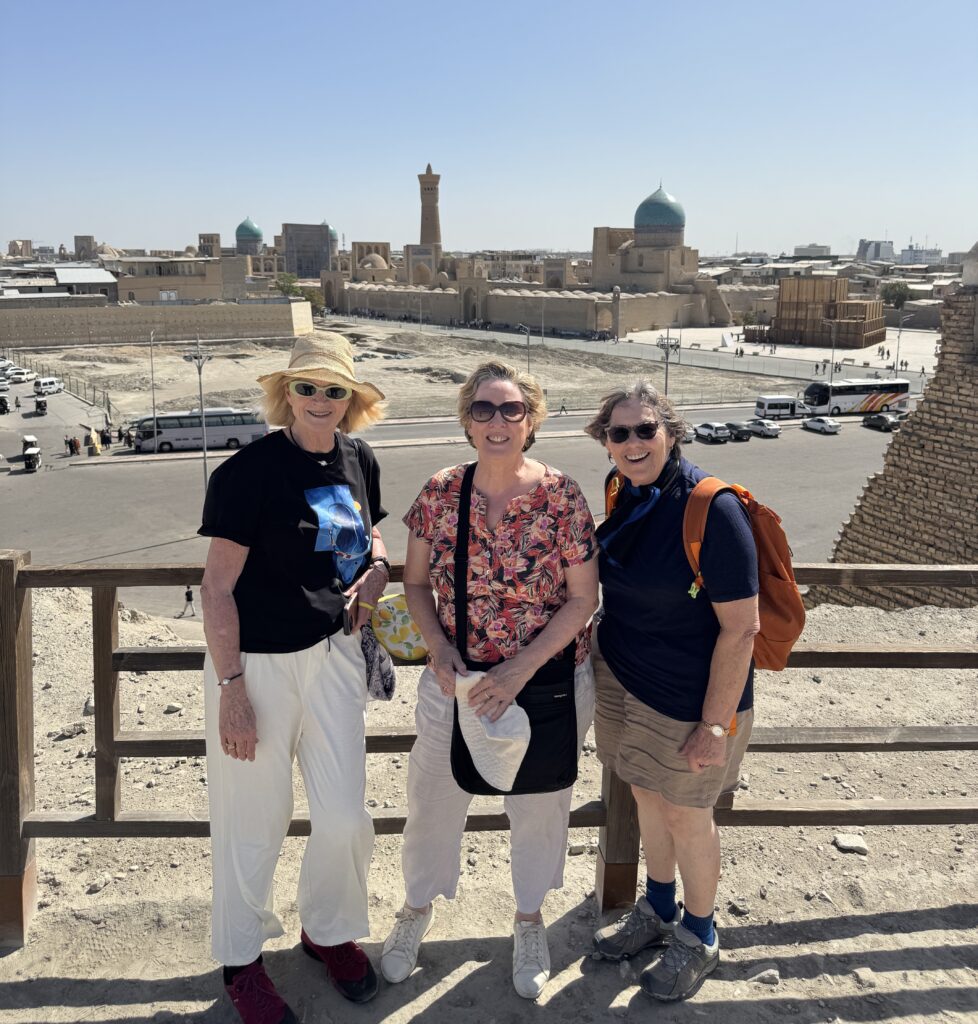
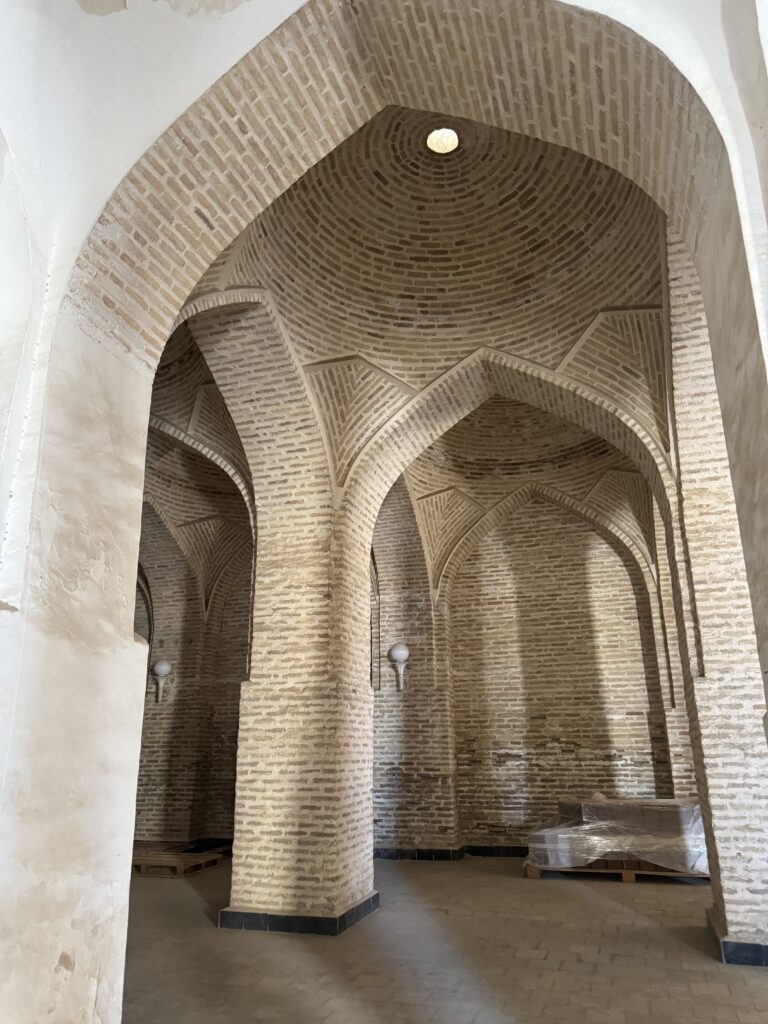
Remember I told you about squinches…well the Samanid Mausoleum is one of the most remarkable and influential buildings in Islamic architecture — and its squinches are a key reason why.
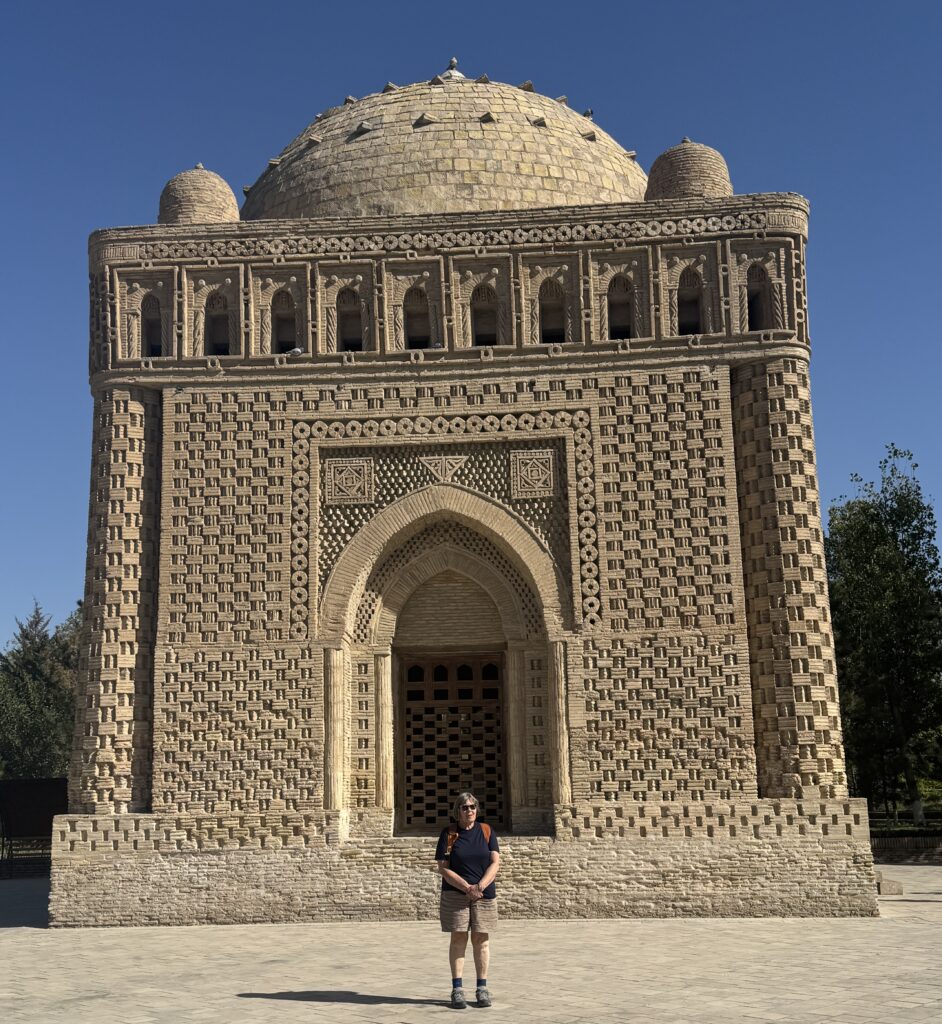
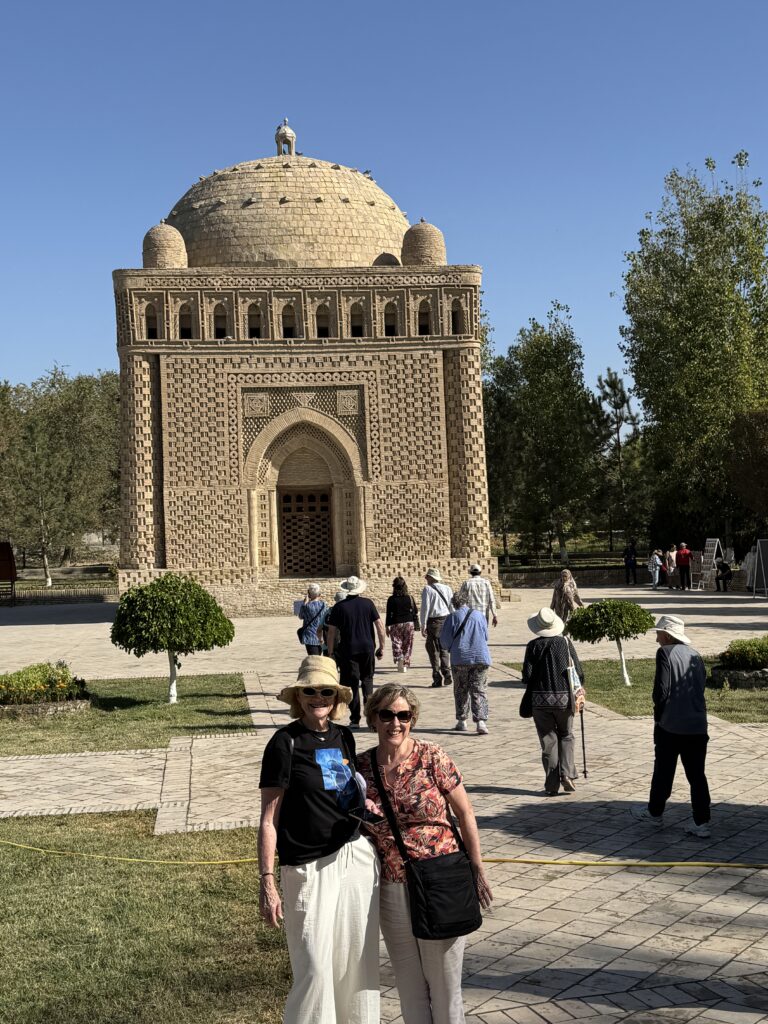
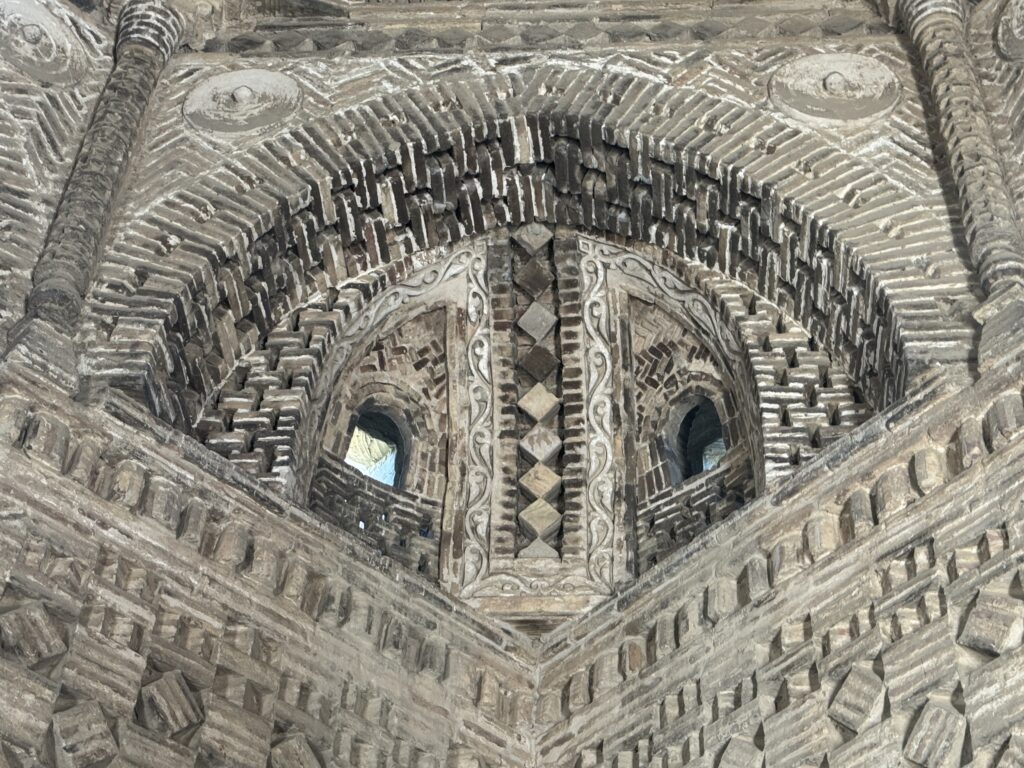
The squinches in the Mausoleum are one of its most brilliant engineering and artistic features. The squinches are the architectural “bridges” that allow a dome to sit neatly on a square room. In the Mausoleum:
- Each corner of the square chamber is filled with a series of arched niches, arranged to form a stepped transition.
- The builders used overlapping and corbelled brickwork to create this transition — both structurally strong and visually elegant.
- The result is a beautifully smooth flow from the square base to the circular dome, giving the interior a balanced, harmonious feeling.
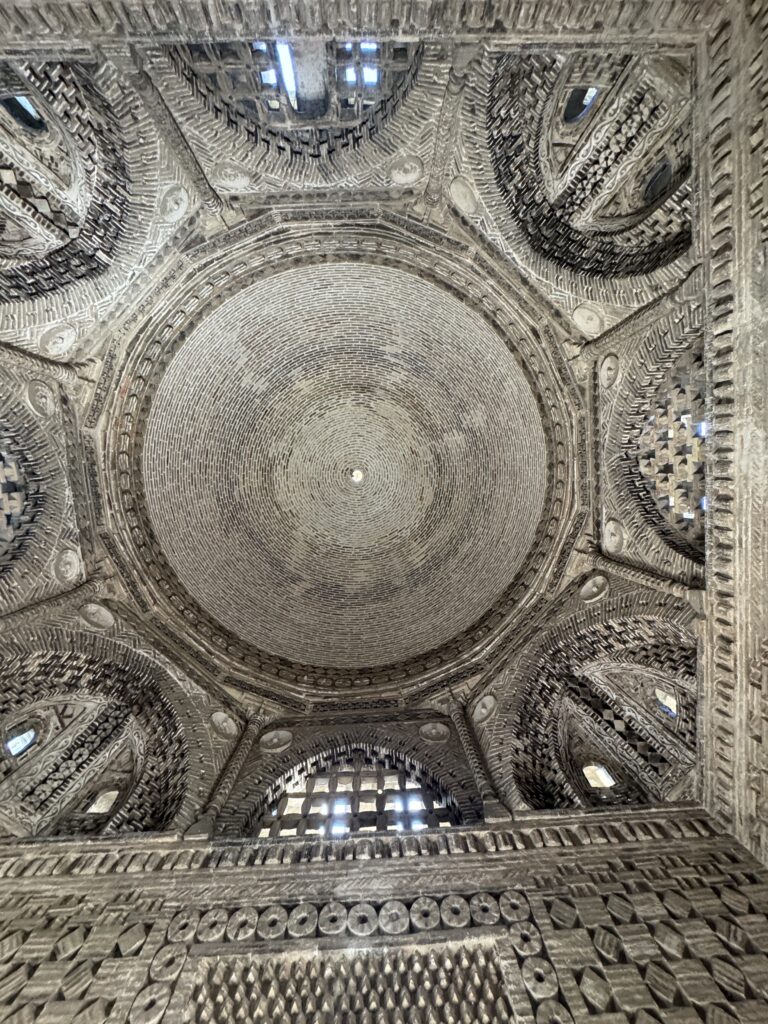
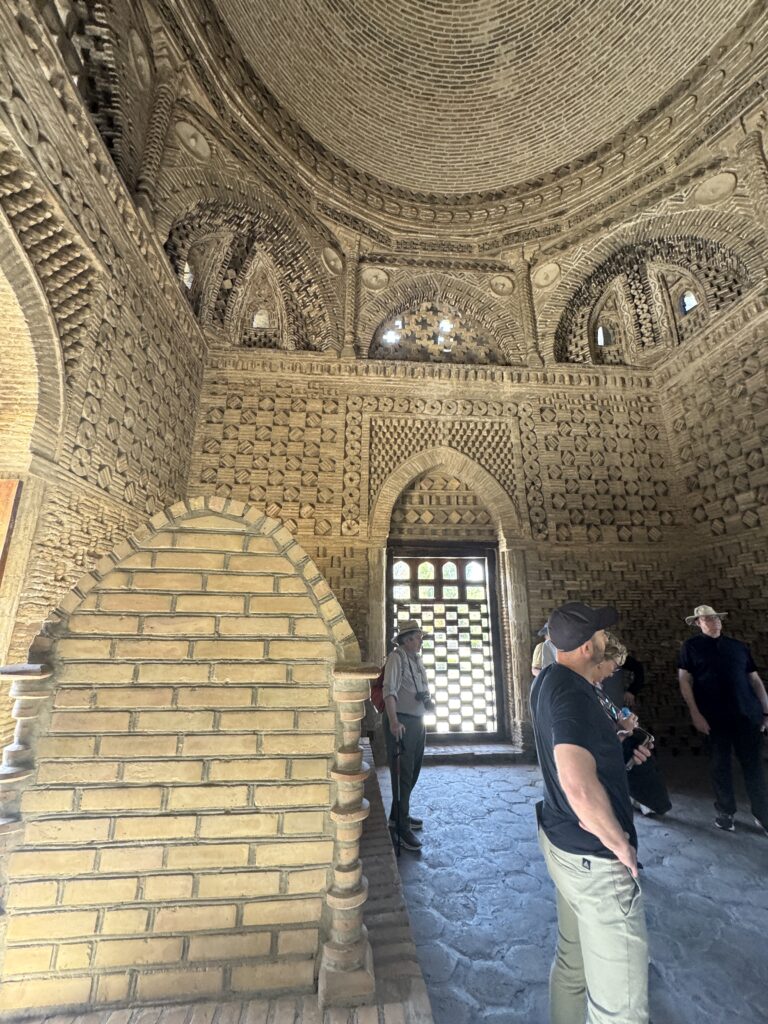
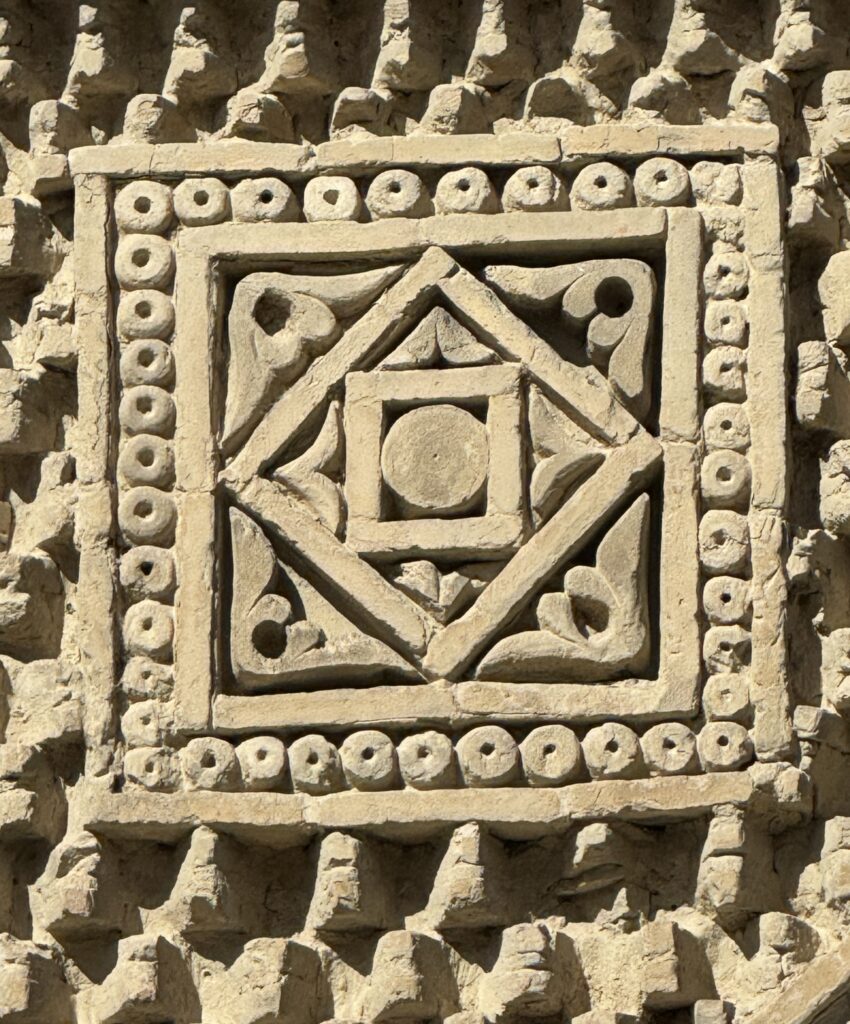
And the square patterned tiles on the outside of the Mausoleum is meant to represent the shape you would see if you were looking down on it from space.
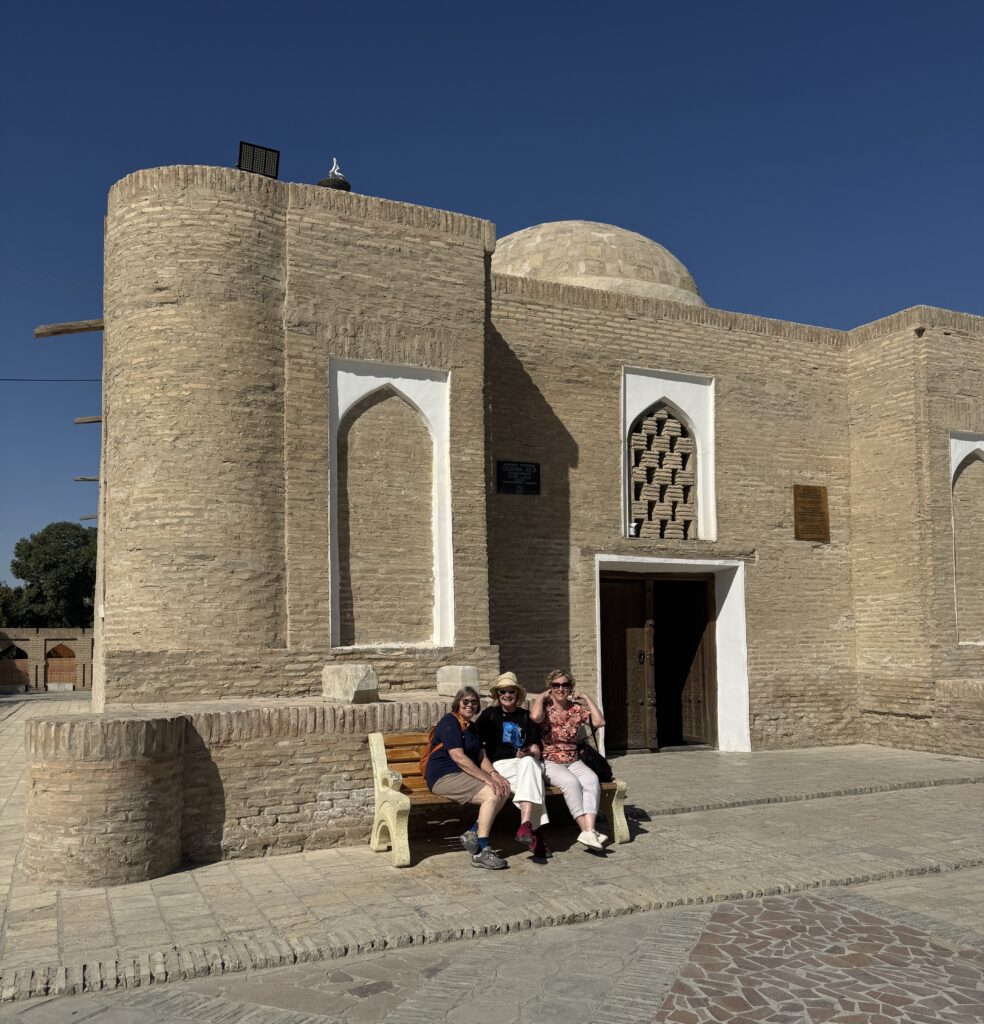
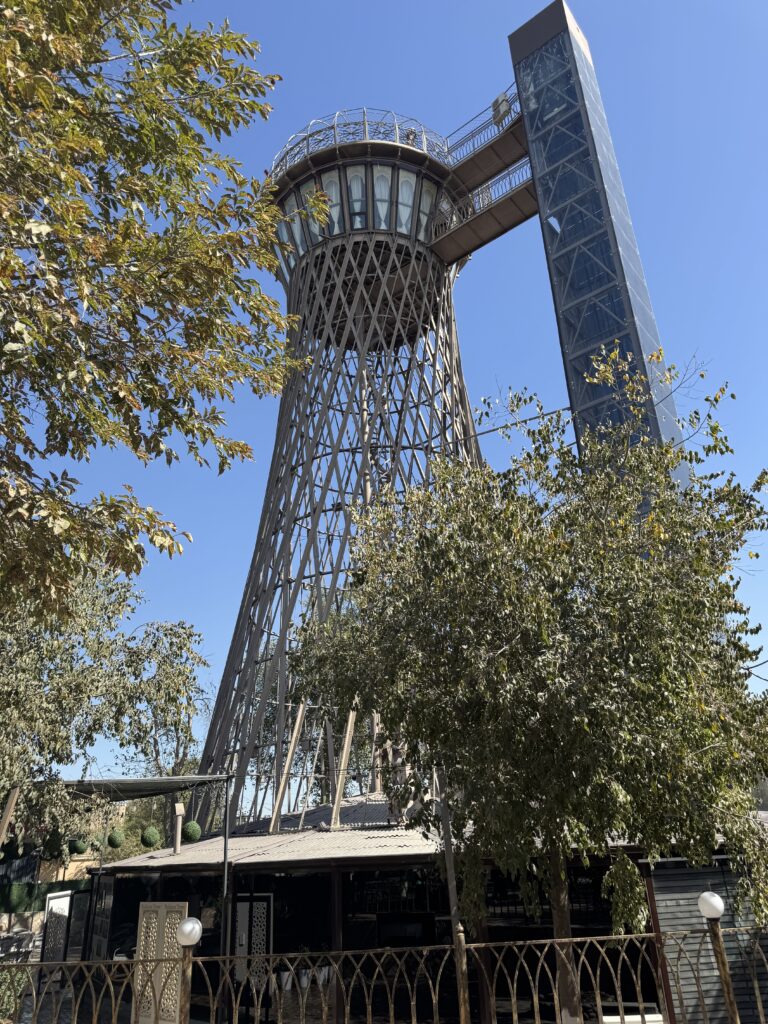
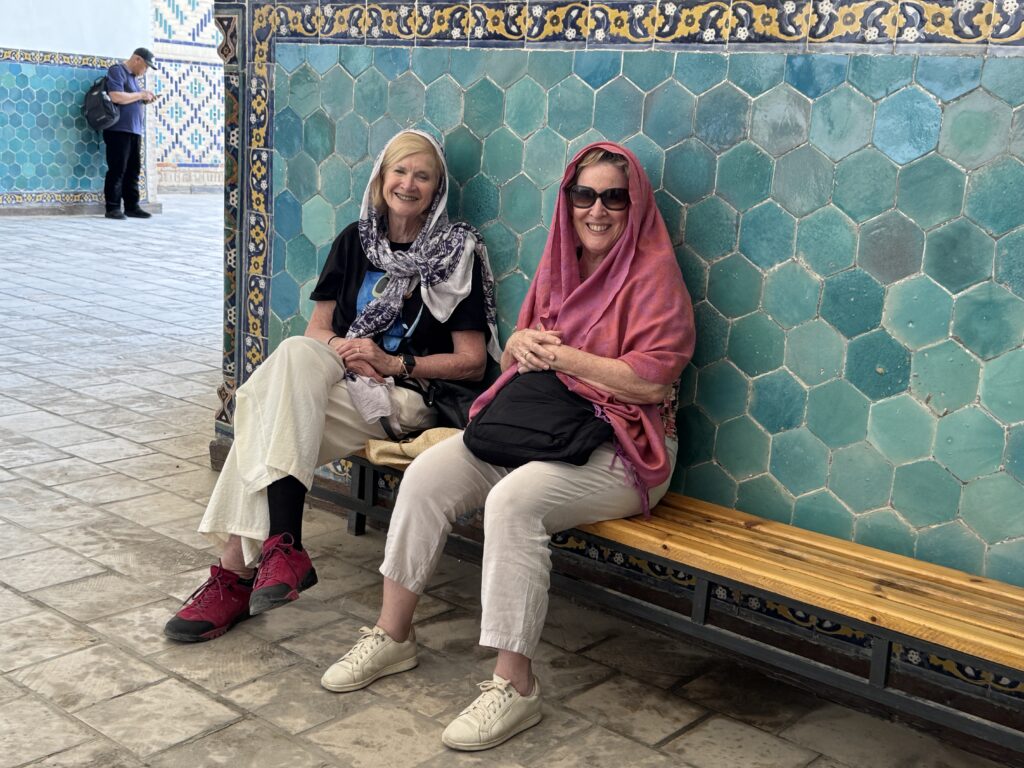
Next was Chashma Ayub, a Persian name which means “Job’s Spring”, and yes, it contained a history of Bukhara’s water supply. And here we used a conveniently located bench to have a rest, from where we could see the old Watertower (which is now an observation deck.)
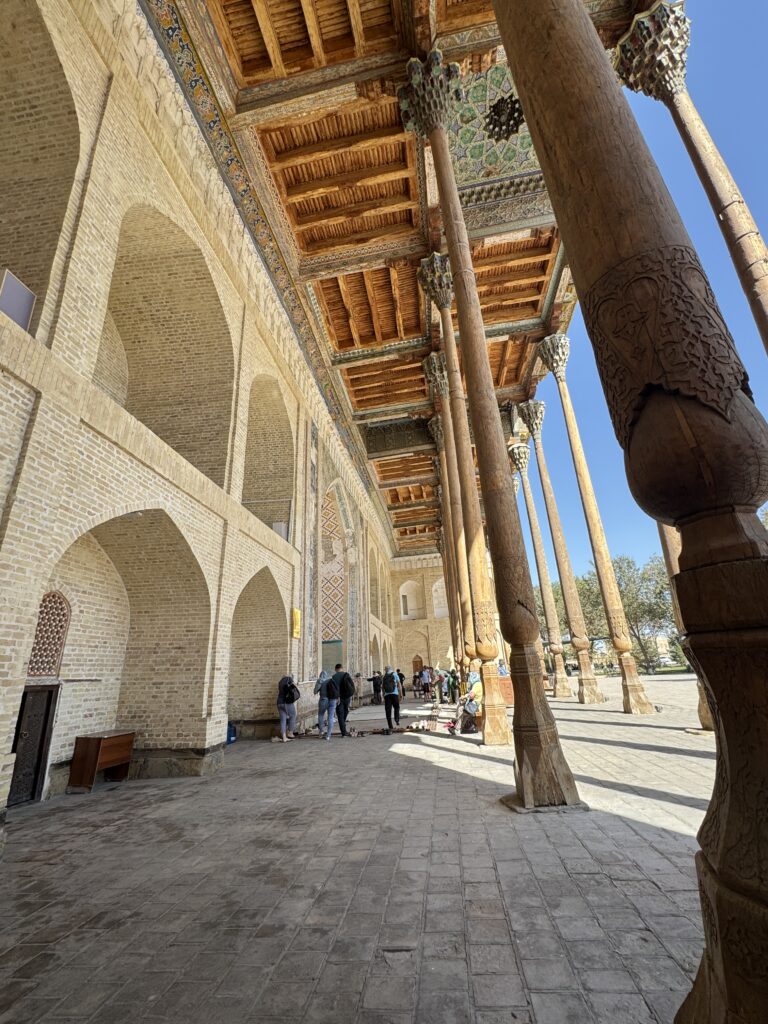
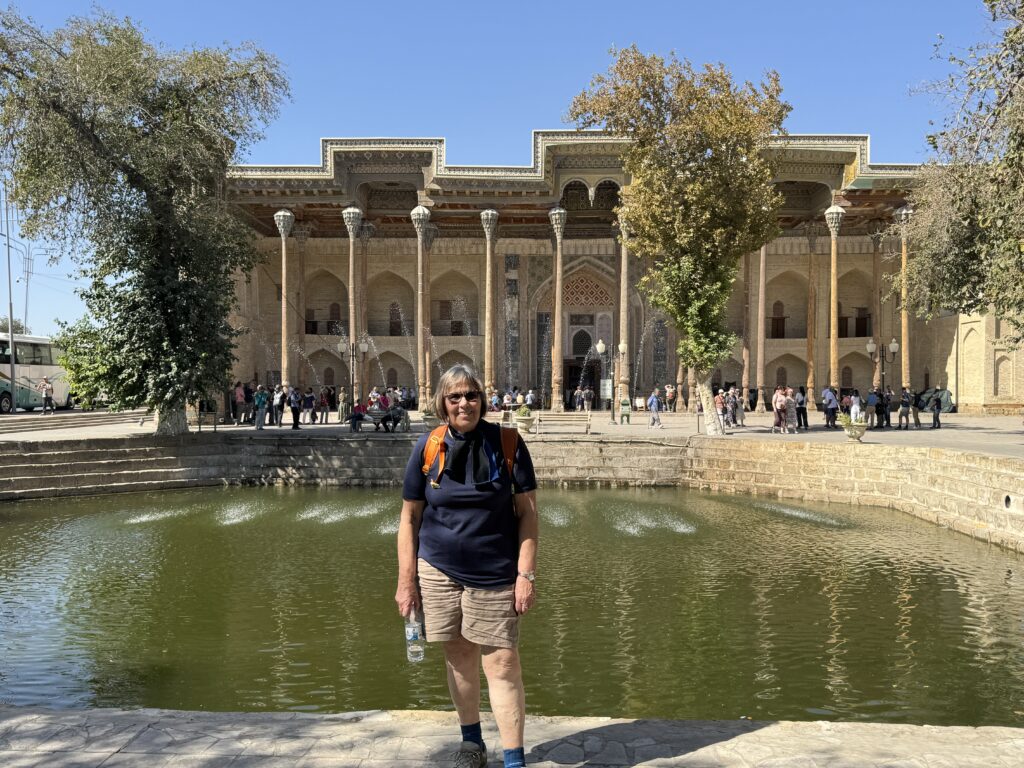
The Bolo Hauz Mosque (sometimes spelled Boloi Hovuz), built in 1712, has a magnificent open portico supported by 20 slender wooden columns. But it’s famous for its 40 pillars. When the sun hits just right, the 20 columns and their reflections in the pond appear as forty columns. Today the fountain was on, but you can probably see the reflection of, say, 28 pillars!
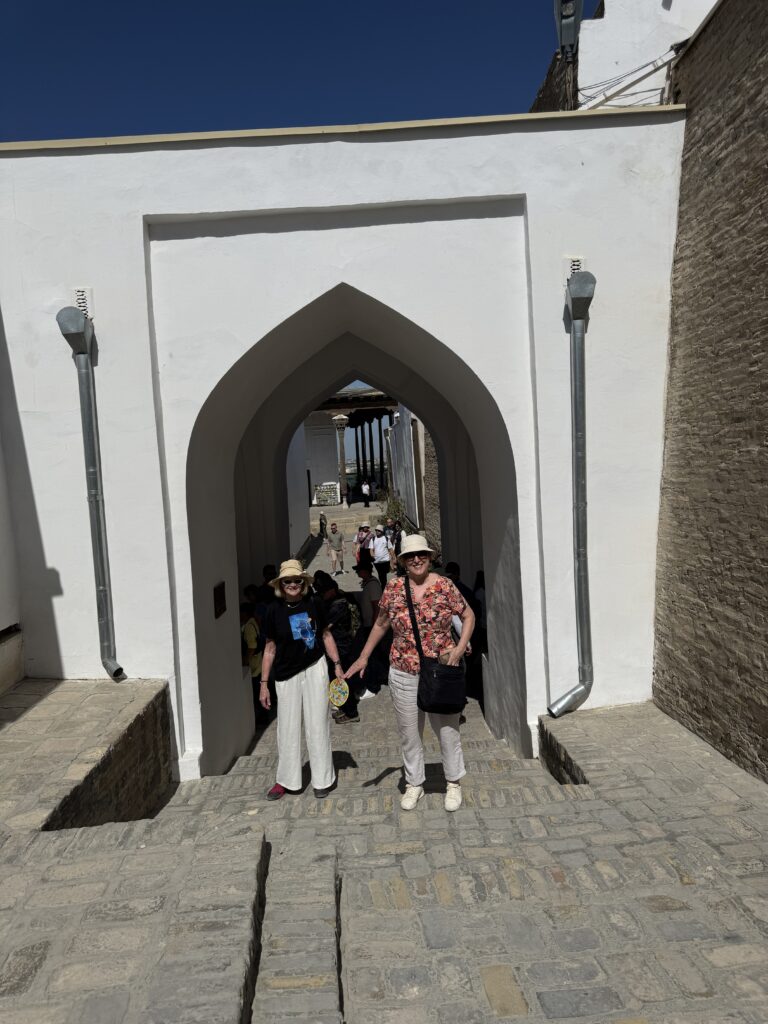
The Ark Fortress is one of the city’s most imposing and historic landmarks — a massive citadel that served as the seat of power for Bukharan rulers for nearly two millennia. It’s not just a building, but a city within a city.
The Ark stands on a man-made hill, rising about 20 metres above the surrounding old town. Archaeological evidence shows the site was first settled as early as the 5th century AD.
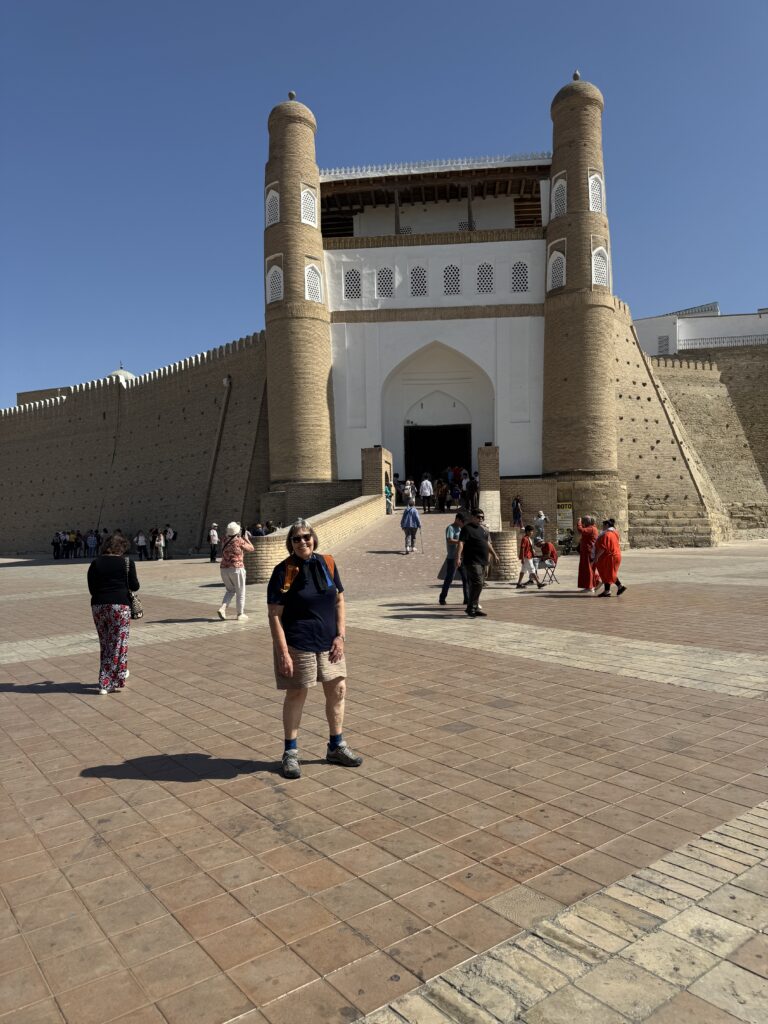
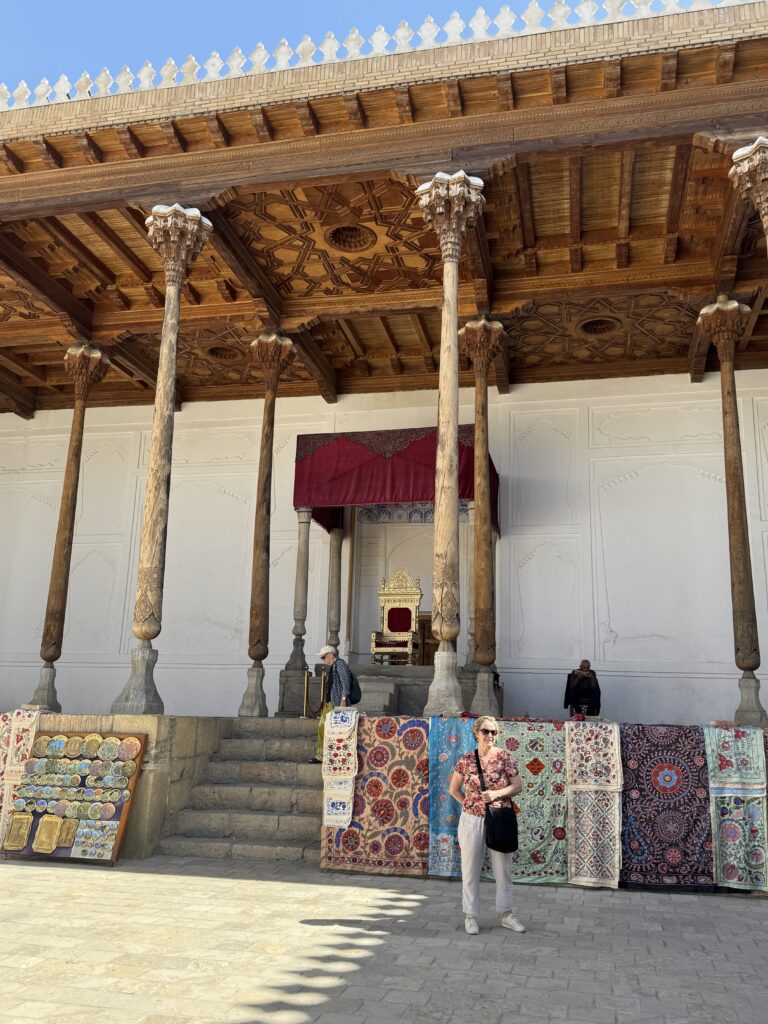
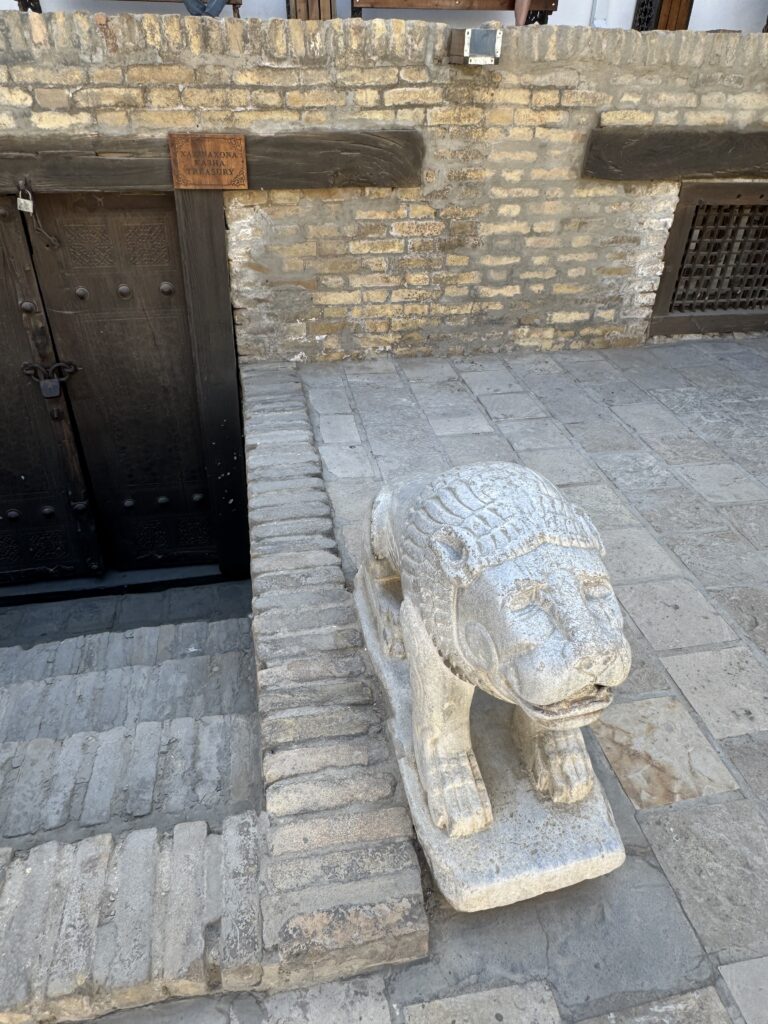
At its peak, the Ark housed around 3,000 people, including the emir’s family, courtiers, guards, and servants. Inside, there were: Royal apartments and reception halls;a mosque; stables, treasuries, armories, and a prison
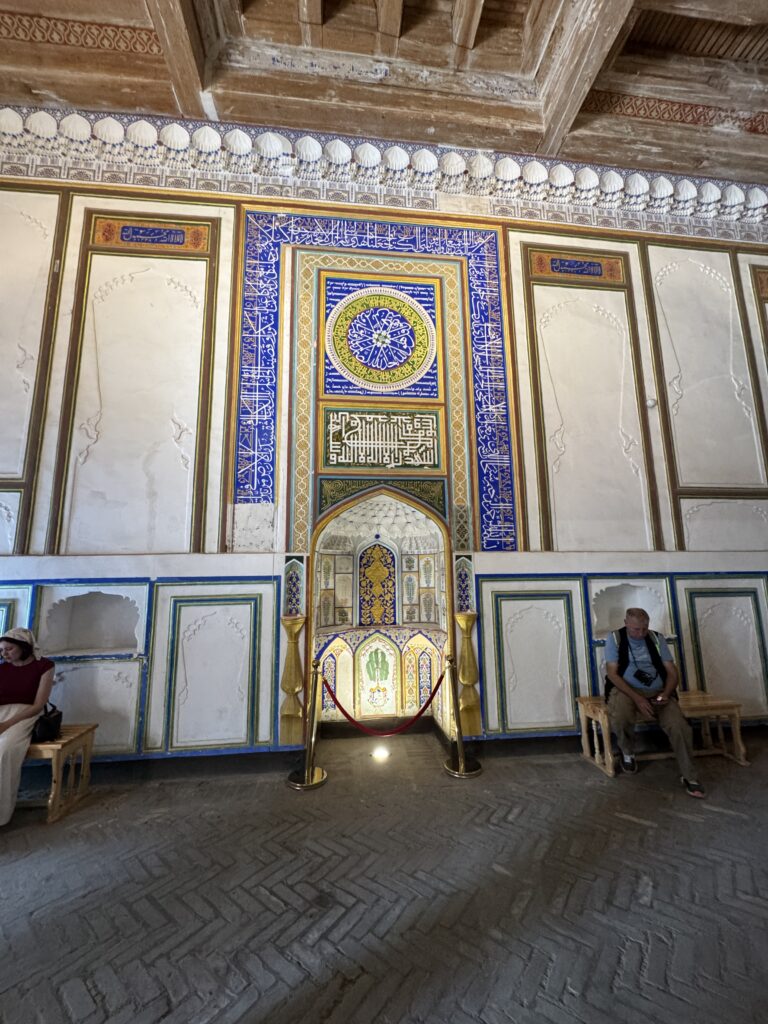
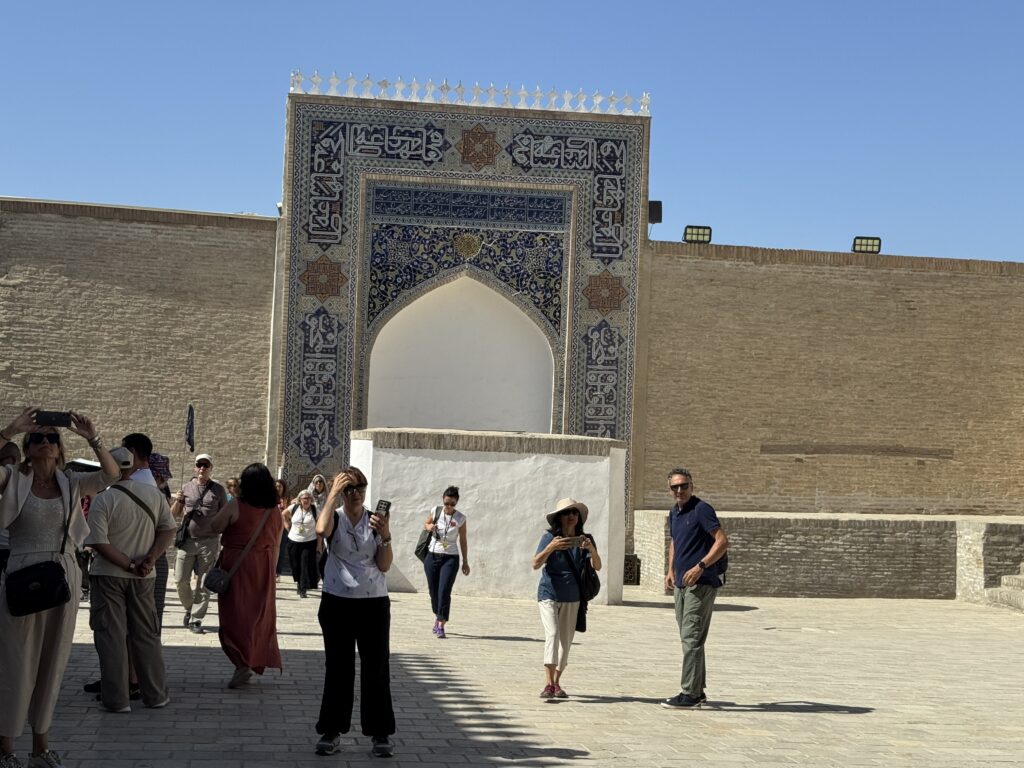
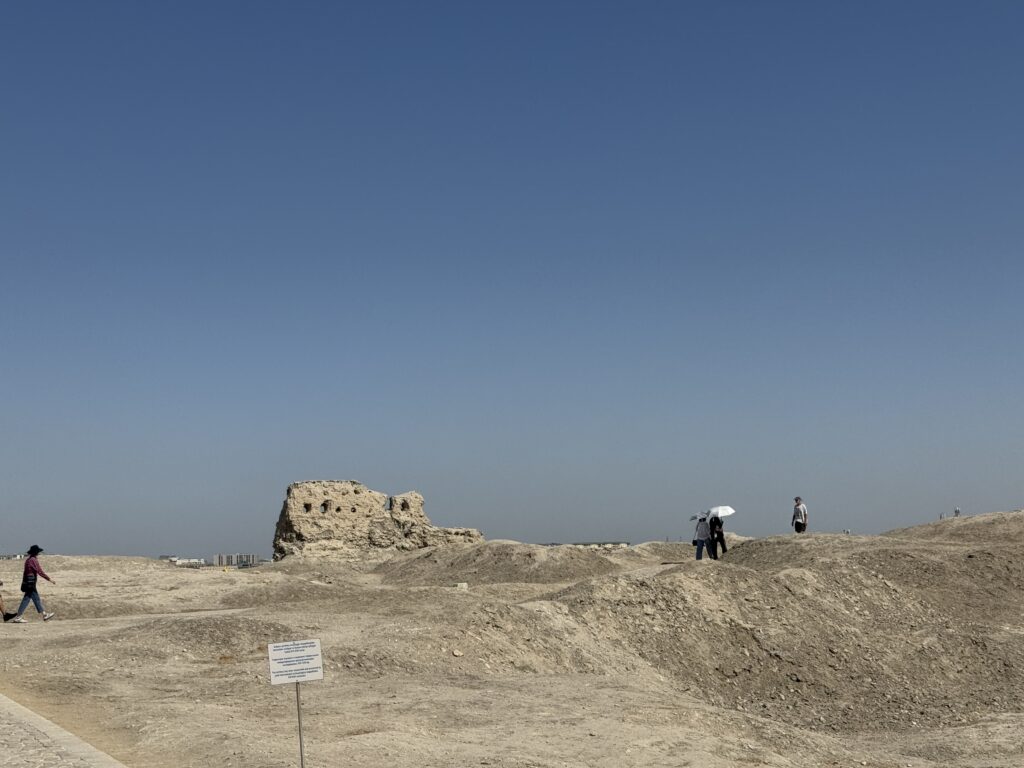
In 1920, during the Russian Civil War, the Ark was bombed by the Red Army. Much of it was destroyed, marking the symbolic end of the Emirate of Bukhara. What remains today is a mix of ruins and reconstructed areas, preserved as a museum complex.
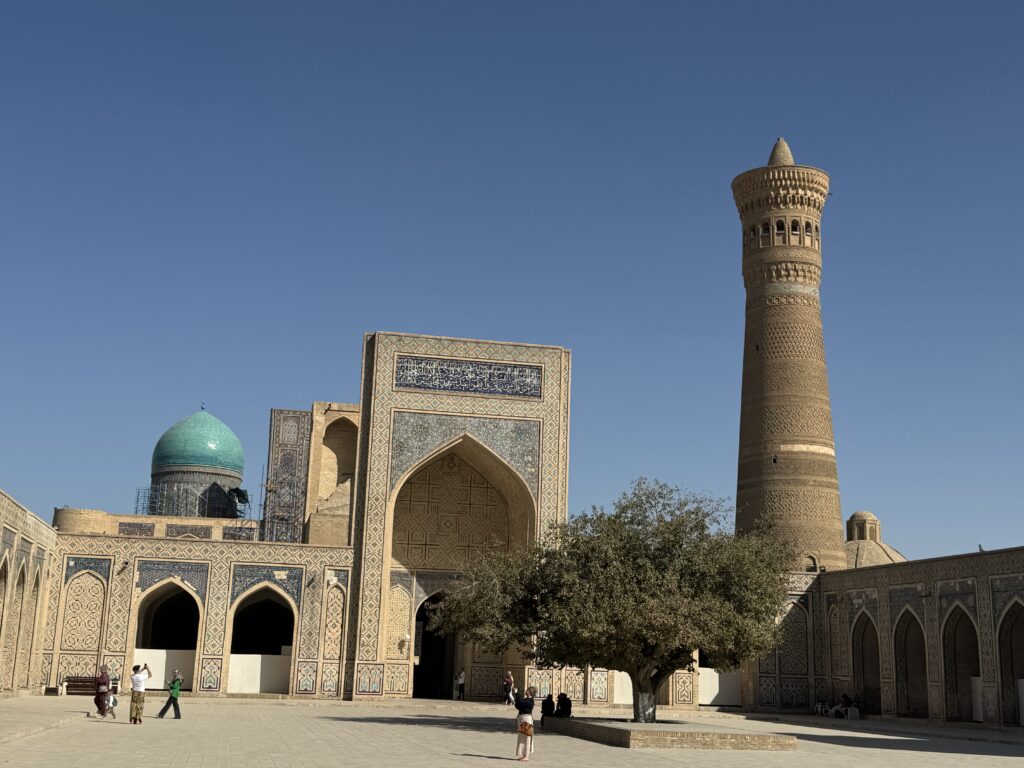
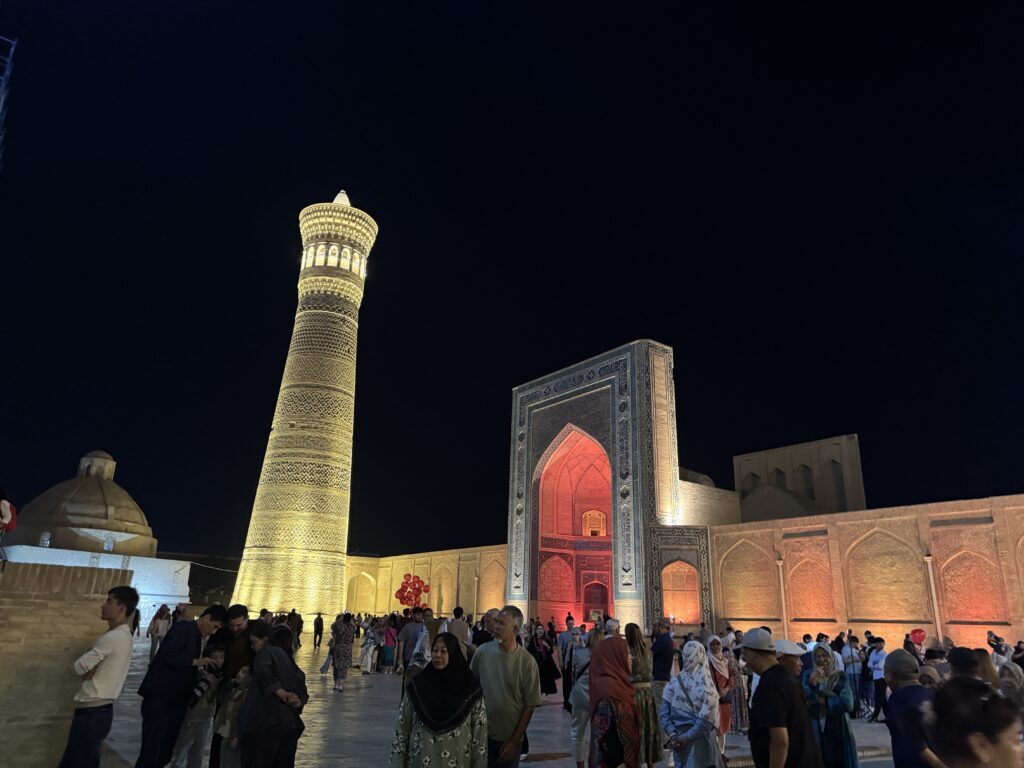
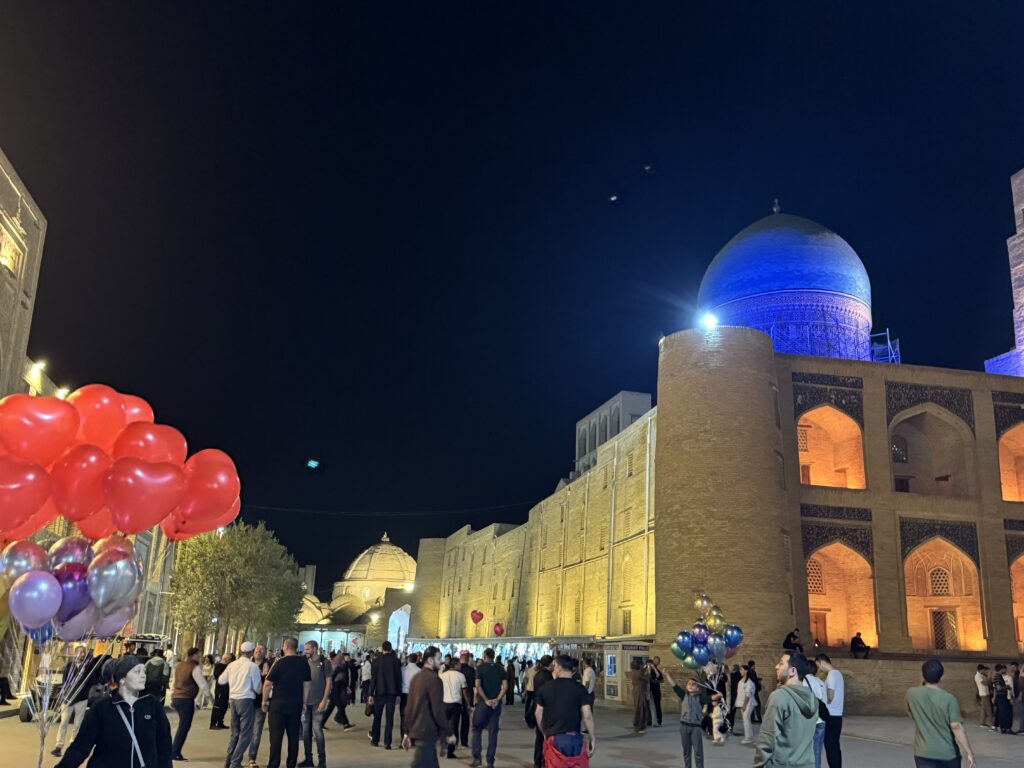
The Kalon Complex (also called Po-i-Kalyan, meaning “The Foot of the Great”) is the spiritual heart of Bukhara, an ensemble of Islamic architecture centred around the Kalon Minaret, Kalon Mosque, and Mir-i-Arab Madrasa.
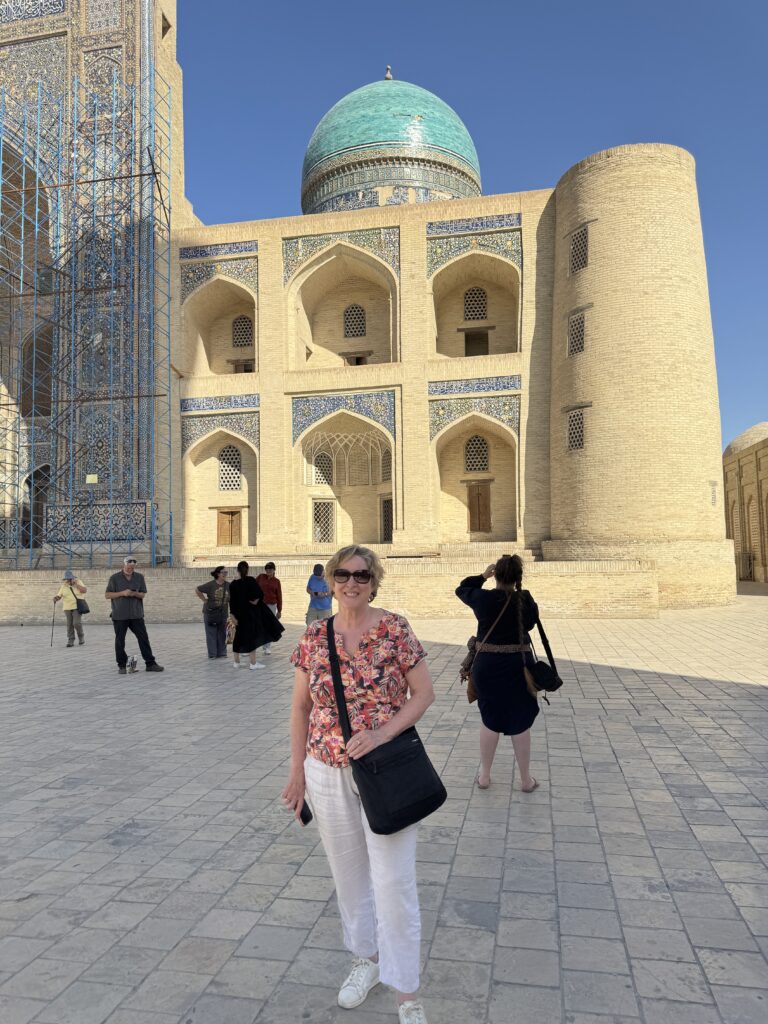
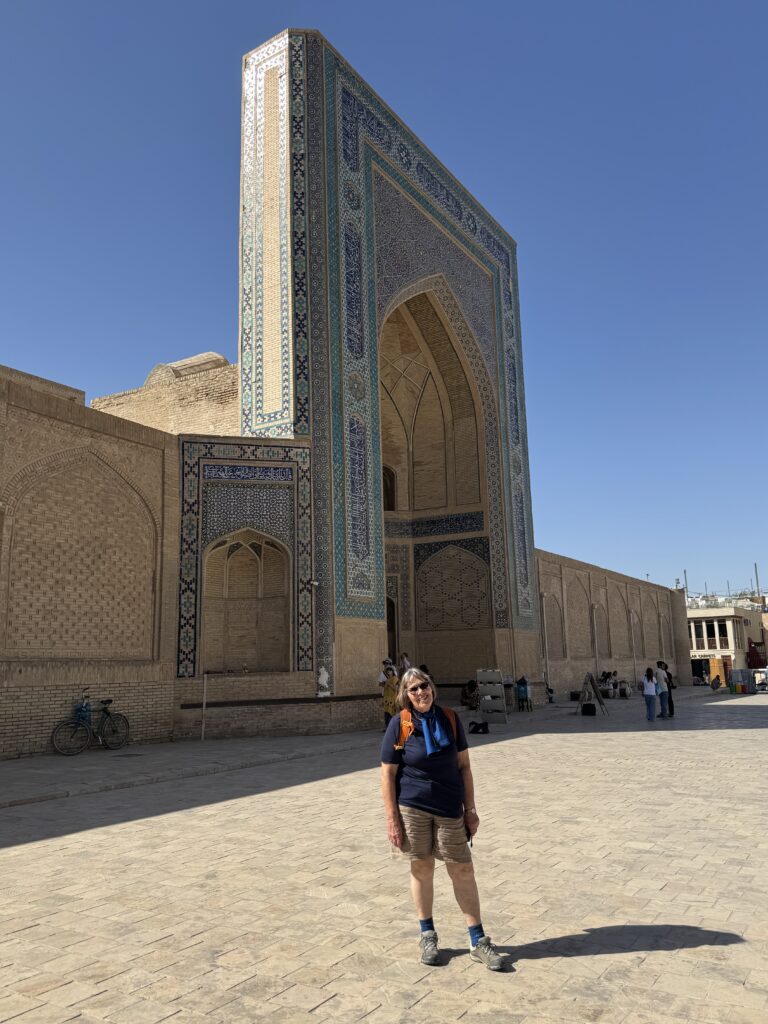
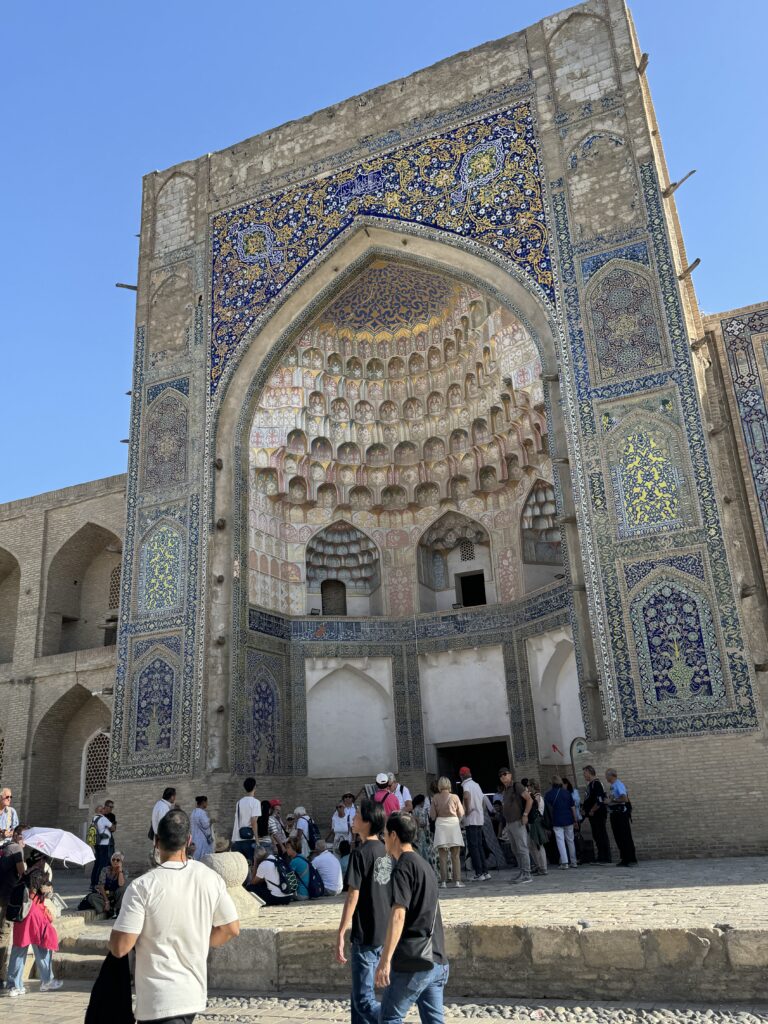
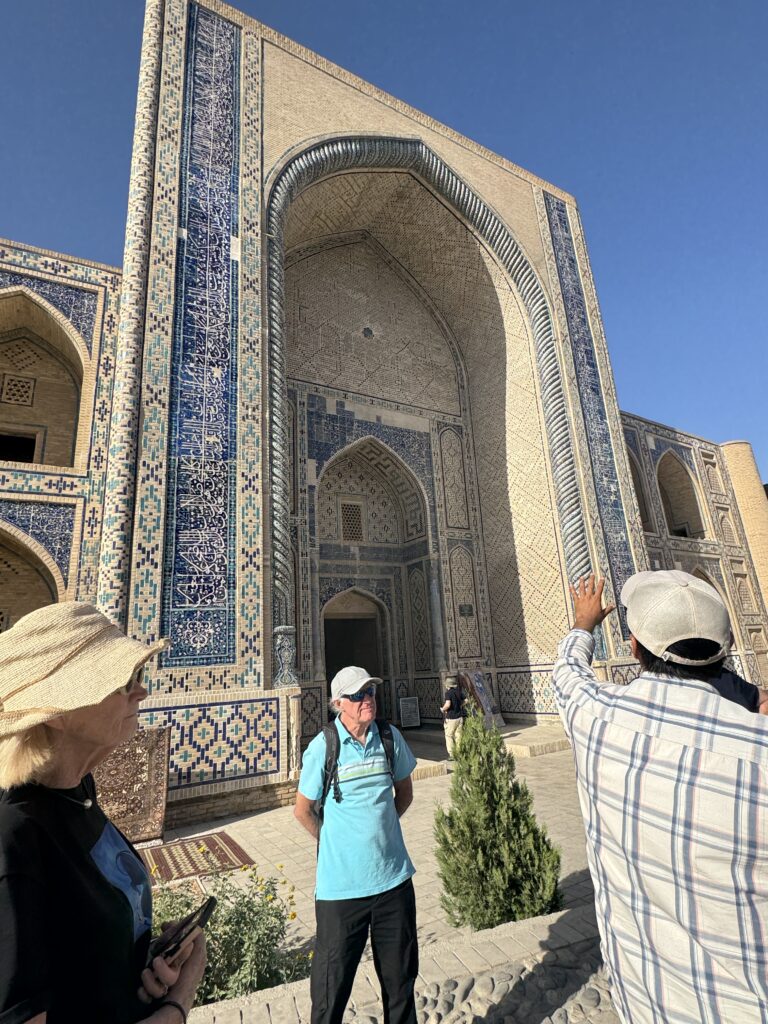
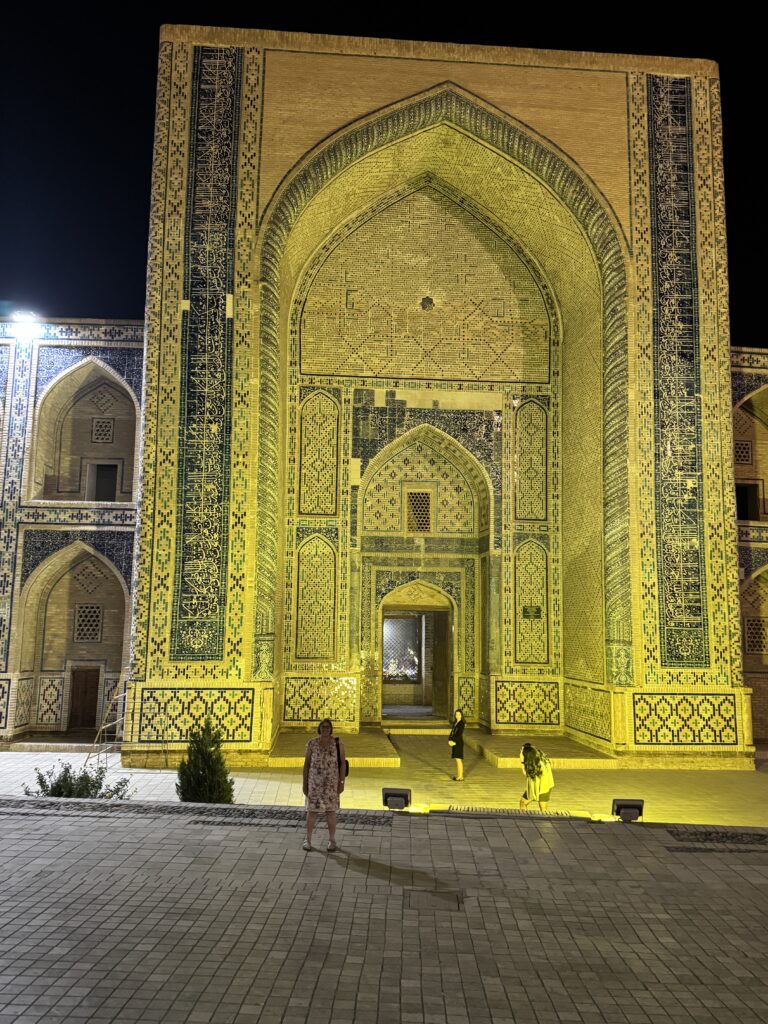
The Kosh Madrassah ensemble has two madrasas face one another, forming a “kosh” composition — a hallmark of Bukharan urban design.
And this is what it looks like at night.
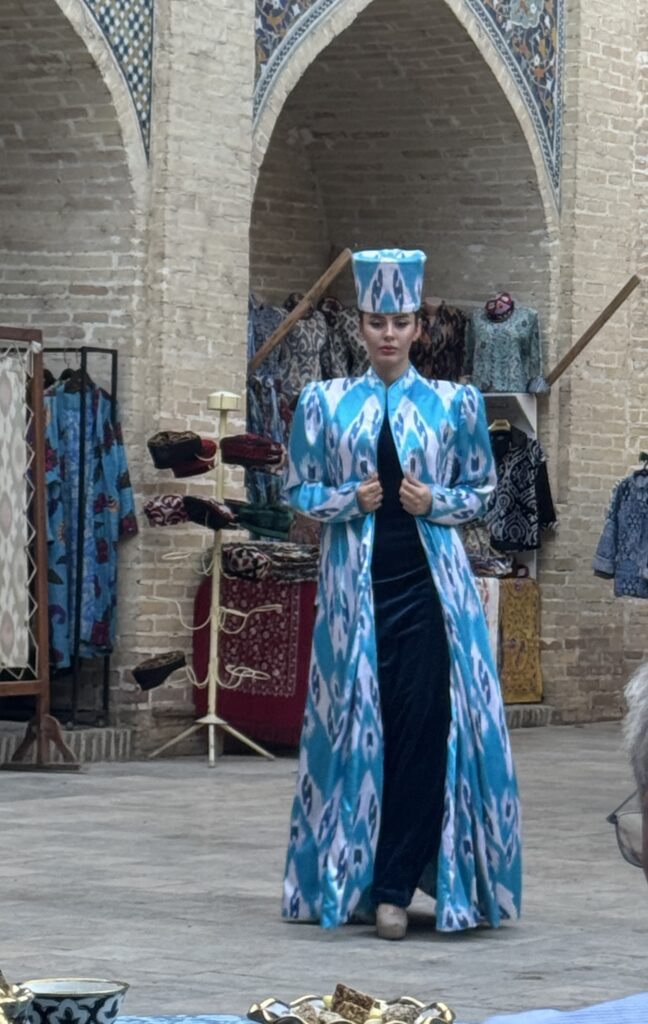
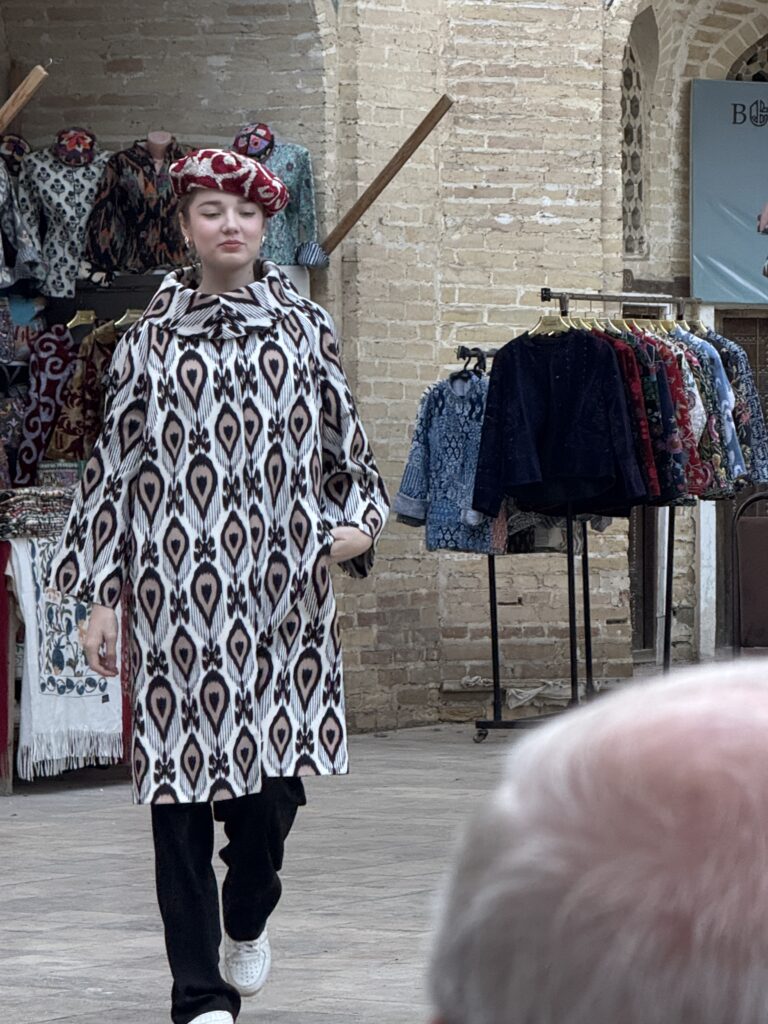
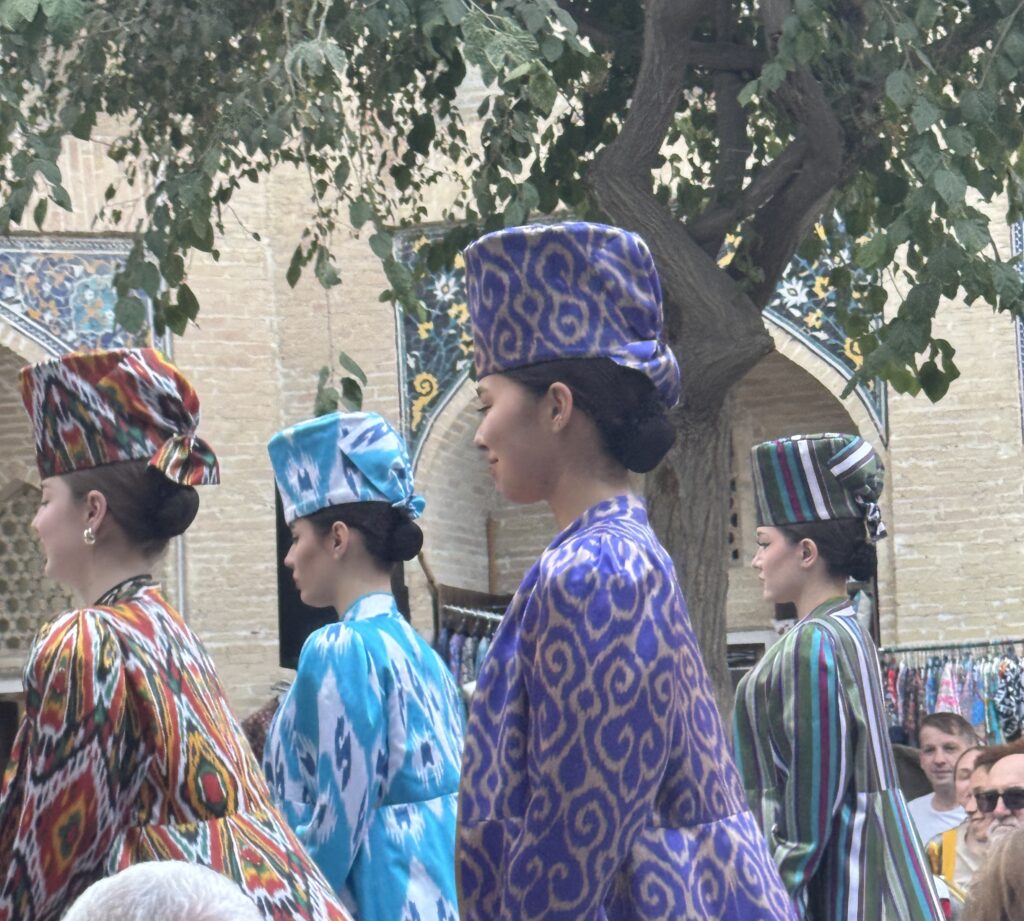
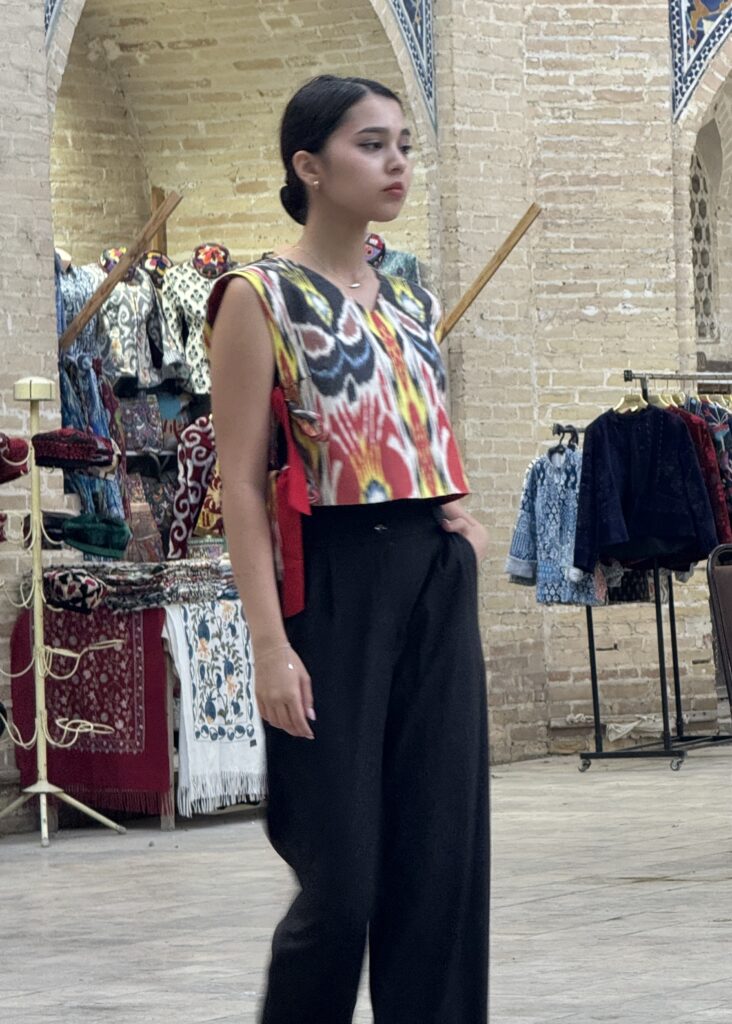
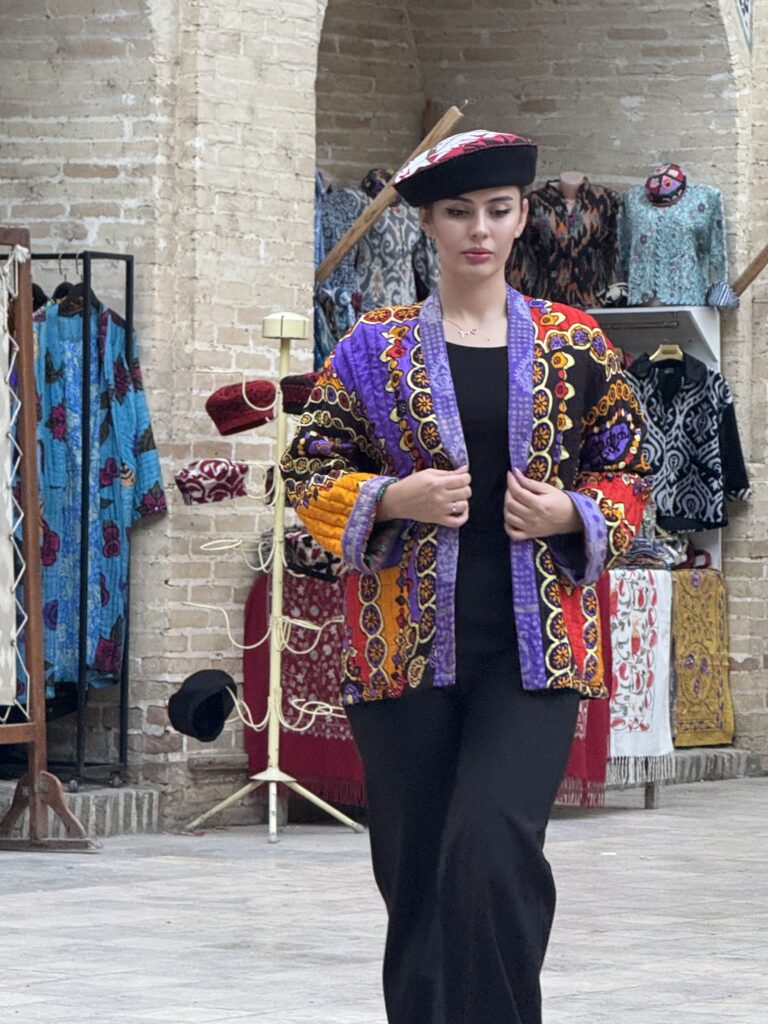
Went to a folk art and fashion parade in the late afternoon. The fashions were beautiful – rich colours and simple designs.
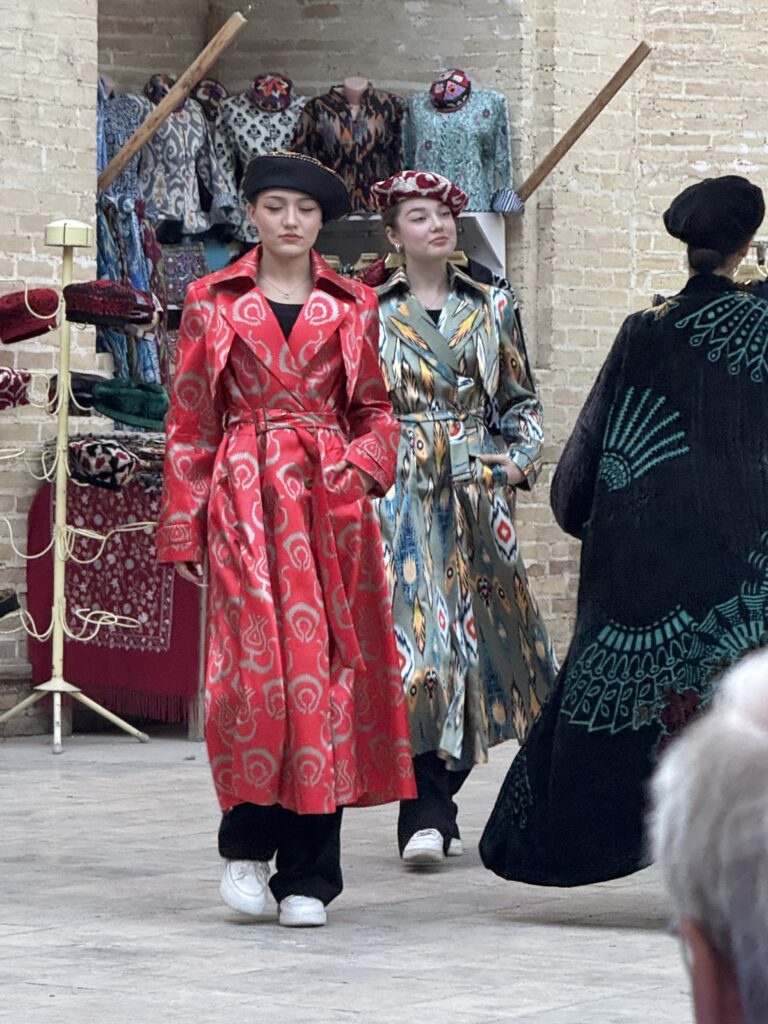
It was a pretty full-on day, and night….
Comments
4 responses to “Can the Stans handle the Merck girls?”
Did you buy a rug?
That would have been my question Sally!
Lovely photos on this very busy day.
Sar what fantastic photos sights history and information. Can’t believe you can put it all together at the end of a busy day. Some of that fashion looked great did you buy any particularly the one top left with purple. Xxoo